22 September, 2026 | 12:53 AM


THE BIG BC SURGE
18-02-2026 12:00:00 AM
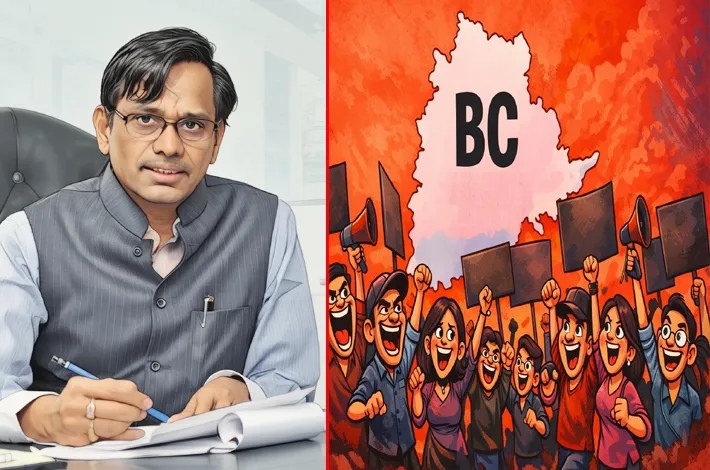
A political shift in motion is underway with the awakening among backward classes in Telangana
■ 60% of chairpersons elected hail from BC communities, underscoring their growing influence
■ Recent municipal polls saw BC candidates clinch 1,373 out of 2,995 wards statewide—nearly 46%—including over 400 general seats
C L Rajam
In a significant development signalling a change in Telangana's political landscape the Backward Classes (BCs) are demonstrating an unprecedented unity and electoral success. As reported in the Metro India, the winds of transformation have begun show. For decades, BCs have faced marginalization, but recent panchayat and municipal elections have showcased a newfound awareness and forward momentum.
Despite no political party granting the demanded 50% reservation for BCs in these polls, BC candidates triumphed not only in reserved seats but also in general categories, marking a clear step ahead. This victory is particularly noteworthy in municipal elections, where approximately 60% of chairpersons elected hail from BC communities, underscoring their growing influence.
The BC associations, comprising intellectuals, retired officials, and experts from various fields, have been tirelessly working to foster political consciousness. This effort has been amplified by the Vijayakranti newspaper, which has long served as the voice of BCs, consistently exposing injustices in political, economic, and social spheres. By emphasizing that political power is key to securing other benefits, the publication has rallied BC leaders and communities.
In fact, Vijayakranti's role was uniquely affirmed by external observers, positioning it as the primary advocate for BC demands. This synergy between community organizations and media has cultivated unity, leading to tangible results in elections. The outcome: BCs securing a majority in municipal bodies, with data indicating that in 105 municipalities, around 64 chairpersons are from BC backgrounds, over 40% of vice-chairpersons, and overall, about 55% of seats won by BCs when including general wards.
Analyzing this shift, it's evident that historical dominance of upper castes—such as Reddys, Velamas, and Kammas—in general seats is eroding.
Previously, these groups monopolized opportunities, leaving BCs, SCs, STs, and minorities on the side-lines. However, the rising political acumen among BCs has compelled upper-caste leaders to adapt. Field-level observations reveal that, fearing loss of BC support, they are now nominating BC followers for contests, even in unreserved seats.
This strategic pivot has enabled BCs to win up to 55% of wards without formal reservations exceeding the cap. Such dynamics reflect a broader democratization of power, where unity forces concessions from entrenched elites. If sustained, this could dismantle long-standing caste hierarchies in Telangana politics, potentially leading to more inclusive governance.
Still, this empowerment is nascent and faces hurdles. There is a need for BCs who have gained positions to bolster their political, economic, and support bases. Economic strengthening is crucial, as reliance on others' backing has historically limited independence. With eyes on upcoming Assembly, Legislative Council, and Lok Sabha elections, BC leaders advocate maintaining this cohesion to achieve "political sovereignty.
"Indeed, recent municipal polls saw BC candidates clinch 1,373 out of 2,995 wards statewide—nearly 46%—including over 400 general seats, a performance driven by major parties like Congress, BRS, and BJP allocating tickets strategically to BCs from communities like Goud, Mudiraj, Yadav, and Padmashali. Congress's dominance in these elections, securing nearly 90% of seats, aligns with its push for BC empowerment, including promises of fine rice distribution, free power, and women's travel schemes.
Extending beyond elections, the demand for 50% BC representation in the state cabinet is pressing. Currently, the 16-member council (including the Chief Minister) features only three BC ministers: Ponnam Prabhakar, Konda Surekha, and Vakiti Srihari. With scope for expansion to 18, advocates argue for at least nine BC berths to reflect their demographic weight.
An impending cabinet reshuffle could address this, but political will remains key. This shortfall highlights systemic underrepresentation, despite BCs comprising a significant voter base. The government's earlier attempt to hike BC quotas to 42% in local bodies was thwarted by court rulings enforcing the 50% overall reservation ceiling set by the Supreme Court. Reverting to lower quotas (around 28-35% for BCs in municipalities) underscores the legal battles ahead for affirmative action.
Intertwined with BC demands is the call for 33% women's reservation in politics. The article notes this long-standing plea, pointing out that the current cabinet has only two women, far short of the six needed for 33%. Nationally, the 106th Constitutional Amendment mandates 33% seats for women in
Lok Sabha and state assemblies, but implementation awaits delimitation and census. In Telangana, Chief Minister Revanth Reddy has pledged 33% in the next Assembly polls, potentially fielding 60 women candidates beyond the 51 reserved seats. This gender quota intersects with BC empowerment, as women from backward classes could amplify representation. Sonia Gandhi's advocacy for women's reservations adds national momentum, yet local execution lags.
In broader context, these developments mirror India's evolving caste politics. Telangana's BC surge echoes movements in other states, where marginalized groups leverage electoral clout to challenge dominance. However, risks abound: fragmentation within BC sub-castes could dilute gains, and economic disparities might hinder sustained mobilization. Media like Vijayakranti plays a pivotal role in awareness, but broader digital outreach could enhance it. Politically, Congress's ULB sweep—following gram panchayat successes—solidifies its hold, potentially sidelining BRS and BJP. Cross-party alliances post-elections indicate fluid dynamics, where BC support becomes a kingmaker.
Ultimately, the change has commenced. BCs' first electoral foothold paves the way for larger ambitions, like MLA, MLC, MP, and ZP chairperson roles. With unity, they could compel parties to cede power, proving that collective action trumps traditional patronage. Yet, true empowerment demands not just seats but policy influence—on education, jobs, and welfare. As Telangana eyes future polls, this awakening could redefine its politics, fostering equity amid caste complexities. The path ahead requires vigilance, but the momentum is undeniable.