13 October, 2026 | 2:07 PM


Transport Ministry proposes unique ID for EV batteries
04-01-2026 12:00:00 AM
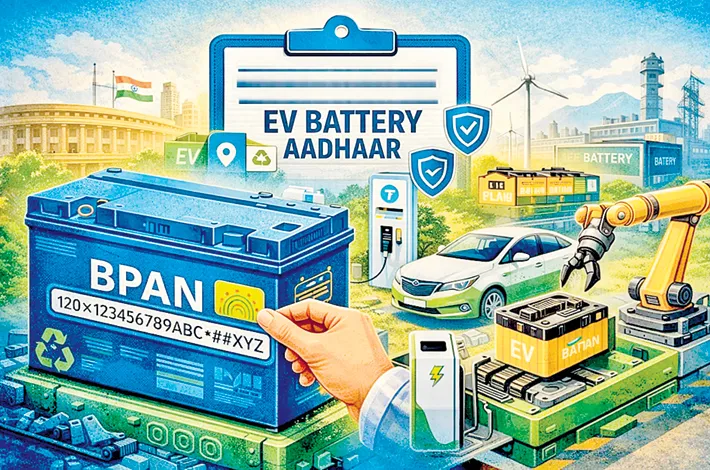
This unique number will function as a permanent digital identity for battery packs, allowing authorities and stakeholders to track them from manufacturing to final disposal.
The Union transport ministry has proposed assigning an Aadhaar-like unique identification number to electric vehicle batteries to enable end-to-end traceability, improve recycling efficiency, and strengthen regulatory oversight in India’s fast-expanding battery ecosystem. The proposal is part of draft guidelines issued to bring greater transparency and accountability across the battery lifecycle.
Under the proposed framework, every battery producer or importer will be required to assign a 21-character Battery Pack Aadhaar Number, or BPAN, to each battery introduced in the market, including those used for self-consumption. This unique number will function as a permanent digital identity for battery packs, allowing authorities and stakeholders to track them from manufacturing to final disposal.
The draft guidelines state that the BPAN must be placed in a clearly visible and easily accessible location on the battery pack. The placement should ensure that the identification number cannot be easily destroyed, damaged, or deteriorated during the battery’s operational life. In addition, battery producers and importers will be required to upload relevant battery-related information on the official BPAN portal.
According to the ministry, the BPAN system will capture and store critical data starting from raw material extraction and manufacturing processes to usage history, recycling, repurposing, and final disposal. If a battery undergoes recycling or repurposing that results in a change in its core attributes, a new BPAN will have to be issued, either by the same entity or by a new producer or importer.
The transport ministry said the proposed system aims to bring transparency, accountability, and sustainability to the battery ecosystem. By enabling accurate tracking of battery performance and environmental impact, BPAN is expected to support better regulatory compliance, facilitate second-life usage of batteries, and improve the efficiency of recycling operations.
Electric vehicle applications currently account for nearly 80 to 90 per cent of the total lithium-ion battery demand in India, far exceeding demand from industrial and other non-automotive uses. In view of their scale, safety considerations, and regulatory importance, the draft guidelines propose prioritising EV batteries during the initial phase of standard formulation.
While the framework recommends applicability of BPAN to industrial batteries above 2 kWh, the ministry noted that focusing first on EV batteries would ensure that the most impactful segment of the battery ecosystem is addressed at the outset.
The draft also recommends that the Battery Pack Aadhaar framework be implemented through the Automotive Industry Standard route under the Automotive Industry Standards Committee. This would allow structured stakeholder consultations, technical validation, and alignment with existing automotive regulations, ensuring national uniformity and smoother regulatory acceptance.