2 October, 2026 | 5:54 AM


Tur falls on weak demand; chana, urad remain firm
29-04-2026 12:00:00 AM
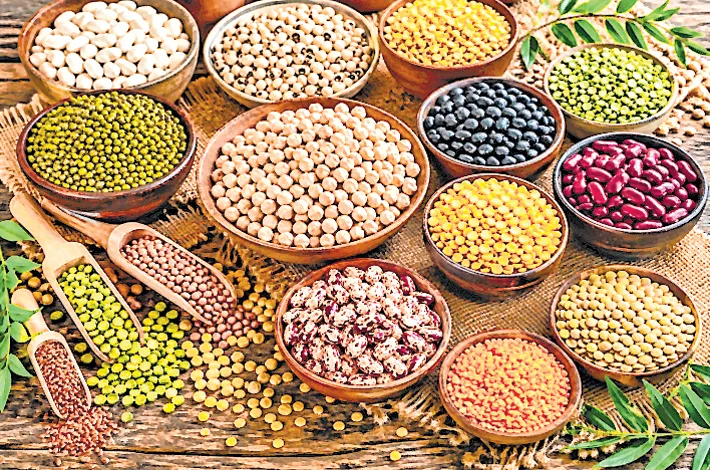
Seasonal slowdown and weak consumption pressure tur, while procurement support and balanced supply keep other pulses stable across key markets
Pulses prices showed a mixed trend across key spot markets on Tuesday, with tur declining on weak demand even as arrivals tightened, while chana and urad held firm amid balanced supply-demand dynamics.
Market participants said seasonal factors and government procurement continue to shape price movements across major producing and consuming centres. Chana prices remained stable in Akola at ₹5,675–₹5,700 per 100 kg, supported by reduced arrivals and steady demand.
Traders noted that a large portion of arrivals is being diverted towards government procurement at the minimum support price of ₹5,875 per 100 kg, which is higher than prevailing market rates.
Procurement activity in Maharashtra has been robust, with Akola emerging as one of the top centres and total purchases nearing the sanctioned target. Prices in Delhi also remained unchanged at ₹5,525–₹5,575 per 100 kg. Tur prices, however, came under pressure due to sluggish demand during the summer months, when consumption of tur dal typically declines. In Akola, prices fell by ₹75 to ₹7,800–₹7,825 per 100 kg, while in Katni, Madhya Pradesh, they dropped by ₹50 to ₹8,050–₹8,150 per 100 kg.
Despite lower arrivals, traders said demand remains weak and is unlikely to pick up meaningfully until June or July. Arrivals have been volatile, as farmers hold back stocks when prices soften.
Urad prices stayed largely unchanged across markets, with Chandausi quoting ₹8,275–₹8,300 per 100 kg and Jaipur at ₹7,600–₹8,600 per 100 kg. Demand remains in line with supply, keeping prices range-bound.
Going ahead, urad prices are expected to move within a narrow band amid seasonal demand slowdown, while incoming imports from Myanmar may add to supply.
Overall, pulses markets are likely to remain subdued in the near term, with demand recovery expected only after summer.
Traders added that weather conditions and procurement trends will remain key triggers in the coming weeks. Higher temperatures have already disrupted normal market arrivals, and any further delay in supply could lend intermittent support to prices. However, weak consumption patterns, particularly from bulk buyers such as hotels and caterers, continue to cap any sharp upside.
Market participants expect volatility to persist in the short term, with prices reacting quickly to changes in arrivals, imports and policy signals. In addition, stockists are maintaining cautious positions, avoiding aggressive buying amid uncertain demand visibility.
Any improvement in festival or institutional demand could offer limited support, but sustained price recovery will depend on stronger consumption and clearer supply trends in the coming months. Overall, market direction will hinge on demand recovery, procurement pace, and import flows, with traders closely tracking weather trends and government policy signals for clearer price cues.
— Informist