18 October, 2026 | 7:24 PM


Vijay & Temples
24-06-2026 12:00:00 AM
A Major Policy Shift in Temple Administration?
metro india news I Chennai:
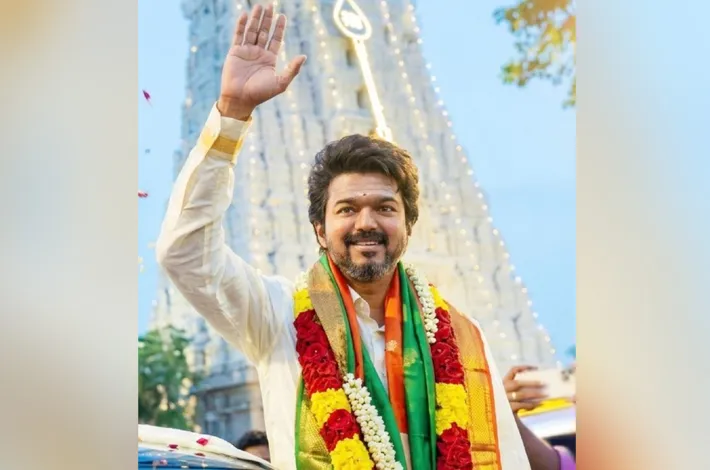
In a significant move that may have cascading impact on other states in the country, shortly after assuming power, the Tamilaga Vettri Kazhagam (TVK) government led by Chief Minister Vijay has cancelled administrative sanctions for 46 projects worth approximately Rs 246 crore that were approved under the previous DMK regime. CM Vijay cancelled the projects for better utilisation of funds of the Hindu temples and put them to development and welfare of the temples. These initiatives, funded through the Hindu Religious and Charitable Endowments (HR&CE) department using temple revenues, included 29 marriage halls (Rs 115.77 crore) and 17 commercial complexes (Rs 130.08 crore). None had progressed beyond paperwork despite sanctions in 2024 and 2025.
The decision, announced around the Chief Minister’s birthday, signals a deliberate reset in how Tamil Nadu manages its vast network of temples. Government officials cited court stays, financial burdens on temples, and a commitment to redirect funds exclusively toward core religious and devotional purposes—temple maintenance, infrastructure upgrades, annadanam (free meals), washrooms, and devotee amenities. This marks a clear departure from the DMK’s approach of leveraging temple surpluses for revenue-generating commercial ventures.
Context of HR&CE and temple finances
The HR&CE department administers a massive portfolio: estimates range from around 38,000 to over 44,000 temples and related properties in Tamil Nadu. Historical data highlights deep disparities. In 2020, the department informed the Madras High Court that out of 44,121 temples under its control, over 37,000 had annual assessable income below Rs 5,000, insufficient even for basic staffing. Around 11,999 temples could not afford daily pujas, while only about 7,000 were financially stable, with just 1,000 holding surplus funds. 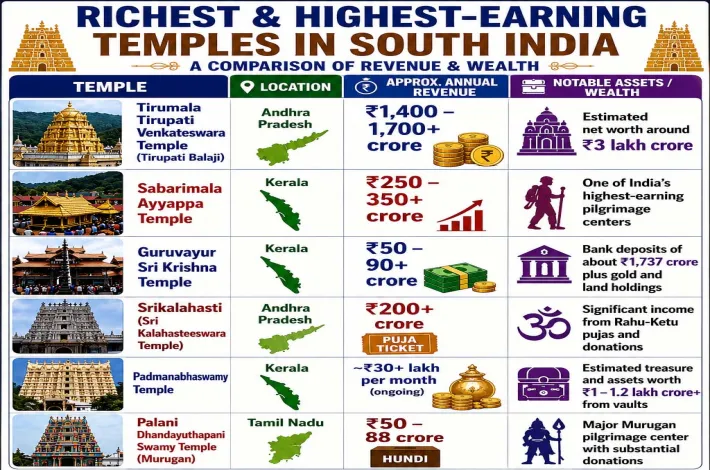
Temple revenues come from donations, hundi collections, land endowments, and other assets. While affluent temples like those in major pilgrimage sites generate significant income, the majority operate at a deficit. The department has historically pooled contributions (e.g., 15% administrative overhead plus audit fees) into a common fund, which has supported underfunded temples for pujas, renovations, and schemes like annadanam. Critics have long argued that commercial diversions and administrative costs strain this ecosystem, especially amid reports of encroachments and under-maintenance.
Under the DMK regime, the policy emphasized “asset creation” through marriage halls, parking facilities, and commercial complexes. Proponents argued these would generate jobs, additional revenue for temple upkeep, and public amenities near religious sites. Similar approaches existed in prior governments, including AIADMK periods for educational institutions. However, opponents, including Hindu activists and the BJP, viewed them as misuse, diverting devotee offerings (seen as belonging to the deity) into secular or commercial activities prone to inefficiency or corruption.
The specific decision and rationale
The TVK government’s Government Order explicitly revoked approvals due to the temples’ financial conditions and existing legal hurdles. A cited example—a multi-level parking facility near a small Ganesh temple in Coonoor receiving only about 500 visitors daily—illustrated projects mismatched to actual needs and lacking basic devotee facilities. Officials stressed that temple funds must prioritize “sacred purposes,” aligning with Madras High Court observations limiting diversions of temple assets. This move follows broader signals from Governor Rajendra Arlekar emphasizing temple-centric spending. The freed-up Rs 246 crore will support temple development rather than new commercial builds. Government sources also noted a lack of available funds and the need for transparency.
Political reactions and broader implications
Several people while appreciating Visa’s initiative wanted funds from the richest temples and temples having more revenue should be utilised to fund the temples that have no revenue even to perform the day to day rituals. Suggestions also poured that temples which were known as centres of knowledge, common activities inn the past should be developed once again as Centres of excellence. Temples should have establishment of Vedic schools, marriage halls, hospitals, regular schools. The temple funds should; d be utilised for the protection and propagation of Sanatana Dharma at the same time they should help imparting services and knowledge to the people.
The announcement ignited sharp debate in the Tamil Nadu Assembly. HR&CE Minister S. Ramesh criticized prior policies, while DMK leaders, including Leader of Opposition Udhayanidhi Stalin, accused the TVK of “vendetta politics.” Stalin suggested the state risked resembling BJP-ruled states like Uttar Pradesh or Madhya Pradesh in its temple approach. The DMK defended the projects as infrastructure enhancements that could benefit devotees and temples financially.
In contrast, the BJP welcomed the decision as a step against misuse and scams, urging it become sustained policy rather than a one-off. Temple activists praised the focus on preservation amid chronic underfunding.
This episode reflects deeper ideological divides in Tamil Nadu politics. Dravidian parties like DMK have historically championed state oversight of temples via the 1959 HR&CE Act to curb alleged mismanagement while promoting social welfare. Critics argue prolonged government control has led to bureaucratic inefficiencies, land encroachments, and diversion of funds. The TVK position—temple funds for temples—resonates with calls for greater autonomy or accountability, though full “freeing” of temples remains a separate, contentious demand.
Symbolic shift or sustainable reform?
Quantitatively, Rs 246 crore is modest relative to the scale of HR&CE operations and total temple revenues (often estimated in thousands of crores cumulatively, though precise consolidated figures vary). Its significance is more directional: it prioritizes core needs in a system where thousands of temples struggle for basic rituals and maintenance. Redirecting even modest surpluses could meaningfully support renovation, heritage conservation, and pilgrim facilities.
Challenges remain. Commercial projects, if well-managed, could theoretically generate income in high-footfall areas. Scrapping them without alternatives risks forgoing potential revenue streams. Sustained oversight, audits of endowments and lands, and efficient pooling mechanisms will be crucial. Past policy notes show government grants supplementing temple funds for pujas and schemes, indicating systemic gaps that neither pure commercialization nor strict ring-fencing fully resolves alone.
The TVK government has indicated broader reforms, including audits of temple properties. Whether this translates into better maintenance, reduced administrative leakages, or improved devotee experiences will determine its success. Legally, alignment with court directives strengthens the move, but politically, it sets up ongoing confrontation with the DMK opposition.
In Tamil Nadu’s temple-rich landscape—home to ancient architectural marvels and millions of devotees—this policy reset underscores a fundamental question: should public religious endowments primarily serve devotional and cultural preservation, or function as tools for broader socio-economic development? The TVK’s early action leans decisively toward the former, potentially setting a precedent for more focused temple governance. Long-term outcomes will hinge on implementation, transparency, and measurable improvements in temple conditions.