13 October, 2026 | 11:15 AM


Winter session begins, complaints over “curtailed democracy”
02-12-2025 12:00:00 AM
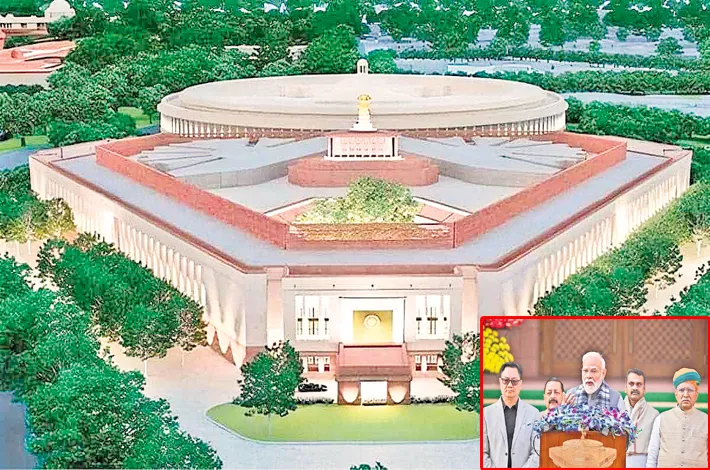
A Congress spokesperson accused the NDA government of “tampering with the dignity of Parliament” by deliberately shortening the session to evade accountability
The winter session of Parliament commenced on Monday with only 15 sittings scheduled until December 19 – one of the shortest in recent years – triggering sharp criticism from the opposition that the government is deliberately “running away” from scrutiny on burning issues ranging from national security, the recent Delhi bomb blasts, crippling air pollution, farmers’ distress, and alleged manipulation of electoral rolls. An all-party meeting convened by Parliamentary Affairs Minister Kiren Rijiju on Sunday saw the opposition, led by Congress, Trinamool Congress, and other INDIA bloc partners, demand extensive debates on a special intensive revision of voter lists in 12 states and Union territories, the deteriorating law and order situation in the national capital, foreign policy setbacks, and the continuing agrarian crisis.
The government, however, has lined up 13 bills for introduction, including two major legislative overhauls- The Atomic Energy (Amendment) Bill, 2025, which will allow private sector participation in nuclear power generation for the first time and The Higher Education Commission of India (Repeal of University Grants Commission Act) Bill, 2025, that seeks to replace the UGC with a new central body to grant greater autonomy to universities while strengthening accreditation and regulatory oversight.
Of the 13 listed bills, only one is a replacement of an ordinance, two have been sent to parliamentary standing committees, and ten have not undergone any pre-legislative scrutiny – a point repeatedly flagged by the opposition as evidence of the government’s “bulldozing” approach. A Congress spokesperson accused the NDA government of “tampering with the dignity of Parliament” by deliberately shortening the session to evade accountability. She alleged that the government “cut” the session to 15 days and push through bills without scrutiny as they know they will be asked tough questions on national security, farmers’ income, pollution, and a foreign policy that has completely collapsed.
BJP leaders however countered that the opposition has “no real issues” and only wants to stall development. They criticized that whenever the opposition speaks, they mock Make in India, demean India’s growth story, and raise baseless points. They reminded that India is the fastest-growing major economy today. “If the opposition speaks sense and present a roadmap for the country, the House will listen,” a BJP leader said.
A political commentator lamented the decline of parliamentary debate. She opined that Parliament is meant for discussion, debate, and decision and expressed her sadness that today, sessions being short, MPs don’t get time even for maiden speeches, and both sides disrupt proceedings. She also lamented that we no longer see the quality of debates we once had with leaders like Piloo Mody, Atal Bihari Vajpayee, or Sushma Swaraj.
A pro Congress political analyst and advocate called the 15-day session “an insult to 1.4 billion Indians”. He questioned that when bureaucrats and ministers work round the year, why can’t Parliament sit for at least 40 days? Terming decisions like privatization of atomic energy and overhauling higher education as “monumental” ones, he argued that passing them in a rushed, ruckus-filled session without debate is undemocratic. At the same time he also suggested that the opposition must also raise relevant, substantive points instead of mere disruptions.
The opposition has warned of strong protests from day one if its demands for discussions on electoral roll manipulation, the Delhi bomb blasts, and pollution are not accommodated under Rule 193 or short-duration discussions. With both sides digging in – the government determined to push its legislative agenda and the opposition vowing to corner it on governance failures – the winter session appears headed for yet another round of logjams, adjournments, and little substantive debate.
As one senior MP remarked off-record, “The temple of democracy is increasingly looking like a battlefield where no one wins – except perhaps the disruption.” Whether the 18th Lok Sabha can break this decade-long cycle of confrontation over conversation will be closely watched when the session begins tomorrow.