13 October, 2026 | 10:23 AM


CBI closes seven-year case , NDTV founders targeted out of “state vendetta”?
02-12-2025 12:00:00 AM
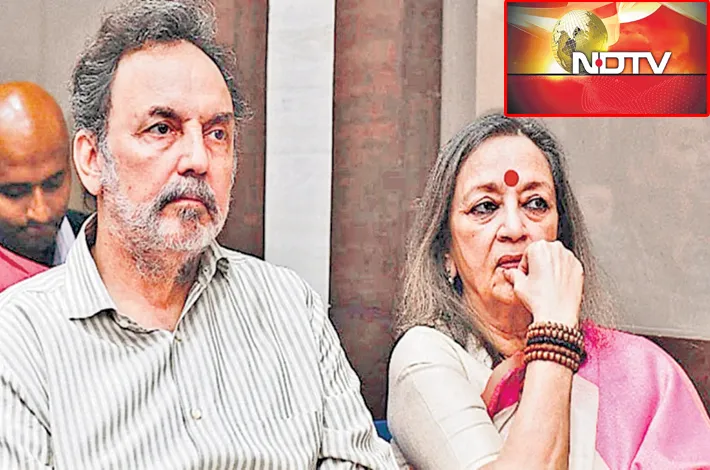
In a significant development that has reignited debate over the use of investigative agencies in high-profile cases, the Central Bureau of Investigation (CBI) has filed a closure report in a Delhi court, stating that no evidence of wrongdoing was found against Prannoy Roy and Radhika Roy, the founders of New Delhi Television Limited (NDTV), in a case registered in 2017.
The case, which alleged that the couple had caused a wrongful loss of Rs 48 crore to ICICI Bank through a loan transaction involving their company, had remained pending for over seven years. During this period, the Roys faced multiple raids, prolonged interrogations, and intense media scrutiny. The closure report effectively brings to an end one of the longest-running corporate-criminal investigations against prominent media personalities in recent Indian history. Social media and the state-aligned media (termed colloquially as Godi Media) consistently presented numerous related "leaks" as sensational revelations in the public discourse to portray this couple as villains.
The CBI’s final report, submitted before Special Judge Arun Bhardwaj at Rouse Avenue Court, reportedly concludes that the transaction in question was a legitimate commercial arrangement and that there was no criminal intent or loss to the bank. Sources familiar with the filing say the agency found the allegations “unsubstantiated” after examining thousands of documents and recording statements of dozens of witnesses.
The case originated in August 2017 when the CBI registered an FIR alleging that NDTV promoters had availed a loan of Rs 366 crore from ICICI Bank in 2008–09 by furnishing inadequate security and later settled it in 2010 at a substantially lower terms, allegedly causing loss to the bank. The agency conducted raids at the residences and offices of the Roys in June 2017, an action that drew sharp criticism from press bodies and civil-society organisations for appearing disproportionate.
Over the next few years, the Enforcement Directorate (ED) also attached assets worth over Rs 100 crore belonging to the Roys and their holding company under the Prevention of Money Laundering Act, further intensifying financial and reputational pressure. The couple underwent marathon questioning sessions spread across several weeks in 2020, with some sessions lasting up to ten hours a day. Legal experts note that the closure comes after a series of judicial setbacks for the investigating agencies. In 2023, the Bombay High Court quashed a separate lookout circular against the Roys, observing that there was no likelihood of them fleeing the country. Earlier, the Supreme Court had also refused to entertain a plea seeking to stall NDTV’s stake sale, noting that commercial disputes should not automatically be converted into criminal cases.
The case took a dramatic turn in August 2022 when the Adani Group, through its subsidiary AMG Media Networks, acquired a 29.18% stake in NDTV via an indirect route involving the conversion of a loan extended in 2009–10 by Vishvapradhan Commercial Private Limited (VCPL) to the Roys. VCPL held warrants that allowed it to convert the debt into equity, giving it control over the promoter holding company RRPR Holding Pvt Ltd. Within months, Adani launched an open offer and eventually secured majority control of NDTV, leading to the exit of the Roys from the board and most of the channel’s senior editorial leadership.
While the transaction was legally cleared by the Securities and Exchange Board of India (SEBI), many commentators at the time described it as a “hostile takeover” enabled by the prolonged legal and financial pressure on the founders. The timing of the CBI closure report – coming three years after the change in ownership – has led to renewed questions about whether investigative agencies were used to soften targets perceived as critical of the government.
NDTV, launched in 1988, had earned a reputation over three decades for independent and often critical coverage of governments across the political spectrum. During the UPA years, it faced criticism from Congress supporters; in the post-2014 period, it was frequently labelled “anti-national” by sections of social media and television channels aligned with the ruling dispensation. Several of its prime-time programmes and reporters became symbols of resistance journalism, even as advertising revenue reportedly dried up for the channel.
The closure report has prompted demands from several quarters for accountability within the investigating agencies. Senior advocates and former judges have called for an independent inquiry into whether the seven-year investigation amounted to “malicious prosecution.” Some have asked whether the Supreme Court to lay down guidelines to prevent the misuse of criminal process in commercial disputes, especially when they involve media organisations.
In its heydays, NDTV set standards for television journalism in India with programmes that combined rigour, decency, and public-interest storytelling. Its founders, both Oxford-educated economists turned broadcasters, were seen as pioneers who professionalised news television at a time when most channels were either state-run or politically owned.
As the CBI formally withdraws the case, the larger questions remain unanswered: How many years of a citizen’s life can investigative agencies consume before concluding there was no crime? When media houses critical of the government face coordinated legal-financial attacks and eventually change ownership, what does it mean for press freedom? And who, if anyone, is accountable for the human and professional cost of investigations that end in closure reports?
For now, a seven-year chapter has closed with the quiet admission that no offence was committed. Whether it opens a larger reckoning about the boundaries between commercial disputes, criminal law, and media freedom is a question only time – and perhaps the higher judiciary – will answer.