18 September, 2026 | 11:59 AM


A 45-Year-Old at the Helm
17-12-2025 12:00:00 AM
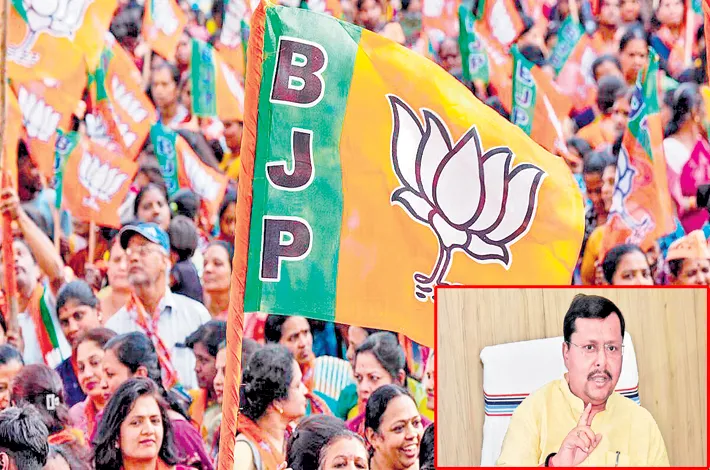
BJP signals a generational shift
A 45-year-old becoming the national working president of India’s largest political party has triggered a loud political debate that goes far beyond one appointment. With Nitin Nabin’s elevation, the Bharatiya Janata Party has deliberately pushed age and leadership into the spotlight, challenging a political ecosystem where power is still largely concentrated among leaders in their seventies and eighties. The move has sparked an intense BJP-versus-Opposition argument on whether Indian politics is finally witnessing a generational churn or merely a cosmetic shift packaged as reform.
In a political landscape dominated by veterans, the age contrast is striking. Congress president Mallikarjun Kharge is 83, NCP-SP chief Sharad Pawar is 85, Trinamool Congress supremo Mamata Banerjee is 70, BSP leader Mayawati is 69, and DMK president and Tamil Nadu Chief Minister M.K. Stalin is 72. Even leaders often described as “young” in opposition narratives, such as AAP convenor Arvind Kejriwal at 57, National Conference leader Omar Abdullah at 55, and Samajwadi Party chief Akhilesh Yadav at 52, are significantly older than Nabin. Against this backdrop, BJP’s decision appears less routine and more like a deliberate political statement.
For the BJP, the messaging is clear. Party leaders and spokespersons have projected Nabin’s rise as proof of an internal culture where performance, organisational work, and grassroots loyalty can trump age and lineage. The appointment is being showcased as evidence that the BJP is willing to hand over critical organisational responsibilities to leaders who still have decades of political runway ahead of them. In an era where opposition parties are often accused of being personality-driven and static at the top, the BJP has seized the opportunity to pitch itself as adaptive, future-oriented, and youth-aligned.
The political sparring intensified when BJP national spokesperson Shehzad Poonawalla publicly contrasted the appointment with Congress’s leadership structure, pointing to internal criticism within the Congress itself about Kharge’s age and youth connect. The subtext of this argument is blunt: while opposition parties debate succession endlessly, the BJP claims to be quietly executing it. For the ruling party, this is not just about age but about projecting a sense of organisational momentum and renewal.
The opposition, however, has dismissed the narrative as clever optics. Congress leaders argue that leadership age alone does not define internal democracy or political effectiveness. They contend that BJP’s electoral dominance stems more from its control over institutions and resources than from any superior organisational model. Critics also point out that real power within the BJP still rests with a tightly controlled top leadership, questioning how much autonomy younger leaders truly enjoy once elevated.
Political analysts see the appointment as part of a broader BJP strategy rather than an isolated decision. Over the last decade, the party has increasingly invested in leaders who can be politically relevant for the long term. The trend became especially visible after the 2023 Assembly elections, when the BJP surprised many by appointing relatively younger, first-time chief ministers in Rajasthan, Chhattisgarh, and Madhya Pradesh, sidelining more senior and established faces. The message then, as now, was that administrative potential and future relevance matter more than seniority alone.
Observers also underline the role of the RSS in shaping this approach. According to analysts, Nitin Nabin’s organisational experience as a five-time MLA and his administrative exposure likely weighed heavily in his favour, along with the ideological vetting that comes with Sangh approval. For the BJP, leadership grooming is not a sudden promotion but a long process involving sustained responsibility within party and government structures.
Yet, the debate has also exposed a more complex reality. Youthfulness in age does not automatically translate into youth appeal. Analysts caution that political connect is shaped by narrative, charisma, and governance outcomes as much as by generational identity. They point out that Prime Minister Narendra Modi, despite being older than many opposition leaders, enjoys strong youth support, while younger leaders across parties have sometimes struggled to build similar resonance.
The contrast with opposition parties remains sharp. Many regional and national parties continue to revolve around towering figures whose authority is rarely challenged internally. While such leaders bring experience, continuity, and loyal vote bases, critics argue that prolonged dominance can stall leadership renewal and discourage internal competition. Supporters counter that stability at the top ensures coherence and protects parties from factionalism.
Ultimately, Nitin Nabin’s appointment has turned into a symbolic battleground. For the BJP, it reinforces a narrative of succession planning, organisational discipline, and long-term thinking. For the opposition, it is an exercise in branding that does not fundamentally alter power equations. For voters, it raises a larger question about whether Indian politics is genuinely opening up space for the next generation or merely rebranding continuity as change.
As the political debate sharpens, one thing is certain: age has become a new axis of political messaging. Whether this translates into deeper generational transformation or remains a headline-friendly contrast will be tested not by appointments alone, but by how much authority, visibility, and impact leaders like Nitin Nabin are allowed to wield in the years ahead.