25 October, 2026 | 5:11 AM


Ancient vegetable prints find new expression
08-02-2026 12:00:00 AM
EKALAVYA MALLEPALLI | Hyderabad
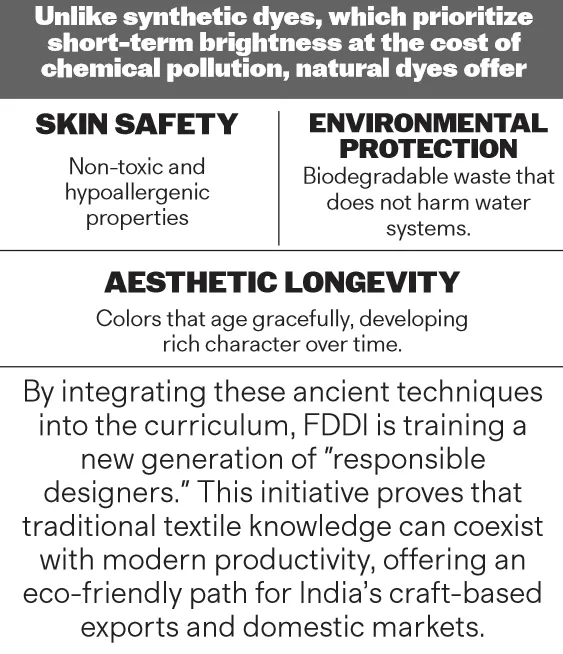
An age-old Indian textile practice is finding a new home in modern academia. The Footwear Design and Development Institute (FDDI) has reintroduced vegetable dye and block printing as essential tools for sustainable design, reconnecting students with India’s rich craft heritage.
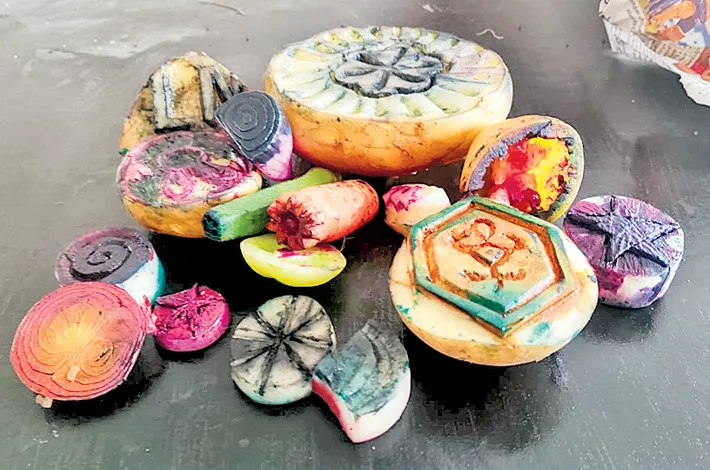
Traditional crafts like Kalamkari, Ajrakh, and Bagru historically relied on colors derived from turmeric, leaves, bark, and even kitchen waste. As part of a recent academic initiative, Dr. Rambabu Muppidi, Senior Faculty in Fashion Design, led a comprehensive demonstration on natural color extraction and fabric treatment. Students worked with cotton, silk, and linen to understand how natural dyes interact with different fibers.
The project showcased the high productivity potential of block printing. This technique requires minimal machinery and low investment, making it an ideal model for: Small-scale units and cottage industries and self-help groups and rural entrepreneurs.
Mass customization
The resulting student work featured organic textures and earthy tones, applied to diverse products including sarees, home furnishings, and fashion accessories as natural dyes are biodegradable and leftover materials can be reused, the process adheres to zero-waste and circular design principles. Speaking to Metro India, Dr. Muppidi emphasized that vegetable block printing is a future-ready solution for the fashion industry.