8 October, 2026 | 12:16 AM


Bangladesh leader likens Hasina regime to ‘terrible tornado’
07-03-2025 12:00:00 AM
Agencies Dhaka
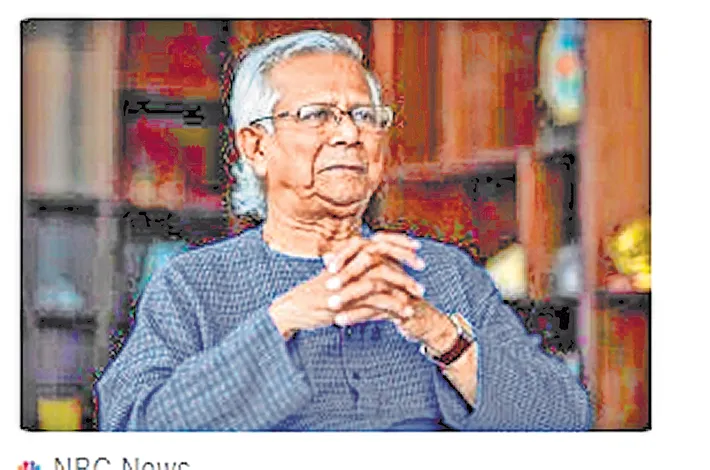
Bangladesh's interim leader says he felt "dazzled" when asked to take charge after long-serving prime minister Sheikh Hasina was driven from power last year. "I had no idea I'd be leading the government," Muhammad Yunus told the BBC. "I had never run a government machine before and had to get the buttons right. "Once that settled down, we started organising things," the Nobel-prize winning economist said, adding that restoring law and order and fixing the economy were priorities for the country.
It's unclear if Hasina, who fled into exile in India, and her party will participate in elections Yunus hopes to hold later this year. She is wanted in Bangladesh for alleged crimes against humanity. "They [the Awami League] have to decide if they want to do it, I cannot decide for them," said Yunus in an interview with the BBC at his official residence in Dhaka.
"The election commission decides who participates in the election." He said: "Peace and order is the most important thing, and the economy. It's a shattered economy, a devastated economy. It's as if there's been some terrible tornado for 16 years and we're trying to pick up the pieces."
Sheikh Hasina was elected prime minister in 2009 and ruled Bangladesh with an iron fist. Members of her Awami League government ruthlessly cracked down on dissent. There were widespread allegations of human rights violations and the murder and jailing of political rivals while she was prime minister. A student-led uprising forced Ms Hasina from office in August. At the behest of protesters, Yunus came back to Bangladesh to lead the new interim government.
He says he will hold elections between December 2025 and March 2026, depending on how quickly his government can institute reforms he believes necessary for free and fair elections. "If reforms can be done as quickly as we wish, then December would be the time that we would hold elections. If you have a longer version of reforms, then we may need a few more months."
"We are coming from complete disorder," he said, referring to the violent protests that engulfed Bangladesh last summer. "People getting shot, killed." But almost seven months on, people in Dhaka say law and order has not yet been restored, and that things are not getting better. "Better is a relative term," he said. "If you are comparing it to the last year for example at the same time, it looks okay. What is happening right now, is no different than any other time."
Yunus blames many of Bangladesh's current woes on the previous government. “I am not supporting that these things should happen. I'm saying that, you have to consider, we are not an ideal country or an ideal city that suddenly we made. It's a continuum of the country that we inherited.”