17 October, 2026 | 11:17 AM


“Beyond Rankings, Towards Real Careers” Emerges as a Guidance for Next Gen of Engineers
11-05-2026 12:00:00 AM
ST. PETER’S ENGINEERING COLLEGE
From industry-ready training to innovation-driven education, SPEC positions itself as a strong choice for aspirants
HEMA SINGULURI | Hyderabad
At a time when engineering aspirants seek institutions that provide not just degrees but also employability, innovation, and career guidance, St. Peter’s Engineering College (SPEC), Hyderabad, has emerged as one of the city’s promising autonomous engineering institutions. Established in 2007 across a 10-acre campus, the college has gained recognition for combining academic excellence, placements, research opportunities, and industry-oriented training under one roof.
Approved by AICTE and affiliated with JNTUH since inception, SPEC received UGC Autonomous Status in 2020. The institution earned NAAC ‘A’ Grade accreditation in 2018 and has maintained continuous NBA accreditation since 2016 for its CSE, ECE, and EEE programmes. In the field of innovation and research, SPEC secured a 3.5-star rating from the Ministry of Education’s Institution Innovation Council and was placed in the 151–300 band in the NIRF Innovation Rankings 2023. In 2024, it also became an ISRO-IIRS Nodal Centre for Remote Sensing and Geospatial Technologies. JNTUH further recognized the EEE department as a Research Centre for Ph.D. programmes.
The college offers B.Tech programmes in Civil Engineering, CSE, CSE (Cyber Security), CSE (Data Science), CSE (AI & ML), AI & Data Science, CSE (Design), ECE, EEE, IT, and Science & Humanities. SPEC has 59 Ph.D.-qualified faculty members, including four postdoctoral scholars, and over 10 recognized Ph.D. supervisors under universities such as JNTUH, SR University, Dr. M.G.R University, and GG University.
Over the last five years, the college recorded 2300+ placements through 230+ placement drives, with the highest package reaching 24 LPA. More than 3000 alumni work in global MNCs, while students have launched 40+ startups, participated in 250+ competitions and hackathons, and contributed to 734 publications. Industry collaborations with Microsoft, Infosys, Movate, ICT Academy, Eduskills, TASK, IDS-Corporate, and Instacs further strengthen practical learning and employability training.
“Placement Training and Infrastructure Are Our Biggest Strengths”
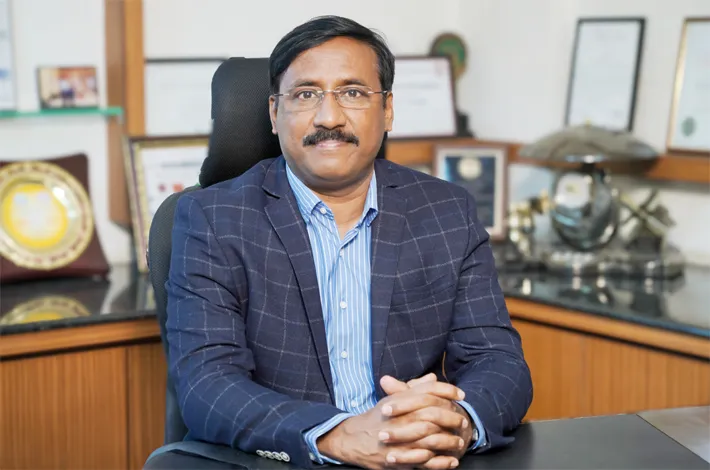
Secretary, and Correspondent T. Vijaypal Reddy believes the consistent growth of the college is rooted in a simple formula, quality education supported by practical exposure.
“The placement training and the infrastructure shaping according to the student’s needs and requirement for better future results with quality of the faculty and their teaching are the main key factors we follow,” he said.
According to him, the institution places equal importance on academics, sports, placements, faculty quality, and overall student development. He stressed that engineering education today should move beyond trends and focus on passion-driven career choices.
“Students must be explored through different options which they are passionate about instead of choosing new courses or common, popular courses blindly,” he observed.
Speaking on the rapid growth of Artificial Intelligence and emerging technologies, Vijaypal Reddy pointed out that students and institutions are both facing changing realities. He explained that AI growth itself does not directly impact colleges as much as the decisions students make while choosing courses.
“Students must realize the importance of choosing the courses, as it also depends on if there is a proper consistent faculty and syllabus for it and the skills it provides as the decision directly impacts on getting an occupation,” he added.
He highlighted that curriculum changes cannot happen overnight despite the emergence of new specializations every month.
“80 percent of the syllabus cannot be changed every time and only 20 percent changes with lots of thorough thought,” he explained.
He further noted that introducing new subjects into the curriculum requires approvals, discussions, and academic planning.
Dedicated Set of Soft Skills Trainers for Every Student
One of the major highlights at SPEC is its dedicated focus on soft skills and placement readiness. According to the chairman, the institution has appointed a separate team of trainers exclusively for soft skills development.
“Especially for soft skills, a separate set of trainers working solely to prepare students with proper soft skills and required training for Jobs and future is appointed and followed,” he said.
Regular workshops with industry experts, hackathons, and interaction sessions are also conducted to prepare students for real-world corporate environments.
Interestingly, Vijaypal Reddy believes rankings alone cannot define educational quality. “We prefer actual learning outcomes of the students rather than the rankings which may decide the college status but not the quality of the education and the skills/services provided,” he remarked, while also stressing the importance of patent confidentiality and responsible innovation.
With nearly 70 percent of students benefiting from fee reimbursement schemes, the college also encourages students to choose courses carefully after proper guidance and career counselling.
“Future Is in the Core”
The chairman expressed concern over the increasing rush toward Computer Science courses despite rising unemployment among graduates.
“30% out of 100 are getting the jobs in computer science, yet students are opting computer science solely based on other’s reference or the common suggestion,” he noted.
He advised students to explore sectors such as ECE, civil, finance, and core engineering fields where demand is expected to rise due to developments like chip manufacturing and industrial expansion.
“Future is in the CORE which students must research and gain knowledge, information,” he asserted.
Summing up the institution’s long-term vision, Vijaypal Reddy explained that SPEC follows the principle of “Study – Courses – Industry” to bridge the gap between education and employment.
“We are trying to match the supply and demand in the industry for the students,” he said, adding, “Students must do the course if they passionately want to do it, not to follow others.”