17 October, 2026 | 12:10 PM


VCET Blends Industry Exposure, Soft Skills and Innovation to Students’
11-05-2026 12:00:00 AM
TOP ENGINEERING COLLEGES
VCET positions itself as a bridge between classroom learning and real-world industry demands through in-house excellence and external collaboration
HEMA SINGULURI | Hyderabad
Visvesvaraya College of Engineering & Technology (VCET) is steadily emerging as a prominent institution in Telangana’s engineering education landscape, with a clear focus on combining in-house training strength with external industry exposure to prepare students not just for jobs, but for nation-building roles.
Established in 2007 under the Jawahar Educational Society, VCET was founded with the vision of delivering world-class, affordable, and industry-oriented technical education to students from Hyderabad and surrounding regions. The institution carries forward the legacy of earlier educators who established the Sree Visvesvaraya Institute of Technology and Science in 1998.
Named after the legendary engineer Sir M. Visvesvaraya, the college reflects his ideals of discipline, innovation, and service. Located at Bongloor X Roads, M.P. Patelguda Village, Ibrahimpatnam, Ranga Reddy District, VCET operates from a green, spacious campus designed to promote holistic learning and innovation.
The institution is approved by AICTE and affiliated to Jawaharlal Nehru Technological University Hyderabad (JNTUH). It currently offers B.Tech, M.Tech, and MBA programs across multiple disciplines.
A major milestone came in 2023, when VCET secured NAAC ‘A’ Grade accreditation, recognizing its academic quality, infrastructure, governance, and student outcomes. In 2024, the institution achieved UGC Autonomous Status, enabling it to independently design curriculum aligned with evolving industry needs.
Today, VCET hosts over 1,800 students supported by 100+ experienced faculty members and researchers, many of whom are trained from premier institutes including IITs and NITs.
“Industry Integration from Day One” – Chairman’s Vision
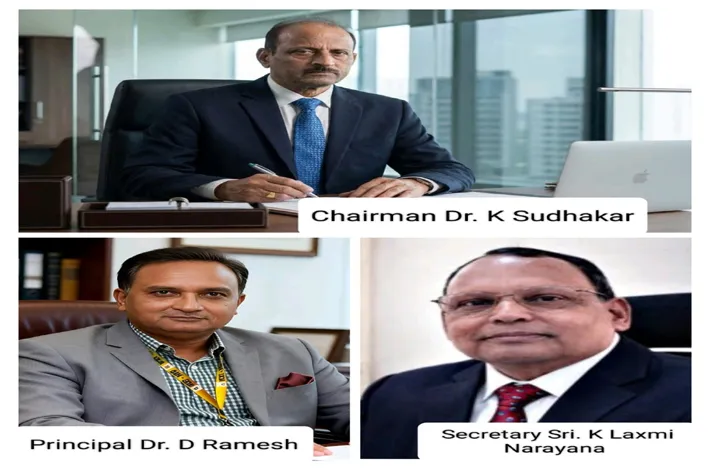
Chairman Dr. K. Sudhakar emphasized that VCET was founded by “well-known and successful people” with a mission to extend affordable education to rural students. He noted that the institution “started small and gradually expanded courses,” and now offers 9 undergraduate and 3 postgraduate programs.
A strong focus is placed on modern teaching methodologies, including updated tools, practical learning, and field visits right from the first year.
From the second year onward, students undergo structured soft skills development, ensuring they are not just technically strong but also confident communicators.
Dr. Sudhakar highlighted the importance of campus recruitment training, internships, and MOUs with higher-level institutions, adding that the college regularly interacts with industry experts to revise curriculum according to current trends.
He explained, “Even if students have skills, they are unable to present them properly. That is why we focus on motivational lectures and soft skills training to build confidence.”
VCET also houses a Center of Excellence, equipped with high-configuration computers, where industry-driven skill programs are conducted regularly.
The Chairman further stated that students are encouraged to physically visit the campus rather than rely only on online information, warning that “propaganda and ads can sometimes be misleading.”
He added that students often look for shortcuts in emerging technologies, but must be exposed to broader learning opportunities for long-term success.
The institution’s long-term vision includes strengthening its NAAC A Grade status, maintaining it for five years, and progressing toward deemed university status.
Academic Expansion & Institutional Growth
The Secretary, Laxmi Narayana, highlighted ongoing CRT programs, soft skills workshops, and technical training sessions including Python and other programming tools. The college also collaborates with organizations like TASK, bringing training expertise from cities like Bengaluru and Maharashtra.
VCET now offers structured academic growth with updated curriculum aligned to autonomous status. The institution continuously adapts courses based on industry requirements and emerging technologies.
Facilities include advanced laboratories, regular staff training, and student development programs. Regular Class Representative (CR) meetings are conducted to ensure student well-being.
Depth, Discipline & Placement Focus
Principal Dr. D. Ramesh stated that VCET’s consistent growth is driven by strong focus on academics, emerging technologies, training, and placements.
He emphasized that the institution is an autonomous college with a detailed syllabus structure, ensuring depth of subject learning.
A key feature includes one faculty member per 20 students, allowing personalized academic attention.
Specialized branches with optional AI-based minor degrees are offered, allowing students to explore new-age technologies.
He added that the college blends in-house and external training from IIT and NIT-qualified faculty, with equal importance given to communication skills, verbal reasoning, and soft skills.
He finally noted “Join as a student, shape your future and build the nation.”
VCET positions itself not just as an engineering college but as a complete ecosystem of learning, discipline, and industry readiness, combining academic strength with practical exposure to prepare students for global challenges.
In addition to the academic and training framework already highlighted, VCET follows the standard Telangana engineering admission process, where most undergraduate seats are filled through TS EAMCET counselling, along with other approved entrance routes as per regulations.
The autonomous curriculum structure also enables inclusion of add-on certification courses and value-added training modules aligned with industry certifications in areas like programming, cloud fundamentals, and emerging technologies.
The college environment also typically integrates statutory support cells including anti-ragging committees, grievance redressal mechanisms, and student development or entrepreneurship cells, along with government scholarship facilitation. An active alumni network and industry linkage initiatives further support placements, internships, and higher education opportunities for graduating students.