3 October, 2026 | 4:58 PM


Centre Mandates Full Vande Mataram in Schools and Government Events
13-02-2026 12:00:00 AM
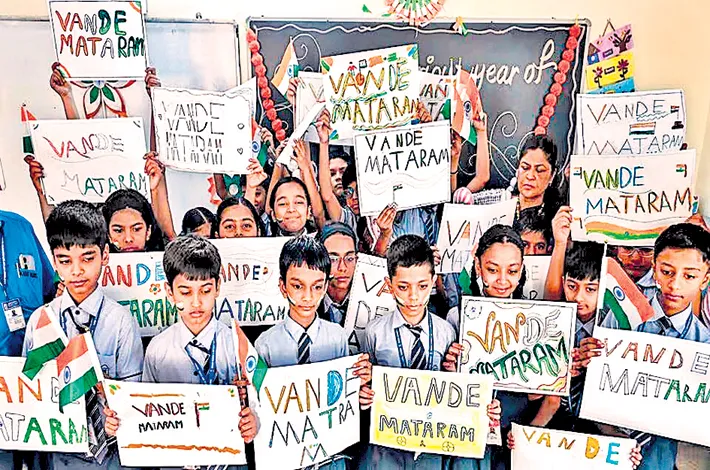
New Protocol Makes Vande Mataram Central Before Jana Gana Mana
A major cultural change is now sparking debates online as, the Union Ministry of Home Affairs (MHA) has issued new national protocol guidelines that make the full six‑stanza rendition of India’s National Song Vande Mataram mandatory at all government functions and in schools across the country.
Under the directive dated February 6, 2026, the song – written by Bankim Chandra Chattopadhyay in the late 19th century, must be sung in full before the National Anthem, Jana Gana Mana whenever both are played together.
The official version, restored in its entirety for the first time in decades, is expected to last 3 minutes and 10 seconds and is now prescribed for state functions, civilian award ceremonies such as the Padma awards, flag‑hoisting events, school assemblies, and public gatherings attended by dignitaries. The guidelines also require the audience to stand respectfully during the song’s performance, aligning its ceremonial observance more closely with that of the National Anthem.
The directive forms part of nationwide commemorations marking the 150th anniversary of Vande Mataram, underscoring its historical significance as a patriotic song tied to India’s freedom movement and cultural identity. However, it also represents a major shift from earlier protocols that commonly used only the first two stanzas of the song for official purposes.
Government spokespeople say the move ensures uniform decorum and respect for national symbols and reinstates the song in its original form to honor its historical roots and cultural resonance. Schools are encouraged to begin their day with community singing of the National Song, boosting awareness among students of India’s literary and patriotic heritage.
Supporters across some social platforms have described the move as a reaffirmation of national pride and an effort to strengthen respect for India’s heritage. Many commentators have highlighted the song’s emotional role during the independence movement and see its full rendition to reconnect younger generations with that legacy.
However, Critics and minority organizations have voiced concerns that the mandatory order could conflict with individual freedom of belief. Jamiat Ulama‑i‑Hind, a prominent Muslim organization, strongly criticized the decision as “unilateral and coercive,” claiming that requiring all six stanzas – some of which contain imagery related to the land and divine mother figures, may contradict the beliefs of monotheistic religions and infringe on freedom of religion protected under the Constitution. Political opposition parties have also weighed in: some brand the guidelines a form of cultural overreach or an ideological move, while others defend it as a rightful reclamation of a historically significant song.
Unlike the National Anthem, Vande Mataram does not currently enjoy explicit constitutional protection under the Prevention of Insults to National Honour Act, 1971. This has fueled debate among legal scholars and commentators on whether similar statutory safeguards should extend to the National Song as well. Observers note that discussions on statutory protection have been ongoing in policy circles.