16 October, 2026 | 12:58 PM


Given its track record, can the Congress pull off a solo act?
15-05-2026 12:00:00 AM
Insight
BHAVDEEP KANG :
* Judging from the trends of the last three general elections, the Congress cannot hope to gain a three-digit tally without the support of allies
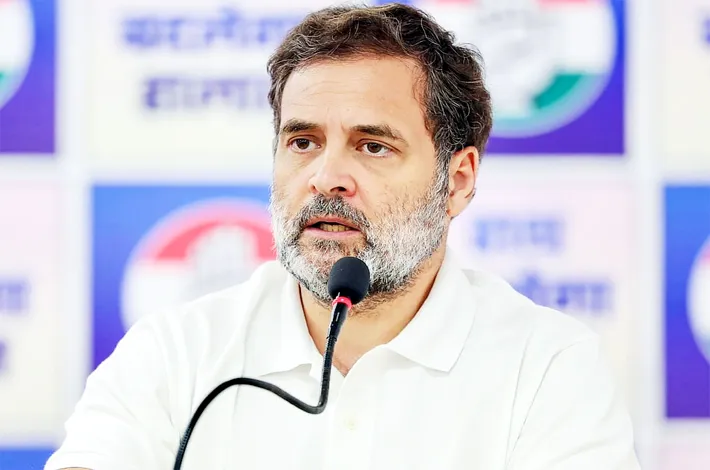
Congress MP Rahul Gandhi’s recent speech claiming “Only the Congress can defeat the BJP” is directed at his party’s regional allies. He declared that none of them were capable of taking on the ruling party: “All the other parties will not be able to stand against them (the BJP); they will not be able to unite, and only the Congress will be left standing, and we will defeat them.” The statement can be read as sheer grandiloquence or as an admonition to regional parties to fall in line.
Gandhi was making two points. First, that the ideological battle was purely between the Congress and the BJP, because there were “only two ideologies” in diametric opposition. By implication, the regional parties are ideologically flexible and prone to alliances of convenience. Second, he was questioning the ability of the regional parties to take on the BJP, given the fact that they have fallen like dominos since the 2024 general elections: the Shiv Sena (UBT) and the NCP (SP) in Maharashtra, the RJD in Bihar, the AAP in Delhi, the TMC in West Bengal, and the DMK in Tamil Nadu.
The renewed rhetoric about ‘going it alone’ is being heard in Congress circles, signalling not just confidence in the wake of a comprehensive win in Kerala and the prospect of a place in the Tamil Nadu government after 55 years but hope that India’s fragmented polity will be restructured into a polar scenario, with anti-BJP forces consolidating around the Congress.
Opposition unity has historically been an unstable construct. The Congress and Trinamool have a contentious history, with the result that the former has rejected Mamata Banerjee’s post-poll call for a united front against the BJP. The unsubstantiated but widely disseminated rumour that the Left cadres aided the BJP in West Bengal further undermines Opposition unity. For its part, the Congress lost no time in dumping the DMK for the TVK, prompting Samajwadi Party leader Akhilesh Yadav’s jibe about abandoning allies in difficult times. The DMK, piqued at being “backstabbed”, demanded social distancing from the Congress in Parliament. Nor is all hunky dory with the Jharkhand Mukti Morcha; the alliance did not hold in Bihar and Assam, and Congress leaders have repeatedly—and publicly—criticised the Jharkhand government’s functioning.
While the Congress perceives the regional parties as ineffective against the BJP, the reverse may also be true. The fact is that the Congress, since the formation of the INDIA alliance in June 2023, has wrested just one state from the BJP (Telengana), while losing two Congress-ruled states to the BJP (Chhattisgarh and Rajasthan). Prior to that, it had taken Karnataka and Himachal Pradesh away from the BJP, which gave it some leverage with its allies. Its victory in Kerala is less significant, given that the state was already Opposition-ruled, and merely changed hands from one INDIA partner to another.
Against this backdrop of electoral failures and tensions with allies, Gandhi can either be lauded for his unending optimism or satirised for being out of touch with reality. In 2024, his party’s tally in 75 seats across six states was zero, and in another 100 seats across 4 states, it was one. So, in 175 seats in 10 states, it has been a non-starter in the last three general elections. The only two states where its tally went beyond single digits were Maharashtra and Kerala.
The role of the allies in reducing the BJP (but not the NDA) to a minority in the Lok Sabha cannot be overstated. The coalitions in UP and Maharashtra cost the BJP 32 seats—the exact number it needed to reach the halfway mark on its own. Of the Congress tally of 99 seats in 2024, at least 20 were obtained as a junior partner in an alliance and 22 in competition with INDIA allies. Notably, with the exception of Tamil Nadu, its strike rate was poorer than that of the regional parties. For example, in Uttar Pradesh, the SP won 60% of the seats it contested, while the Congress won only one in three.
The results also pointed to the fact that even though the Congress perceives itself as the BJP’s challenger, in all the states where the two parties are in direct competition, the BJP is at an overwhelming advantage. Judging from the trends of the last three general elections, the Congress cannot hope to gain a three-digit tally without the support of allies. Three- or four-cornered contests generally work in the BJP’s favour.
The Congress, which has the largest footprint of any party apart from the BJP, sees itself as the natural leader of any national-level alliance, even if it is the junior partner in UP, Bihar, TN, and Jharkhand. Therein lies the rub. Regional parties see the Congress either as riding on their coattails or as part of the opposition in their states. Why should they knuckle under to the Congress, unless it proves capable of containing the BJP?
The two parties will go head-to-head in Gujarat, Uttarakhand, Himachal Pradesh, Manipur, and Goa in 2027.
With the economy facing headwinds, owing to geopolitical conflict, and consumers feeling the pain of higher fuel prices and cooking gas shortages, the Congress should be able to make significant gains. Only then can it stake its claim to lead a coalition in 2029.
Bhavdeep Kang is a senior journalist with 35 years of experience in working with major newspapers and magazines. She is now an independent writer and author.