6 October, 2026 | 9:41 AM


Glaciers lost 7 trillion tons of ice since 2000
22-02-2025 12:00:00 AM
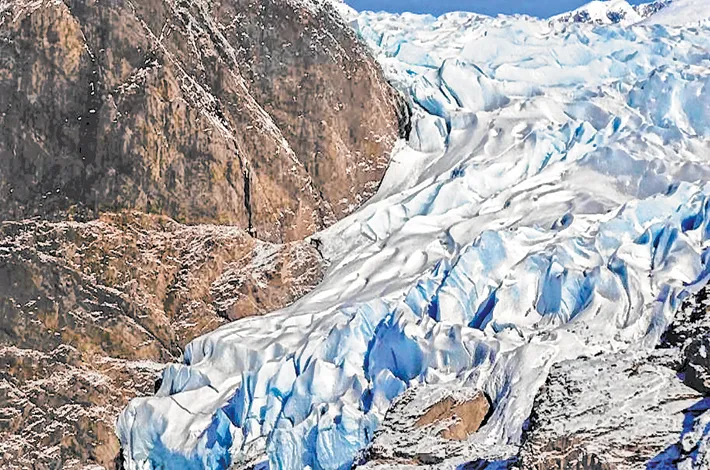
Agencies glaciers
World’s mountain glaciers are shrinking more than twice as fast since the early 2000s due to climate change, according to a study published in Nature. The world’s glaciers lost ice at the rate of about 255 billion tons (231 billion metric tons) annually from 2000 to 2011, but that quickened to about 346 billion tons (314 billion metric tons) annually over about the next decade.
In the last few years, the melt has accelerated even more, hitting a record 604 billion tons (548 billion metric tons) lost in 2023, the last year analyzed. In all, the world’s glaciers have lost more than 7 trillion tons of ice (6.5 trillion metric tons) since 2000, according to the study.
“The glaciers are indeed retreating and disappearing as we said they would. The rate of that loss seems to be accelerating,” said William Colgan, a glaciologist for the Geological Survey of Denmark and Greenland and one of about 60 authors of the study.
Glaciers in Alaska are melting at the fastest rate of any of the 19 regions studied, losing about 67 billion tons (61 billion metric tons) of ice a year, producing the biggest net ice loss, the study found. In the past 24 years, Central Europe’s glaciers have lost the highest percentage of ice of any region, now 39% smaller than they were in 2000, the paper said.
The Alps have shrunk so fast that they could eventually disappear, Colgan said. “Glaciers are apolitical and unbiased sentinels of climate change, and their decline paints a clear picture of accelerated warming,” said Gwenn Flowers, a professor of Earth Sciences at Simon Fraser University in Canada, who wasn’t part of the study
University of Colorado ice scientist Ted Scambos, who also wasn’t part of the study, said: “It’s due to greenhouse gas increases caused directly by coal, oil, and natural gas burning. ... No amount of rhetoric, tweeting, or proclamation will change that.”