23 October, 2026 | 9:53 AM


How six dreamers built HCL on belief alone
13-08-2026 12:00:00 AM
Barsati to Boardrooms
Ajai Chowdhry I new delhi
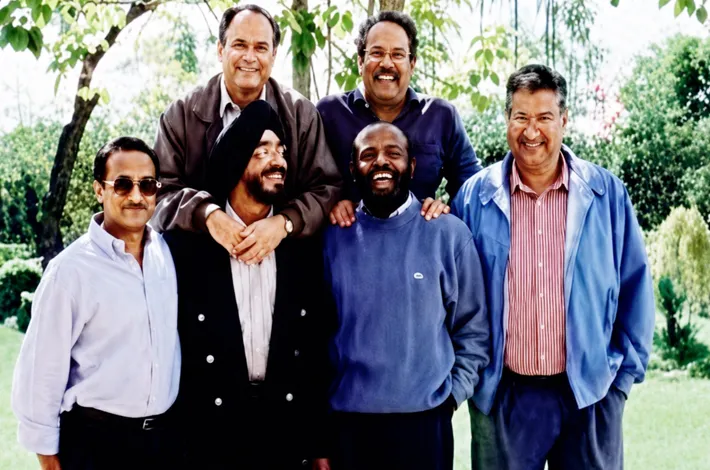
In 1976, six young men in India walked away from secure jobs with little more than conviction and a shared belief that the microprocessor would reshape the world. Shiv Nadar, Arjun Malhotra, Yogesh Vaidya, Subhash Arora, D.S. Puri and their colleague pooled resources, borrowed funds and, in one instance, sold a car to raise Rs 1.87 lakh. They opened a modest barsati office in Golf Links, Delhi, and named their venture Microcomp. Their goal was straightforward and ambitious: to build an Indian computer at a time when most people in the country had barely heard of the machines. Startups were rare. Venture capital did not exist.
Banks showed scant interest in lending to entrepreneurs without collateral. Manufacturing licences remained tightly controlled. The six founders lacked the required permit, a barrier that could have ended the effort before it began. They approached UP Electronics Corporation, which held the licence. The partnership combined official authorisation with technical know-how and produced Hindustan Computers Limited, or HCL. What followed ranked among the boldest early decisions. The company began marketing a computer that was still under design.
Sales teams carried only a brochure and a mock-up. They travelled across the country, explaining the potential of technology few customers had ever seen or used. The first confirmed orders arrived from IIT Kharagpur and IIT Madras. Academic institutions proved more receptive than commercial buyers. The harder test came in the marketplace. In Coimbatore, the HCL team competed against DCM DP, a larger and better-established rival, for an order from Premier Mills. While the competitor presented its case, the HCL representatives waited in the reception area. When their turn arrived, they secured the contract. That single success generated five additional orders, then ten. Momentum grew through persistence rather than superior resources or brand recognition.
The early culture at HCL reflected the founders’ restlessness. They searched constantly for gaps in the market. They recruited people who displayed what they described as a “cowboy” spirit—individuals willing to improvise, take initiative and treat obstacles as temporary.
Technology, they insisted, had to remain useful and accessible rather than intimidating. Machines needed to solve practical problems for Indian organisations instead of simply copying foreign designs. Within four years the company expanded beyond India, establishing a presence in Singapore. From the cramped barsati in Delhi, operations scaled into a global technology enterprise.
Over the following decades HCL moved from building some of India’s earliest indigenous computers to delivering a wide range of products and services across continents. The technology itself advanced far beyond anything the founders could have pictured in 1976. Computing power multiplied, software ecosystems expanded and digital infrastructure became central to business and daily life.Fifty years after those first steps, the anniversary invites reflection on the original conditions. Six people sat together in 1976 and asked whether an unproven idea could succeed without capital markets, manufacturing licences or widespread customer familiarity with computers.
They worked from a barsati. They sold from a brochure and a mock-up of a machine that did not exist at the moment of the pitch. They knocked on successive doors until orders materialised.That sequence forms the core of the HCL story. The company never possessed the largest balance sheet or the most established brand in its formative period. It operated without the smoothest regulatory path. Progress came from identifying openings, hiring for initiative and maintaining pressure on the next opportunity. The same outlook guided the move into international markets and the later evolution into a major technology group.
Today HCL stands as a global organisation whose reach and capabilities would have seemed distant in the mid-1970s. The hardware and software of the present era bear little resemblance to the early systems the founders designed and sold. Processing speeds, storage capacity, connectivity and applications have transformed. Organisations rely on digital tools in ways unimaginable when the barsati office first opened. The underlying approach has remained consistent. The founders and those who followed continued to emphasise large ambitions, calculated risk and the determination to keep aspiring.
The anniversary message captures that continuity: dream big, take the risk and, above all, just aspire. The journey from six people and Rs 1.87 lakh to a worldwide technology company illustrates how a combination of technical belief, commercial persistence and organisational culture can convert an improbable start into sustained growth. The Premier Mills order, the early IIT contracts, the Singapore expansion and the long sequence of subsequent milestones all trace back to the same foundation. A small team refused to wait for ideal conditions. They assembled limited capital, secured a manufacturing partnership, marketed a product still in development and built a sales process capable of overcoming scepticism. They hired for energy and adaptability.
They treated technology as a practical instrument rather than an exclusive domain. Half a century later, the physical traces of the barsati and the original mock-ups have long disappeared. The company occupies a different scale and operates in a transformed industry. What endures is the record of those initial decisions and the culture they established. The story of HCL’s first fifty years remains, at its centre, the account of six colleagues who left conventional employment, pooled their resources and set out to make computers relevant in India. Their successive choices—partnership, pre-emptive selling, restless expansion and an insistence on accessibility—turned a constrained beginning into a lasting enterprise. Happy 50th, HCL. The journey continues.
50th year of HCL
The anniversary message captures that continuity: dream big, take the risk and, above all, just aspire. The journey from six people and Rs 1.87 lakh to a worldwide technology company illustrates how a combination of technical belief, commercial persistence and organisational culture can convert an improbable start into sustained growth