14 October, 2026 | 12:26 AM


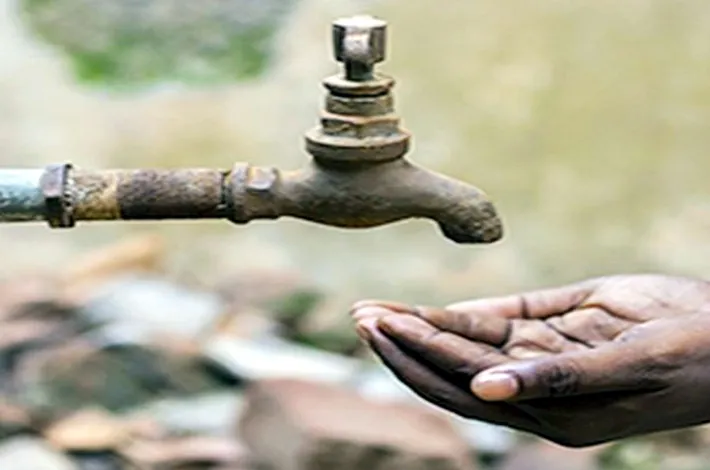
Hyderabad reels under severe water crisis
02-07-2026 12:00:00 AM
metro india news I hyderabad
The city is facing one of its worst drinking water crises in recent years, with nearly 12,000 borewells in apartments and residential complexes running dry by the end of summer, according to internal estimates of the Hyderabad Metropolitan Water Supply and Sewerage Board (HMWSSB). Delayed monsoon rains and rapidly declining groundwater levels have sharply increased dependence on water tankers across the city.
Demand for tanker water has surged to nearly 20,000 bookings a day, particularly in IT hubs such as Gachibowli, Kondapur, Manikonda and Miyapur, where many apartment complexes now rely entirely on tanker supplies. Private operators are reportedly charging between ₹1,500 and ₹2,500 per tanker, while residents complain that government tankers often take three to five days to arrive.
The city's key water sources—Osman Sagar, Himayat Sagar, Singur and the Manjira system—are witnessing declining storage. Although supplies continue from the Krishna and Godavari projects, leakages and distribution delays have left several suburban colonies receiving water less than once a week.
Hyderabad requires about 750 million gallons per day (MGD), but the Water Board is currently supplying only around 620 MGD, leaving a substantial deficit. With borewells failing, dependence on tanker services has reached record levels.
Experts attribute the crisis to inadequate rainfall, unchecked urbanisation, excessive concretisation and poor implementation of rainwater harvesting. They have called for lake protection, groundwater recharge and long-term conservation measures.
The shortage has also spread to the erstwhile Medak district, a key drinking water source for Hyderabad. Groundwater levels in several mandals have fallen by 3.5 to 4.5 metres compared to last year, with borewells drying up in Zaheerabad, Narayankhed, Gajwel and Dubbak. Storage in the Singur Project and Manjira Barrages has fallen close to dead storage, affecting hundreds of villages. In the industrial belt of Patancheru and Bollaram, groundwater contamination has worsened the crisis, forcing families to spend up to ₹3,000 a month on tanker water. Residents have also alleged that private operators are illegally extracting groundwater and selling it at inflated prices, while accusing authorities of failing to curb the growing illegal water trade amid the deepening water emergency.
June ends, reservoirs still await inflows
Despite the arrival of the southwest monsoon and scattered heavy rain across Telangana, the state's major reservoirs are yet to receive the substantial inflows needed to improve storage. As June ended, key projects including Srisailam, Nagarjuna Sagar, Sri Ram Sagar, Singur and Nizam Sagar remained well below expected levels. While inflows have increased marginally, the absence of major flood flows has slowed reservoir filling ahead of the kharif season.
Adding to the concern, the India Meteorological Department (IMD) has forecast below-normal rainfall across the country in July after June recorded a significant rainfall deficit, particularly over central India. Experts warn this could reduce rainfall in the upper catchments of the Krishna and Godavari rivers, which feed Telangana's major irrigation projects.
Officials said rainfall within Telangana alone cannot significantly improve storage in large reservoirs. Krishna basin projects depend mainly on rainfall in Karnataka and Maharashtra, while Godavari basin reservoirs rely on Maharashtra's catchments. Local rain mainly replenishes tanks and groundwater.
July is crucial for kharif cultivation of paddy, cotton and maize. If rainfall remains below normal in the upper catchments, reservoir storage may not improve sufficiently to support irrigation, affecting canal water releases and crops across lakhs of acres.
Officials said the next two to three weeks will be critical. Successive low-pressure systems over the Bay of Bengal bringing widespread rain to Maharashtra and Karnataka could quickly boost inflows, as witnessed in previous years. Until then, the government is expected to regulate water releases cautiously to balance irrigation, drinking water and power generation needs.