16 October, 2026 | 6:06 AM


India imposes anti-dumping duty on two Chinese products
28-12-2025 12:00:00 AM
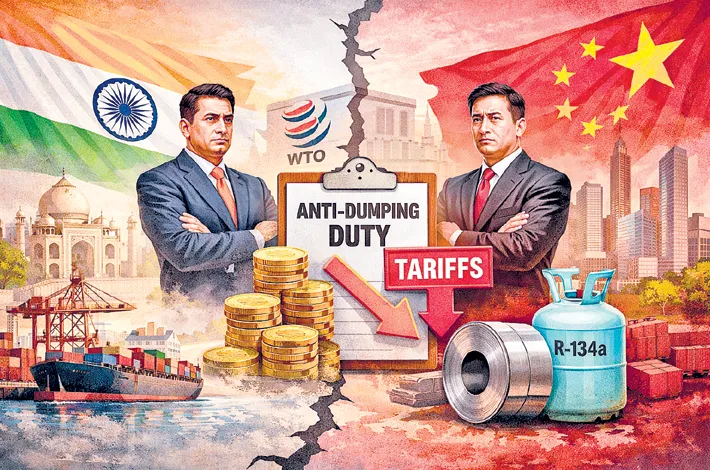
These duties were imposed as these products — cold-rolled non-oriented electrical steel, and 1,1,1,2-Tetrafluoroethane or R-134a — were exported to India from China at below normal prices. India has imposed anti-dumping duty on two Chinese goods, a refrigerant gas and certain kinds of steel products, during the month so far to guard domestic players from cheap imports from the neighbouring country.
On steel goods, India has imposed $223.82 per tonne on certain Chinese firms, while on few others $415 per tonne was imposed for five years, according to a finance ministry notification. On the gas, up to $5,251 per tonne was slapped for five years.As per a separate notification, India said it has imposed anti-dumping duty on imports of 'Calcium Carbonate Filler Masterbatch' exported from Vietnam. It is widely used in plastic industry. These duties are imposed after the commerce ministry's investigation arm Directorate General of Trade Remedies (DGTR) has conducted probes separately for each of these items and recommended the duty.Anti-dumping probes are conducted by countries to determine whether domestic industries have been hurt because of a surge in cheap imports.
As a countermeasure, they impose these duties under the multilateral regime of the Geneva-based World Trade Organisation (WTO). The duty is aimed at ensuring fair trading practices and creating a level-playing field for domestic producers vis-a-vis foreign producers and exporters.India, China, and Vietnam are members of the WTO.India has already imposed anti-dumping duties on several products to tackle cheap imports from various countries, including China.Imposition of high tariffs by the U.S. on several countries have led to dumping of goods in countries like India.
Impact on Indo-China relations
India’s imposition of anti-dumping duties on select Chinese steel products and refrigerant gas is likely to add another layer of strain to already complex India–China economic relations, without triggering an immediate confrontation. New Delhi has framed the move strictly within WTO rules, signalling that the action is defensive rather than punitive, aimed at protecting domestic industry from unfair pricing amid global trade distortions caused by U.S. tariffs. This legal, rules-based approach limits China’s scope for retaliation and helps India project itself as a responsible trade actor.
However, from Beijing’s perspective, repeated trade remedies against Chinese exports reinforce concerns about shrinking market access in India. Over time, such measures could deepen mutual distrust and reduce momentum for trade normalisation, even as bilateral trade volumes remain high. Strategically, the duties underscore India’s broader push for economic self-reliance and supply-chain resilience, subtly aligning trade policy with geopolitical caution. While unlikely to derail diplomatic engagement, these actions keep economic frictions simmering in the background of India–China relations.