22 October, 2026 | 6:47 AM


India Inc pushes big for big capex-led push
14-01-2026 12:00:00 AM
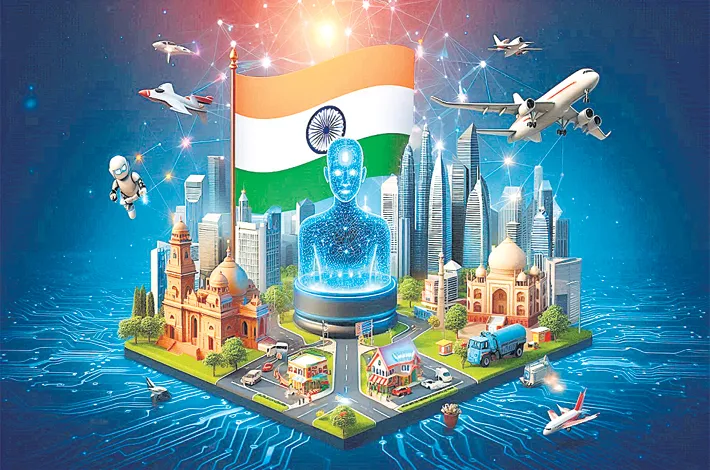
With the Union Budget 2026 just weeks away, corporate India has turned up the pressure on North Block with an expansive wish list that places infrastructure, manufacturing revival and artificial intelligence at the centre of India’s growth story. Industry bodies, led by the Confederation of Indian Industry, have made detailed submissions to the Finance Ministry, arguing that a strong capex-led push is non-negotiable in a world marked by geopolitical uncertainty, slowing global demand and supply chain realignments. But as the debate gathers momentum, a key question is being raised: is India Inc’s agenda balanced, or does it tilt heavily towards corporate priorities while sidelining broader economic concerns?
Infrastructure spending dominates the conversation. Industry leaders are united in their demand for sustained and even expanded capital expenditure, arguing that public investment remains the most reliable growth multiplier. The broad consensus emerging from boardrooms is that total infrastructure spending should be around 7 percent of GDP, with the Union Budget contributing roughly half. Based on an assumed nominal GDP of about Rs 400 lakh crore in the next fiscal year, this translates into a central infrastructure outlay of nearly Rs 14 lakh crore, a sharp jump from last year’s Rs 11 lakh crore. Supporters say this increase is essential to crowd in private investment, generate employment and keep India’s growth momentum intact.
Public-Private Partnerships have re-emerged as a key theme in this pre-budget debate. The government’s announcement of a pipeline of 283 PPP projects worth over Rs 17 lakh crore over three years has been welcomed by industry as a sign of renewed intent. Corporate voices are also pitching for an India Infra Project Development Fund to help states and cities design viable, bankable projects. Another major demand is opening up infrastructure investment to pension funds, which manage assets exceeding Rs 16 lakh crore. Proponents argue that this could ease pressure on banks and provide long-term capital, though critics warn that pension savings must be insulated from excessive risk.
While roads and highways are seen as a relatively mature segment with growing private participation, attention is shifting to railways. Industry expectations include announcements on high-speed rail corridors, expanded freight networks, station redevelopment and full electrification. The argument is that rail-led connectivity will reduce logistics costs and support manufacturing clusters. However, some observers question whether such investments will prioritise affordable mobility and regional equity, or remain focused on premium projects and freight efficiency alone.
Manufacturing and consumption support form the second pillar of India Inc’s budget pitch. Industry representatives argue that weak demand, especially in rural and semi-urban markets, continues to constrain growth. A recurring demand is the reduction of fuel taxes, with some advocating bringing petrol and diesel under the GST framework to lower logistics and input costs. Energy-intensive sectors such as food processing, chemicals and textiles have flagged fuel and electricity expenses as major challenges. Alongside this, corporates want incentives for machinery upgrades, faster depreciation benefits, higher R&D support and simplified compliance to enhance global competitiveness.
nvestment facilitation is another area where corporate India wants decisive action. CII has proposed the creation of a dedicated Ministry of Investment to act as a single nodal authority for approvals, particularly for foreign investors. The idea is to replicate single-window models seen in countries like Vietnam and Taiwan, where faster clearances have helped attract capital. While industry argues that such a ministry would cut red tape, sceptics question whether adding another layer of administration would truly solve execution bottlenecks.
Artificial intelligence has emerged as a major talking point in Budget 2026 discussions. Industry leaders are pushing for a comprehensive national AI policy, arguing that AI is no longer optional but essential for global competitiveness. They want a supportive regulatory framework that accelerates adoption across sectors while encouraging innovation-led job creation. At the same time, critics note that corporate pitches often underplay concerns around data protection, ethical use of AI and the potential impact on informal and low-skilled workers.
Consulting firms have added a trade and customs dimension to the debate. Their recommendations include rationalising customs duty slabs, lowering duties on raw materials while raising them on finished goods, and continuing exemptions for priority sectors such as clean energy and battery manufacturing. A customs amnesty scheme to resolve legacy disputes worth over Rs 40,000 crore has also been suggested to unlock working capital. While industry sees this as pragmatic, others worry it could dilute compliance discipline.
The data centre sector has also found a place in India Inc’s wishlist, with projections of massive capacity expansion over the next decade. Industry is seeking GST input credits on construction and clarity on depreciation rates to attract investment. Environmental concerns around energy and water usage, however, remain largely absent from corporate submissions.
What stands out in this debate is what is missing. There is relatively little emphasis on social spending, healthcare, education or rural employment, even though these areas directly influence consumption demand. Economists argue that without strengthening household incomes and public services, a corporate-led growth strategy may struggle to deliver broad-based prosperity.
As the Finance Minister prepares to finalise Budget 2026, the challenge will be to balance India Inc’s push for growth with fiscal prudence and social priorities. Whether the final budget reflects a narrow corporate wishlist or a more inclusive economic vision will be clear only on February 1.