17 October, 2026 | 5:22 AM


India’s GIFT city vs Vietnam’s IFCs
09-05-2026 12:00:00 AM
Metro India News | Hyderabad
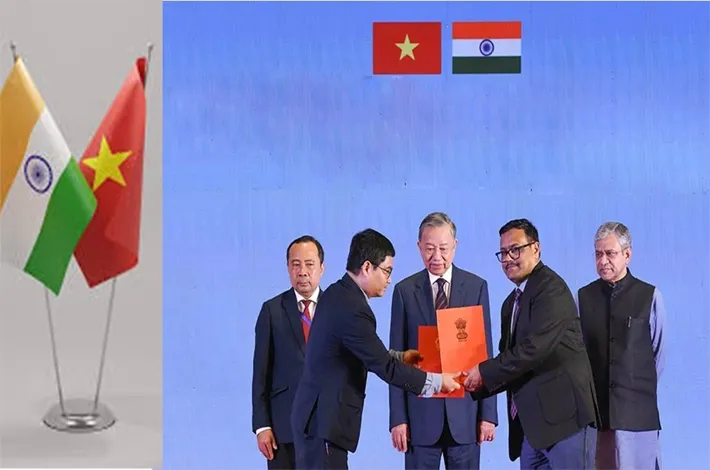
On 6th May 2026, India and Vietnam gave diplomatic elevation to their economic partnership escalating the relationship as Enhanced Comprehensive Strategic Partnership, which is the highest level of diplomatic tie-up. Vietnam and India share bonhomie and several similarities. Vietnam announced Vision 2045 in year 2019 while India announced its Viksit Bharat 2047 in year 2023. Both economies intend to transform from developing to developed status by their 100th anniversaries of independence.
Vietnam has 85% exports to GDP, whereas India has 22%. India has higher burden with 82% public debt to GDP while Vietnam has 31%. India is a service economy whereas Vietnam is manufacturing oriented. India has 78% literacy and 5% unemployment, whereas Vietnam has more than 96% literacy with 1% unemployment. Coinciding the partnership celebrations international financial centre concept drew attention since India is 10-years ahead of Vietnam in this regard.
It was in year 2007, IL&FS did extensive research on the need, required infrastructure support and viability and proposed IFSC concept in Gujarat. Gift city foundation was laid in year 2011. Within 1 year the first tower, GIFT One, was raised and occupied in year 2012. By year 2015, GIFT city was almost fully completed and became India’s first International Financial Services Centre (IFSC). GIFT city has domestic zone and SEZ and 6 divisions viz., IFSC, domestic financial centre, multi-services SEZ, Social & Civil zone, residential zone, and Transit Oriented Development zone.
GIFT city has 30 million constructed and allotted space. It has 1,000 operational entities, 25,000 employees, 2 international stock exchanges, and 1 bullion exchange. Banking assets in GIFT city are more than $100 billion with 38 banks playing active role. GIFT city offers 10 years tax holiday, GST exemptions, reduced MAT, and several direct and indirect tax benefits. Vietnam launched International Financial Centers (IFCs) in year 2025. They offer tax incentives, forex liberalization, and conductive regulations.
Like GIFT city, Vietnam’s IFCs intend to attract global banks, fintechs, funds, investors, and global financial rails. However, Vietnam’s IFCs have geographical justification with one in Ho Chi Minh city and the other in Da Nang city to ensure regional diversification and economic balance. Both these centres complement each other and have uniform regulations and support. Unlike India’s GIFT city which offers very wide corporate tax benefits, Vietnam’s IFCs offer personal income tax benefits to avoid human brain drain.
Better capital mobility and human capital benefits are other key attractions. Unlike GIFT’s Rupee-centric forex model, Vietnam’s IFCs allow multi-currency forex model which naturally attracts offshore banking. Ho Chi Minh IFC focuses on capital markets and Da Nang on fintech and digital assets. Ease of financing is made naturally easy in Vietnam’s IFCs. Although 10-years younger to GIFT city, Vietnam’s IFCs have several features that GIFT city can adopt.
Currently, Indian government is working on enhancing GIFT city by tripling the land area and widening operations. The Parliamentary Standing Committee on Finance (2024-25) recommended region specific International Financial Service Centers besides GIFT City. The cost-benefits and trade-off will be healthier with diversification than concentration and more so with International Financial Service centers.

Dr. Kishore Nuthalapati
is the Regional Director of PRMIA, US covering
Telangana and Andhra Pradesh. He is serving as the CFO of BEKEM Infra Projects Pvt Ltd, Hyderabad.
Views are personal and are not of any organizations he is or was associated with