11 October, 2026 | 3:31 AM


India’s policies fuel growth momentum: Shaktikanta Das
11-01-2026 12:00:00 AM
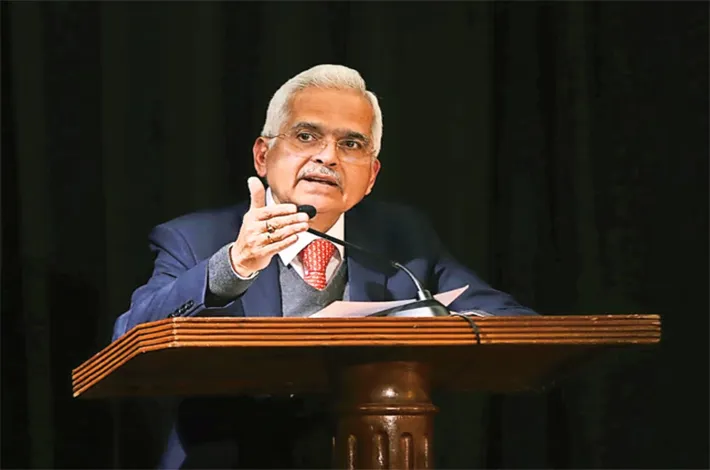
Economic self-reliance strengthens growth sustainability, while an autonomous foreign policy allows India to engage with the world in its best national interest
Shaktikanta Das
Principal Secretary to the PMO,
Metro India News | new delhi
At a time when the global economic order is under strain from protectionism, trade tariffs and geopolitical rivalries, India’s policy framework has given the country renewed momentum and confidence, said Shaktikanta Das, Principal Secretary to the Prime Minister, on Friday.
Delivering the inaugural Bibek Debroy Memorial Lecture, Das said India stands at a critical juncture of its economic journey, supported by reforms and policy choices that have placed “wind in its sails.” He noted that despite emerging global uncertainties, India is moving steadily towards its long-term goal of becoming a developed nation.
Referring to the global environment, Das said the consensus that once drove globalisation has weakened considerably. Multilateral cooperation has become harder to achieve, while free trade ideals are increasingly being replaced by protectionism, regional blocs and strategic alliances. Traditional multilateral institutions, he added, are struggling to deliver on their core mandates amid rising geopolitical competition.
Against this backdrop, India has embraced the vision of Atmanirbharta or self-reliance as a guiding principle of its economic strategy. Das clarified that self-reliance does not imply isolationism. Instead, it focuses on building domestic capabilities, strengthening resilience and reducing excessive dependence on external sources for critical goods and technologies.
“Economic self-reliance strengthens growth sustainability, while an autonomous foreign policy allows India to engage with the world in its best national interest,” he said. Together, these elements ensure that India’s rise remains resilient, inclusive and beneficial not just for the country, but for the global economy as well.
Das said India has already demonstrated its ability to navigate multiple global shocks, including the disruptions caused by the COVID-19 pandemic since 2020. Having weathered what appeared to be “perfect storms,” the country is now better positioned to manage future challenges.
He described the current phase as a transition from being an “incredible India” to a “credible India,” while acknowledging that the journey ahead will involve headwinds from both known and unknown sources.
Highlighting shifts in global trade dynamics, Das noted that supply chains are increasingly being reshaped through reshoring and “friend-shoring,” contributing to fragmentation in global networks. Trade and supply chains, once neutral tools of globalisation, are now being used as instruments of strategic influence.
Despite these challenges, Das reiterated that India remains committed to a cooperative, rules-based global system. At the same time, the country is proactively forging partnerships and adapting strategies to safeguard its national interests in a rapidly changing world order.
He concluded by stressing the need to revitalise the multilateral system, even as India pragmatically adjusts to new global alignments on its path towards Viksit Bharat.