7 October, 2026 | 7:27 PM


Israel cuts off aid to Gaza
03-03-2025 12:00:00 AM
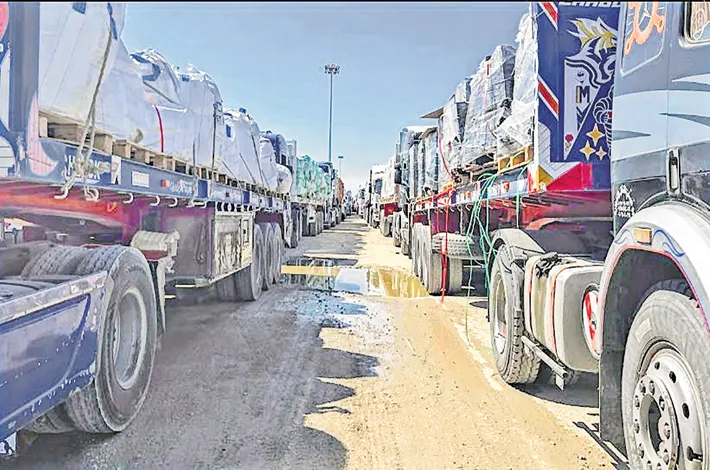
Trucks line up at the Rafah border crossing between Egypt and Gaza as Israel stops entry of aid on Sunday —AP
AP TEL AVIV/CAIRO
Israel stopped the entry of all goods and supplies into the Gaza Strip on Sunday and warned of "additional consequences" if Hamas does not accept a new proposal for an extension of the first phase of a fragile ceasefire. Hamas accused Israel of trying to derail the truce and said its decision to cut off aid was "cheap extortion, a war crime and a blatant attack on the (ceasefire) agreement".
However, both sides stopped short of saying the ceasefire had ended. The first phase of the ceasefire, which included a surge in humanitarian assistance, expired on Saturday. The two sides have yet to negotiate the second phase, in which Hamas was to release dozens of remaining hostages in return for an Israeli pullout and a lasting ceasefire.
An Israeli official, speaking on condition of anonymity, said the decision to suspend aid was made in coordination with the US Trump administration. Israeli Prime Minister Benjamin Netanyahu's office said earlier on Sunday that it supports what it described as a proposal from US Mideast envoy Steve Witkoff to extend the first phase of the ceasefire through Ramzan Passover, which ends on April 20. Under that proposal, Hamas would release half the hostages on the first day and the rest when an agreement is reached on a permanent ceasefire, according to Netanyahu's office. There was no immediate comment from the United States, Egypt or Qatar, which have been mediating between Israel and Hamas for over a year.
Under the first, six-week phase of the ceasefire, Hamas released 25 Israeli hostages and the bodies of eight in exchange for the release of nearly 2,000 Palestinians imprisoned by Israel. Israeli forces pulled back from most of Gaza and Israel allowed a surge of humanitarian aid to enter. But the first phase was marred by repeated disputes, with each side accusing the other of violations. Israel imposed a complete siege on Gaza in the opening days of the war and only eased it later under US pressure.