22 September, 2026 | 3:49 PM


Japan tests milestone with power generation in space
29-12-2025 12:00:00 AM
Successful scaling could reduce dependence on volatile international markets and provide a hedge against geopolitical energy disruptions. However, the path to commercialization remains challenging. Engineers acknowledge that current demonstrations are small-scale proofs of concept
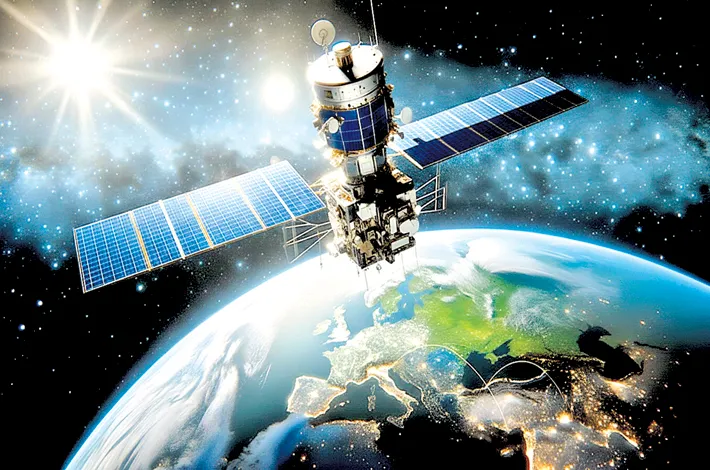
In a landmark development for renewable energy and space technology, Japan has successfully conducted a groundbreaking test of a system that generates electricity in orbit and transmits it wirelessly back to Earth. The demonstration, part of long-standing efforts by the Japan Aerospace Exploration Agency (JAXA) and collaborating institutions, marks a significant step toward realizing space-based solar power (SBSP) as a viable source of clean, continuous energy.
The test involved solar panels deployed in space that captured sunlight and converted it into electrical energy. This power was then transformed into microwaves and beamed down to a receiving station on the ground. Upon arrival, the microwave energy was efficiently converted back into usable electricity through rectifying antennas, known as rectennas. This wireless transmission eliminated the need for physical cables or traditional fuel transportation, proving the core feasibility of harvesting solar energy beyond Earth's atmosphere and delivering it reliably to terrestrial users.
What sets space-based solar power apart from conventional ground-mounted solar installations is its ability to operate without interruption. On Earth, solar generation is hampered by nightfall, cloud cover, weather patterns, and seasonal variations. In contrast, satellites in orbit—particularly in geostationary positions—can collect sunlight almost constantly, with intensity up to several times greater than at ground level due to the absence of atmospheric filtering.
This continuous availability positions SBSP as a potential source of baseload renewable energy, capable of providing stable power output comparable to nuclear facilities but without the associated risks or waste. The recent success builds on decades of research by JAXA and partners such as Japan Space Systems. While earlier milestones included ground-based and aircraft-assisted demonstrations of microwave transmission, this orbital test represents a critical leap forward.
Engineers involved described the achievement as an "early but pivotal" validation of the technology. Although the transmitted power in this initial experiment was modest—on the order of kilowatts, sufficient for small-scale applications like powering household appliances—the demonstration confirms that the fundamental chain of collection, conversion, transmission, and reconversion works in real-world orbital conditions. Experts view this breakthrough as a potential game-changer in humanity's approach to energy production.
As the world grapples with accelerating climate change and the urgent need to decarbonize power grids, SBSP offers a pathway to abundant, emissions-free energy that is largely immune to terrestrial limitations. Proponents argue that large-scale orbital solar farms could supply cities, remote regions, or even disaster-struck areas with targeted power delivery, bypassing vulnerable infrastructure like power lines that are prone to damage from natural disasters—a particular concern for seismically active Japan. The technology also aligns with global efforts to enhance energy security. Japan, which relies heavily on imported fossil fuels and has sought alternatives since the 2011 Fukushima nuclear incident, stands to benefit immensely.
Successful scaling could reduce dependence on volatile international markets and provide a hedge against geopolitical energy disruptions. However, the path to commercialization remains challenging. Engineers acknowledge that current demonstrations are small-scale proofs of concept. Future systems would require vast arrays—potentially spanning kilometers—to generate gigavwatts of power equivalent to large power plants.
Key hurdles include the high cost of launching and assembling massive structures in orbit, precise beam control to ensure safety and efficiency, and minimizing any environmental or health impacts from microwave transmission (though studies indicate operational levels pose negligible risks).Despite these obstacles, optimism is growing. Advances in reusable launch vehicles (such as those pioneered by private companies), lightweight materials, robotic assembly, and improved solar cell efficiencies are steadily lowering barriers.
JAXA's roadmap envisions progressive steps: from the current experimental phase to larger prototypes in the coming decade, potentially culminating in commercial-scale operations by the 2030s or 2040s.This Japanese achievement arrives amid renewed international interest in SBSP. Other nations and organizations, including efforts in the United States (such as Caltech's prior demonstrations) and Europe, are pursuing similar technologies.
Japan's test, however, underscores its leadership in integrating space innovation with climate solutions. As the world transitions toward sustainable energy, space-based solar power could emerge as one of the most transformative technologies of the century. By harnessing the virtually limitless solar resource available in orbit and delivering it cleanly to Earth, Japan has illuminated a promising future where energy abundance and environmental stewardship go hand in hand. This early success is not just a technical triumph—it represents hope for a cleaner, more resilient global energy system.
— Paul Koti, The author is an expert in renewable energy related matters