22 October, 2026 | 6:46 AM


Mere formality or “something beyond”
15-01-2026 12:00:00 AM
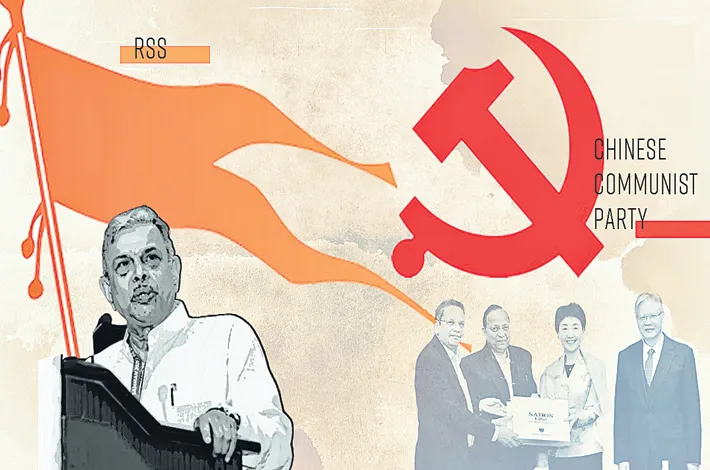
A fiery debate and controversy was ignited over the recent visit of Communist Party of China (CPC) leaders to the Bharatiya Janata Party (BJP) headquarters. The visit, which occurred amid ongoing tensions with China, drew sharp criticism from the Congress party, prompting BJP to counter by resurrecting questions about Congress's 2008 Memorandum of Understanding (MOU) with the CPC. The controversy erupted when CPC leaders visited the BJP office as part of an "institutionalized mechanism" for dialogue between the two parties.
Photos of the meeting, showing exchanges of mementos and smiles, circulated widely, leading Congress to accuse the BJP of cozying up to an "enemy" nation. Congress leaders highlighted China's territorial claims on Arunachal Pradesh, its support for Pakistan, and recent infrastructure developments in the Shaksgam Valley – an area ceded to China by Pakistan in 1963. "China is a bigger enemy than Pakistan," a Congress representative stated, questioning the BJP's "anti-national activities" in hosting the delegation, especially after incidents like the Galwan Valley clash.
The BJP hit back, defending the meeting as a routine exchange without any binding commitments. They contrasted it with Congress's past actions, particularly the 2008 MOU signed during a visit to China by Sonia Gandhi, Rahul Gandhi, and Anand Sharma. The BJP argued that while their interaction was transparent and non-committal, Congress's MOU remained shrouded in secrecy, raising suspicions of undue influence.
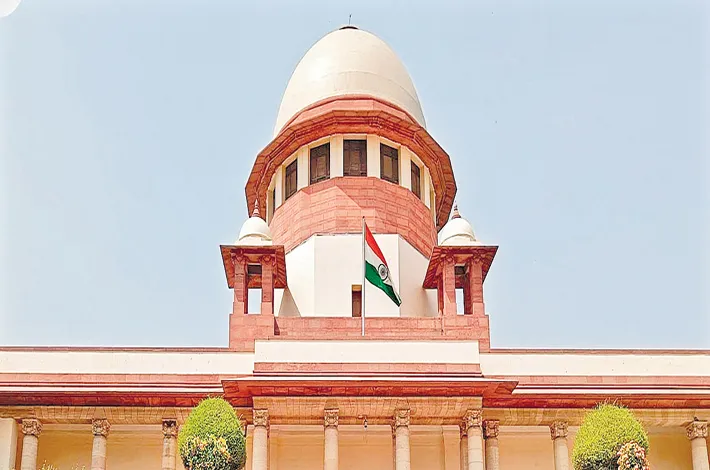
A Congress spokesperson defended the MOU by citing a 2020 Supreme Court ruling on a petition filed by BJP MP Ram Jethmalani. He claimed the court dismissed the petition as "absurd," allowing withdrawal without mandating disclosure. "If you have it in your hand, please show it to the world," he challenged BJP. When pressed on why Congress wouldn't voluntarily disclose it for transparency, the Congress leader argued it wasn't required by law and shifted focus to the BJP's current meeting. He reiterated that China is an enemy and questioned the BJP's timing amid border tensions.
A political commentator supported BJP’s view, distinguishing between a "courtesy call" and a legally binding MOU. "A meeting means nothing. There is no contract signed," he said, mocking Congress's denial by pointing to photos of the 2008 signing. He questioned why Congress needed court intervention if they had nothing to hide: "Let the public decide." was the tone of his argument. He also raised the issue of funds flowing to the Rajiv Gandhi Foundation post-MOU, demanding an explanation for the financial transaction.
Another political analyst, a pro Congress one, attempted a historical defence, praising Congress's post-1962 foreign policy for minimizing skirmishes with China until 2014. He welcomed the BJP-CPC meeting as neighbourly engagement. He accused the BJP of hypocrisy, noting Congress's celebrations of Bolshevik revolutions and CPC events, but urged dialogue over confrontation. A RSS affiliated writer and columnist lambasted Congress's historical failures, from the 1962 war to the 1971 Indo-Pak war, where he claimed Congress released 93,000 Pakistani POWs without securing Indian ones. "What kind of diplomacy was that?" he asked. Defending the BJP meeting, he argued it was non-binding and aimed at understanding each other. He praised the Modi government's border infrastructure push, contrasting it with Congress's alleged fear of provoking China.
Another Congress leader echoed Congress's criticisms, accusing BJP and RSS of "embracing" China despite Galwan and Pakistan support. He referenced the 1971 war failures under Congress but pivoted to BJP's current diplomacy: "What was the purpose of 1971 negotiations? You can't negotiate." He questioned funds in PM CARES from Chinese sources, but BJP countered by demanding answers on Rajiv Gandhi Foundation funds.
The debate touched on ongoing Sino-Indian issues, including China's NSG and UNSC bid blocks, harassment of Arunachal Pradesh nationals, and Shaksgam Valley developments. While it was more or less unanimously opined against trusting China, Congress also cautioned BJP against shifting from U.S. dependence to Chinese exploitation, urging caution without secret commitments. The episode highlighted deep partisan divides, with Congress's secret MOU remaining a flashpoint. As tensions with China persist, the debate underscores the need for transparency in political engagements with foreign powers. Neither party has fully disclosed details, leaving the public to question underlying motives.