23 October, 2026 | 3:05 AM


Metro India Exposed ‘Shell’ Political Parties a Year Ago
07-09-2026 12:00:00 AM
BBC Report Now Goes Viral
Metro India News | Hyderabad
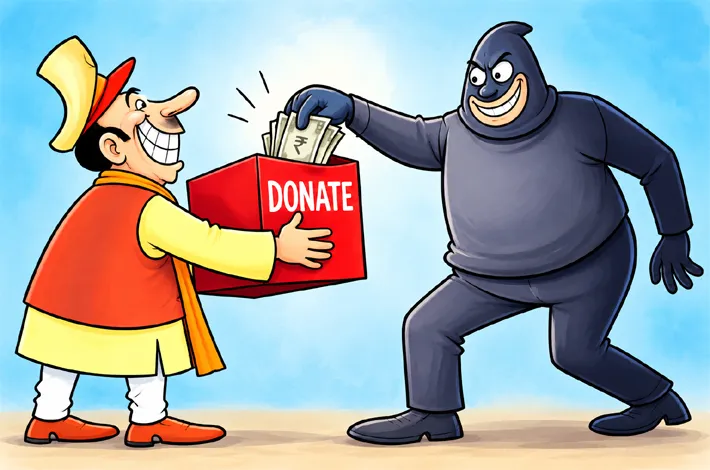
City-based English daily Metro India flagged a startling phenomenon in India’s electoral funding system as early as late August 2025: registered but unrecognised political parties (RUPPs) that exist largely on paper, field almost no candidates, win negligible votes, yet rake in hundreds of crores in donations. Nearly a year later, a detailed investigation by BBC Hindi on a similar set of Gujarat-based outfits has gone viral on social media, reigniting national debate on opaque political financing and the misuse of tax exemptions.
On 29 August 2025, Metro India published a report titled “Shell companies as political parties?” drawing on findings first highlighted by Dainik Bhaskar. It detailed how ten little-known RUPPs in Gujarat collectively received donations totalling ₹4,300 crore between 2019-20 and 2023-24 — a period covering the 2019 and 2024 Lok Sabha elections and the 2022 Gujarat Assembly polls.
These parties, including Lokshahi Satta Party, Bharatiya Janparishad, Saurashtra Janata Party, Satyawadi Rakshak Party, New India United Party, Gareeb Kalyan Party and others, fielded a mere 43 candidates across those elections. Together they secured just 54,069 votes.Yet their audit reports showed expenditures of around ₹3,500 crore, while election expenditure statements filed with the Election Commission of India (ECI) reported a meagre ₹39.02 lakh.
The standout case was Lokshahi Satta Party, which received ₹1,045 crore and spent ₹1,031 crore, but fielded only four candidates who together polled fewer than 4,000 votes. Official filings claimed average spending of just ₹2.27 lakh per candidate.Metro India described these entities as “parties without people, votes without value” and likened them to shell companies used in financial frauds.
The report noted donations flowing from across 23 states, glaring gaps between party audit reports and candidate expenditure filings, and allegations that some RUPPs facilitated tax evasion by issuing bogus donation receipts. It recalled earlier probes showing intermediaries and shell companies routing funds under the guise of political activity, and highlighted that while the ECI caps spending by individual candidates, party-level expenditure faces far less scrutiny.
Congress leader Rahul Gandhi had publicly demanded an ECI probe into the ₹4,300 crore, asking where the money came from and where it went.Fast forward to early September 2026. BBC Hindi’s investigation, published around 4 September, examined six Gujarat-based RUPPs — Aam Janmat Party, Satyawadi Rakshak Party, Swatantrata Abhivyakti Party, New India United Party, Bharatiya National Janata Dal and Gareeb Kalyan Party.
These six alone received roughly ₹1,500–1,700 crore in donations in 2023-24, exceeding the combined donations of five national parties (Congress, AAP, BSP, CPI(M) and NPP) excluding the BJP. Aam Janmat Party topped the list with about ₹620 crore — more than double the Congress’s reported collection that year — while others received between ₹138 crore and ₹330 crore.
Despite this war chest, the six parties fielded only 15 candidates in the 2024 Lok Sabha elections. BBC reporters found many registered offices were residential flats or shops that remained locked, with office-bearers hard to locate or unwilling to explain the scale of funding and spending. One party official claimed large sums went to “charity” or “social welfare” but could provide little documentation.
The report noted the tax benefits available to both donors and registered parties under relevant Income Tax Act provisions, and referenced broader concerns about RUPPs being used as conduits.The BBC story quickly spread across social media platforms, prompting discussions on electoral integrity, the proliferation of over 2,700 RUPPs in India, and the limited tools available to the ECI for deregistering inactive outfits.
Subsequent coverage in Indian media has linked the findings to earlier reports, including the 2025 Dainik Bhaskar and Metro India stories, as well as Income Tax Department actions against alleged bogus donation claims running into thousands of crores.The core issues remain consistent across both investigations. Political parties enjoy income-tax exemptions on voluntary contributions. Donors can claim deductions.
Candidate spending is capped, but party spending is not similarly restricted. Many RUPPs contest few or no elections for years, yet continue to receive and report large inflows and outflows. Critics argue this creates space for anonymous or routed funds, potential tax evasion, and the circumvention of expenditure limits.
Defenders note that registration under Section 29A of the Representation of the People Act is relatively easy, and not every small party is necessarily fraudulent.In the intervening year, the ECI has delisted hundreds of non-compliant RUPPs that failed to contest elections for six consecutive years or submit required accounts.
Tax authorities have also pursued recovery in cases of suspected bogus claims. Still, the gap between paper existence and real political activity persists for many outfits.Metro India’s August 2025 report from Hyderabad was among the earlier English-language accounts that brought the “shell political parties” phenomenon into sharper focus for a wider audience. The recent BBC investigation has amplified the same questions with fresh data focused on 2023-24 figures and on-the-ground checks of offices.
Together they underscore a structural vulnerability in India’s political funding framework: entities that look like parties on official lists but function more like financial vehicles. As public attention intensifies, pressure is mounting on the Election Commission, tax authorities and lawmakers to tighten disclosure norms, accelerate verification of RUPPs, and close loopholes that allow hundreds of crores to flow through organisations with minimal electoral footprint. The debate is no longer about whether the anomaly exists — both the Hyderabad daily a year ago and the global broadcaster now have documented it — but about how quickly and effectively the system will respond.