29 September, 2026 | 2:40 PM


Modi recasts BJP for next election
26-01-2026 12:00:00 AM
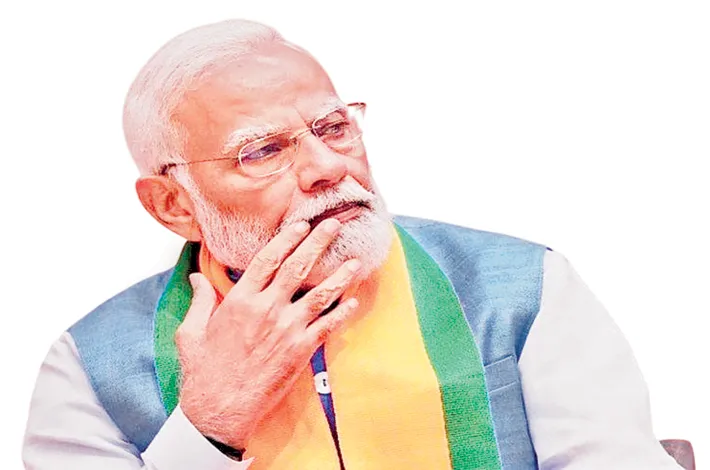
Setting his sights on the General Election in 2029, Prime Minister Narendra Modi has stepped into election mode. A key pointer is his picking the nearly 46-year-old Nitin Nabin, who is as old as the BJP itself, to head the Saffron Party. Modi is looking to create a new record of returning to power for the fourth straight term. Nitin Nabin is set to lead the party into the General Election in 2029.
He will work in tandem with Modi to prepare the party for the next parliamentary elections. Modi threw his full weight behind Nitin Nabin. Describing himself as Karyakarta, Modi referred to the new BJP President as his boss. Besides, the manner in which Nitin Nabin was escorted to his new office by the galaxy of Saffron Party leadership is equally unprecedented. Led by Prime Minister Modi, former BJP Presidents like Rajnath Singh, Amit Shah, Jagat Prakash Nadda and Nitin Gadkari accompanied him.
With focus on 2047, marking Centenary of the Indian Independence and the goal of making India a developed country, Viksit Bharat, Modi may opt for a far younger team, signalling generational shift in the BJP. A hands-on leader, Modi is not only leading the Government, but, at the same time, managing and shaping the ruling party.
Single-most important achievement of Modi is that not only has he made way for younger leaders in the Government, but even in the party, he has managed to shape a new team. Heavily under the shadow of the RSS, both the Government and the BJP have steadily come under his own grip.
Since 2014, Prime Minister Narendra Modi has steadily reshaped both the Union government and the BJP leadership, sidelining veterans and centralising authority. During his first term, senior leaders like L K Advani and Murli Manohar Joshi made way, though Advani’s protégés—Arun Jaitley, Sushma Swaraj and Uma Bharati—remained ministers. By 2019, they too had faded out. Subsequent reshuffles saw Prakash Javadekar and Ravi Shankar Prasad dropped in 2021, followed in 2024 by Smriti Irani, Anurag Thakur, Meenakshi Lekhi, General V K Singh and R K Singh.
Modi assumed firm control of the BJP after being named the party’s prime ministerial candidate in 2013. Ahead of the 2014 elections, he ensured Amit Shah was given charge of Uttar Pradesh, while he himself won from Varanasi and became Prime Minister. Since then, Modi has effectively controlled both the government and the party organisation—traditionally considered RSS territory. He handpicked Amit Shah as BJP President, under whose leadership the party retained power in 2019. J P Nadda, similarly chosen by Modi, became BJP President in 2020 and was granted repeated extensions to lead the party through the 2024 elections, when Modi secured a record-equalling third consecutive term.
Nadda’s extended tenure reflected differences between the RSS and Modi over his successor, marking a shift from earlier times when RSS decisions were final. Eventually, Modi’s choice, Nitin Nabin, received RSS approval. Historically, the RSS exercised decisive influence—from ministerial selections under Atal Bihari Vajpayee to party leadership choices since the Jan Sangh era. That balance has changed in the Modi era. While the RSS appears to be yielding ground politically, Modi has facilitated its institutional growth. Having consolidated control, Modi is now positioning the BJP as a formidable electoral force, with a clear push towards victory in 2029.
(Writer is Delhi-based senior journalist, political commentator and analyst. Views are personal)