21 September, 2026 | 8:41 AM


Mohan Bhagwat supports Gen Z
07-08-2026 12:00:00 AM
metro india news I mumbai
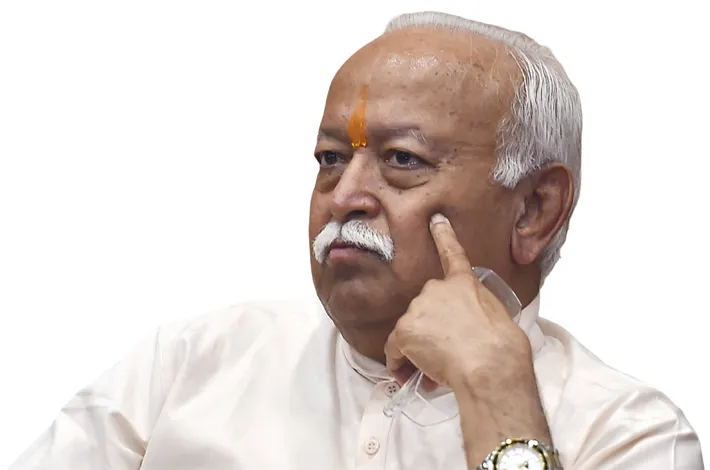
Rashtriya Swayamsevak Sangh (RSS) chief Mohan Bhagwat on Thursday strongly backed India’s younger generation during an interaction with Gen Z and Gen Alpha students, asserting that their protests do not make them anti-national, that their grievances over the education system are genuine, and that he would “trust Gen Z blindly.”
Speaking at the inaugural session of the India International Movement to Unite Nations (IIMUN) 15th anniversary championship conference at the Nita Mukesh Ambani Cultural Centre, Bhagwat addressed and interacted with around 2,000 students aged 15 to 19 from over 100 cities. The event’s theme centred on the role of youth in uniting the world the Indian way.
The interaction, came against the backdrop of recent student-led protests, including those by the Cockroach Janta Party (CJP) over the NEET paper leak and related issues at Jantar Mantar in Delhi, which culminated in the resignation of Union Education Minister Dharmendra Pradhan. Bhagwat described protest as a legitimate form of dialogue in a democracy. “A protest is also a way of dialogue. We are sitting here and discussing, and if we understand each other’s perspectives, that is good. Otherwise, a debate will continue,” he said.
Protests build consensus
He elaborated that in a democracy, protests help build consensus as multiple views come together through discussion. “However, due to various reasons, if a concern is not heard, one may move towards agitation. But all these steps should be taken to evolve a consensus, not to create divisions.” On the recent student agitation, he stated that the grievances are genuine. “A lot needs to be done in India’s education system, and it is not being done; so, this is being raised. So, indeed there should be dialogue.”
He contrasted today’s youth with his own generation: earlier, young people accepted elders’ words without questioning, but Gen Z and Gen Alpha seek logical answers along with affection and respect. He invoked the Indian tradition of shastrarth, involving presentation of the initial perspective (purva paksha) and response (uttar paksha), rather than mere argument. Addressing concerns that protesters might be labelled anti-national, Bhagwat was categorical: “I want to make it clear that if Gen Z engages in any agitation, they are not anti-national.
They are our own people; they are our next generation. A sense of belonging and mutual respect is needed for dialogue to take place.” He added that he believes today’s younger generation is more honest than the existing one and that appeals of patriotism and service resonate with them. “I will never say that Gen Z should not protest, but there should also be a way given in democracy.
We need to see that if youth is shouting, it is not for opposing but for improvement.” He referred to the Constitution and speeches of Dr B.R. Ambedkar for guidance on methods of addressing issues. Regarding reports of lathi charges and the alleged use of pellet guns during the Jantar Mantar protests, Bhagwat said he lacked complete information and could not comment definitively. “What happened and why it happened, I do not have complete information... We need to look into where exactly the problem lies.”
He noted reports of anti-social elements but stressed that without authentic information, conclusions should not be drawn. “However, if I am asked to place my faith in someone, I would place my faith in Gen Z.” In related remarks, he indicated that when something that should not happen does occur, it points to a lapse somewhere that needs correction. Bhagwat devoted significant attention to education, calling it a societal responsibility rather than a commercial business or solely the government’s domain.
“Education is not a commercial business; it is a necessity of life. Therefore, the education system should be structured in a way that makes it accessible and affordable for everyone.” He supported the long-standing demand for allocating six per cent of the budget or GDP to education and urged society to share the financial burden, remain vigilant, train teachers, and contribute actively. “Society should also contribute to improving the status of education.”
He also noted that employment encompasses entrepreneurship, not just jobs. On leadership, Bhagwat said true leaders lead from within and by example, managing teams rather than merely standing in front giving speeches. “I do not see myself as a leader; I know myself as a worker.”
He outlined qualities including knowledge, recognising others’ strengths, sharing credit and resources, and showing courage. Addressing social media’s influence, he argued that laws alone are insufficient. Attitude change, responsible role models among influencers, and societal acceptance are essential. Banning content often drives it underground; verification of information is crucial, especially with the rise of fake videos. He questioned why violent content gains more engagement if Gen Z rejects violence.
Reservations should continue
In other remarks during the interaction, Bhagwat said reservation should continue as long as social discrimination exists, but those who have benefited and improved their situation should consider making way for others, keeping politics out of the issue. On broader matters, he touched upon supporting government decisions in conflicts involving Pakistan and China while maintaining a humanitarian outlook, stressing that permanent hatred is not the solution and that humanity must remain one.
The event marked a notable outreach by the RSS to younger generations amid heightened youth activism. Organisers noted Bhagwat’s previous engagements with IIMUN in earlier years. Opposition voices, including from Shiv Sena (UBT), criticised the interaction as selective, suggesting he should engage those who faced police action. Bhagwat’s remarks, however, emphasised dialogue, mutual respect, system correction, and faith in the honesty of Gen Z and Gen Alpha as the path forward for addressing genuine concerns in a democracy.
The interaction underscored the RSS chief’s view that engaging questioning youth through reason, affection, and democratic processes is essential for national progress, while affirming their right to raise issues without being branded as adversaries of the nation.
Protests do not make them anti-national, that their grievances over the education system are genuine.
- Mohan Bhagwat
RSS chief