13 September, 2026 | 12:41 PM


No PNG, No LPG? Why govt wants to switch?
29-03-2026 12:00:00 AM
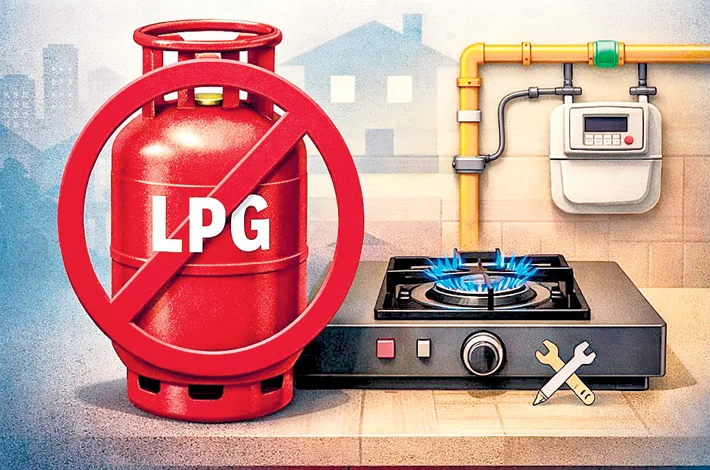
The government is promoting this shift due to ongoing challenges with LPG supply. A significant portion of India's LPG is imported, making prices and availability vulnerable to global events, particularly geopolitical tensions in West Asia.
The Indian government has issued a fresh order requiring households in areas where piped natural gas (PNG) infrastructure is available to switch from traditional LPG cylinders to PNG connections. Failure to apply for and obtain a PNG connection within three months of receiving formal notice could result in the discontinuation of LPG supplies.
The directive, notified on March 24, 2026, under the Natural Gas and Petroleum Products Distribution Order, 2026, by the Ministry of Petroleum and Natural Gas, aims to accelerate the expansion of city gas distribution networks and reduce the country's heavy dependence on imported LPG. Local gas distributors are expected to notify eligible households via registered post, speed post, SMS, or other means.
The government is promoting this shift due to ongoing challenges with LPG supply. A significant portion of India's LPG is imported, making prices and availability vulnerable to global events, particularly geopolitical tensions in West Asia. These disruptions have contributed to supply pressures. PNG, linked to natural gas infrastructure, benefits from greater stability through a mix of domestic production and long-term contracts.
Advantages of PNG over LPG include continuous supply — eliminating the risk of running out unexpectedly — and potentially greater safety, as natural gas is lighter than air and disperses quickly in the event of a leak. Billing is also based on actual usage rather than upfront payment for a full cylinder, offering more flexibility for consumers. LPG, however, remains crucial in rural and remote areas where pipeline networks have not yet reached.
Its portability makes it suitable for regions without fixed infrastructure. The order applies specifically to areas with existing PNG connectivity and technical feasibility. Exceptions may be granted via a no-objection certificate (NOC) if installation is not possible due to structural or other constraints. The policy is expected to free up LPG supplies for underserved regions while promoting a more diversified and secure energy mix for urban and semi-urban households.