20 September, 2026 | 9:46 PM


Not quite up to the HILT
28-07-2026 12:00:00 AM
Policy rollout finds few takers among running industries
- ■ Only 193 applications received under HILT, covering nearly 500 acres, far below the policy's long term target.
- ■ Operational industries remain hesitant, citing relocation uncertainty, high conversion costs, and lack of dedicated industrial parks.
- ■ Government terms the response encouraging and has sought a three month extension for applications till September end.
- ■ Industry says mostly sick, defunct, and unused industrial units have opted for land conversion so far.
MAHESH AVADHUTHA I hyderabad
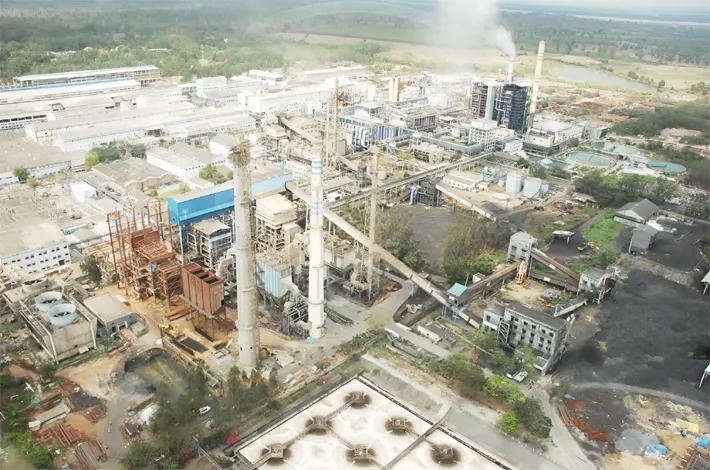
The Telangana government's ambitious Hyderabad Industrial Lands Transformation (HILT) policy, conceived to reshape Hyderabad's urban landscape by relocating industries beyond the Outer Ring Road (ORR), has entered a crucial phase with contrasting assessments emerging from industry stakeholders and government officials.
While the government describes the initial response as encouraging, industry representatives say the policy has largely attracted only sick, defunct or underutilized industrial units, with most operational manufacturing firms continuing to adopt a wait and watch approach.
Introduced in November 2025, the HILT policy aims to transform nearly 9,300 acres of industrial land (over 4700 acres of plotted land) spread across more than 20 industrial estates and parks within Hyderabad's Core Urban Region like Cherlapally, Nacharam, Mallapur, Moula Ali, Jeedimetla, Patancheru, Kukatpally etc into mixed use urban zones comprising residential, commercial, institutional, hospitality and IT developments. The policy seeks to relocate polluting industries outside the ORR while unlocking the value of centrally located industrial land that has gradually become surrounded by residential neighbourhoods over the past four decades.
According to Industries Department officials, about 193 applications covering nearly 500 acres have been received since the operational guidelines and online portal were launched this year. Officials say the response is significant considering the policy is voluntary and involves major business decisions. The department has reportedly requested the government to extend the June 30 application deadline by another three months until the end of September to encourage additional participation.
Industry bodies, however, present a different picture. They contend that most applicants are companies whose factories have already ceased operations or own large parcels of unused land. Such properties, particularly those located in areas like Nacharam,
Mallapur and Patancheru that have evolved into dense residential zones, are viewed as attractive for redevelopment by the real estate sector after conversion. Sources indicate that a few prominent companies with dormant land holdings have shown interest in the scheme.
In contrast, owners of functioning small and medium manufacturing units remain hesitant. Industry representatives cite several concerns, including uncertainty over the applicable Sub Registrar Office (SRO) values used for calculating the Development Impact Fee, the financial burden of conversion charges, and the absence of clearly identified relocation sites beyond the ORR with ready infrastructure.
Manufacturers also argue that relocating long established factories is not merely a matter of acquiring land. It involves rebuilding plants, shifting machinery, retaining skilled workers, re-establishing logistics networks and securing fresh utility connections, making the transition expensive and operationally challenging. Industry associations have suggested that the government first develop dedicated industrial parks with essential infrastructure or allocate large land parcels to associations that can create common facilities before expecting widespread relocation. Similar concerns were raised during consultations with the government earlier this year.
The HILT policy has remained politically contentious since its announcement, with opposition parties questioning its implementation and valuation methodology, while the Congress government maintains that it is an urban renewal initiative designed to reduce pollution, modernize land use and create resources for future industrial infrastructure. Legal challenges to the policy have also reached the Telangana High Court, though implementation has continued.
With the government targeting under 5000 acres of land parcels in the state capital for eventual transformation, the coming months, particularly if the application deadline is extended, are likely to determine whether HILT evolves into a landmark urban redevelopment programme or requires further policy refinements to address industry concerns.