23 October, 2026 | 1:27 PM


Rs 1.15 Cr paid for Lokesh’s Cover story?
11-08-2026 12:00:00 AM
- Andhra Pradesh faces scrutiny over media spending
- A viral post links government outlay to Fortune India cover on Nara Lokesh
metro india news I Amaravati
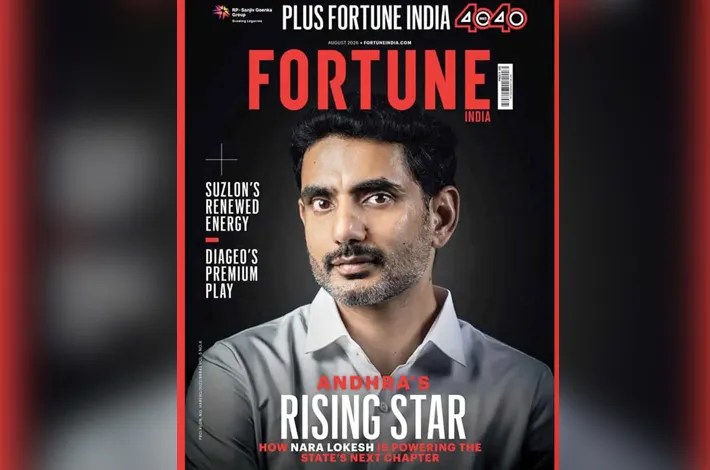
A social media post highlighting a government expenditure order has sparked debate in Andhra Pradesh over the use of public funds for media promotions aimed at showcasing the state as an investment destination. The post, shared by user Manohar Nakka on X, juxtaposed the August 2026 cover of Fortune India magazine featuring IT and Human Resources Development Minister Nara Lokesh with a January 2025 government order sanctioning more than Rs 1.15 crore for CNBC-TV18.
The Telugu-language post, which carried laughing emojis and the caption roughly translating to “doing petty jobs… getting caught,” quickly gained traction. It presented the Fortune India cover—titled “Andhra’s Rising Star: How Nara Lokesh is Powering the State’s Next Chapter”—alongside the official order as evidence of paid promotion. The image of the magazine cover shows Lokesh in a formal shirt against a dark background, with the Fortune India branding and the headline prominently displayed. The government order in question, G.O.RT.No. 102 from the General Administration (I&PR) Department dated January 18, 2025, grants administrative sanction for Rs 1,15,64,000 (Rs 98 lakh plus Rs 17.64 lakh GST at 18 percent).
The funds were allocated to CNBC TV18 Channel (Network 18 Group) “for highlighting / representing the State of Andhra Pradesh at the World’s most Celebrated Business Forum positioning the Andhra Pradesh State as the best Investment Hub in connection with World Economic Forum-2025, at Davos.” The expenditure was to be debited from the budget under electronic media, with the Director of Information & Public Relations directed to take necessary action. Andhra Pradesh has actively participated in the World Economic Forum annual meetings in Davos to attract global investment. In recent years, the state under Chief Minister N. Chandrababu Naidu has highlighted pledges and grounded projects, including major commitments in technology, green energy, and manufacturing.
Nara Lokesh has frequently represented the state at such forums and in bilateral engagements, promoting policies focused on speed of doing business, industrial clusters, and sectors such as AI, data centres, electronics, and renewables. The Fortune India feature itself portrays Lokesh’s role in investment attraction, education reforms, and positioning Andhra Pradesh competitively. However, the linkage drawn in the viral post has been contested. An official fact-check account associated with the Andhra Pradesh government stated that the circulating claim is “completely false.” It clarified that the January 2025 order pertains specifically to payments for CNBC-TV18’s coverage related to the 2025 World Economic Forum and has no connection to the August 2026 Fortune India cover story.
The two entities, though part of broader media groups, are distinct in this context, and the post was accused of deliberately misleading the public. The fact-check warned of potential legal action against those spreading or sharing the false narrative. States routinely allocate funds for investment promotion, including media partnerships, pavilion setups, and advertising at global events such as Davos. Previous Andhra Pradesh governments have also incurred significant costs for similar outreach. Critics, including opposition voices in the past, have questioned the scale and necessity of such spending, arguing it prioritizes image-building over other developmental needs.
upporters maintain that visibility at international forums is essential for competing with other Indian states for capital, technology, and jobs, especially amid high-profile announcements involving companies like Google. The episode underscores ongoing political contestation in Andhra Pradesh over governance priorities since the TDP-led alliance returned to power. While Fortune India’s decision to feature Lokesh reflects growing national attention on the state’s investment pitch, the viral association with an earlier promotional outlay has fuelled accusations of self-promotion funded by taxpayers. As of now, no evidence has publicly established a direct financial link between the 2025 CNBC sanction and the 2026 magazine cover.
The controversy arrives amid broader discussions about transparency in government media spends and the role of paid or facilitated coverage in political branding. Officials continue to defend promotional activities as standard practice for economic development, while critics demand greater scrutiny of how public money is used to shape narratives around individual leaders and state performance. The original post and subsequent clarifications illustrate how social media rapidly amplifies official documents into political flashpoints in India’s competitive state politics.