31 August, 2026 | 1:24 PM


‘Space sector set to drive India’s economic growth’
30-01-2026 12:00:00 AM
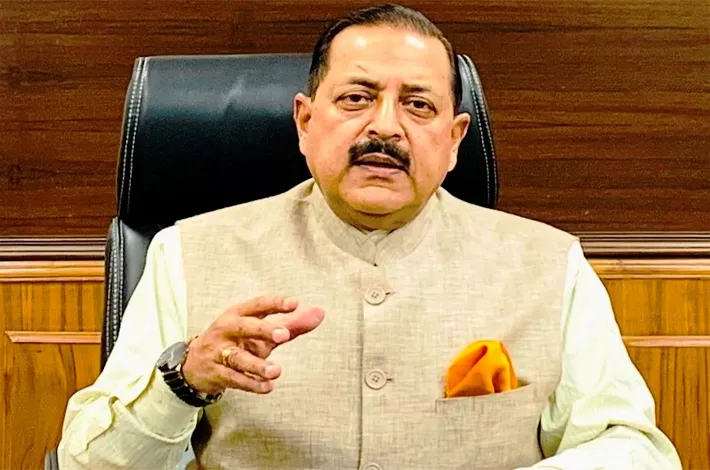
The decision to open the space sector to private players as one of the most path-breaking reforms, crediting Prime Minister Narendra Modi for breaking long-standing taboos and encouraging entrepreneurship in a domain once dominated solely by government agencies
metro india news I hyderabad
Union Minister Jitendra Singh on Thursday said India’s space sector is poised to become a major contributor to the country’s future economic growth, highlighting sharp gains in revenue, global demand, and private participation. Responding to supplementary questions during the Question Hour in the Rajya Sabha, the minister underlined how reforms and policy shifts over the past decade have transformed India’s space ecosystem.
Singh pointed out that revenue from launching foreign satellites has increased significantly. Since the Indian Space Research Organisation began launching satellites for other countries, India has launched a total of 434 foreign satellites, of which 399 were launched after 2014. He said this expansion has helped India earn about 323 million euros and USD 233 million so far, reflecting the growing international confidence in the country’s space capabilities.
The minister said the space sector had remained under-explored for several years, but recent policy decisions have unlocked its potential. He described the decision to open the space sector to private players as one of the most path-breaking reforms, crediting Prime Minister Narendra Modi for breaking long-standing taboos and encouraging entrepreneurship in a domain once dominated solely by government agencies.
Highlighting the rapid growth of the space economy, Singh said India’s space sector is currently valued at around USD 8.4 billion. Over the next decade, the government expects this figure to grow four to five times, reaching an estimated USD 40–45 billion. He also noted the surge in space startups, stating that the number has grown from a single-digit figure earlier to nearly 400 at present.
Singh said India is fast emerging as a global hub for space manufacturing, space entrepreneurship, and the broader space economy. With rising global demand for satellite launches, manufacturing, and space-based services, he said the sector is expected to play a crucial role in boosting innovation, employment, and long-term economic growth.