22 September, 2026 | 5:20 PM


Stalin’s ‘Two Indias’ remark sparks debate
30-12-2025 12:03:43 AM
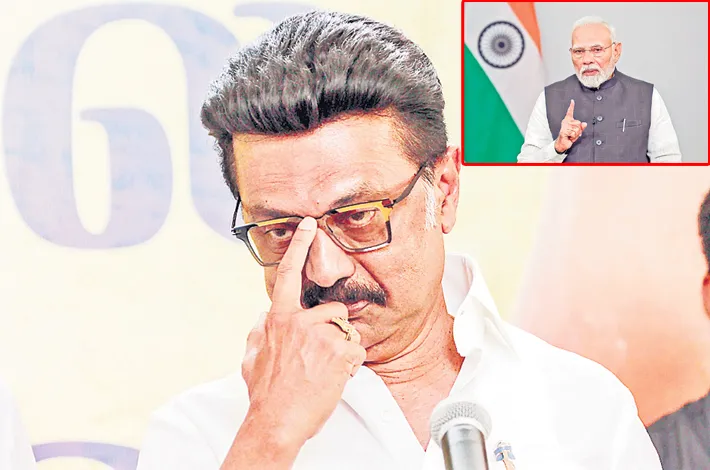
Tamil Nadu Chief Minister MK Stalin has ignited a fierce political debate by drawing a stark contrast between what he describes as two divergent versions of India: one progressive and harmonious under opposition-led governance, exemplified by Tamil Nadu, and another plagued by poverty, unemployment, and communal tensions in states ruled by the Bharatiya Janata Party (BJP).The comments, made in the wake of reported incidents of vandalism and intimidation against Christian communities during the Christmas season in several BJP-governed states, have drawn sharp criticism from the BJP, which accused Stalin of divisive politics and exploiting a religious festival to target Prime Minister Narendra Modi.
Stalin's remarks highlighted alleged attacks on minorities in places such as Chhattisgarh, Assam, Uttar Pradesh, Madhya Pradesh, Delhi, and Odisha — all under BJP rule. Reports from around Christmas 2025 included vandalism of Christmas decorations in schools and churches, harassment of carol singers, and physical confrontations, including an incident in Madhya Pradesh where a BJP local official allegedly manhandled a visually impaired woman at a church event.
Stalin condemned these as actions by "right-wing violent groups" and cited a reported 74% rise in hate speech against minorities since the BJP came to power at the Centre, calling it a "grave danger" to national harmony. In a pointed contrast, Stalin praised Tamil Nadu's progress under the Dravidian model, noting its high economic growth rate (with nominal GSDP growth at 16%, positioning it among the fastest-growing large states), inclusive welfare schemes in education and health, and a culture of interfaith unity where festivals are celebrated together without fear or division.
A Congress spokesperson, speaking in support of Stalin's ally, defended the statement as a factual observation backed by data, emphasizing that communal disharmony appears more prevalent in BJP-ruled states due to inflammatory rhetoric from election platforms. She argued that Tamil Nadu's inclusive approach ensures development benefits reach even the poorest, and dismissed accusations of divisiveness, stating that the two "Indias" reflect differing governance models rather than a call for separation.
The BJP hit back strongly. Senior leader Shazia Ilmi accused Stalin of using the Christmas festival to "poison minds" against PM Modi, pointing to the irony of his comments given past controversial remarks by DMK leaders against Sanatan Dharma. She highlighted that minorities have disproportionately benefited from central welfare schemes under the Modi government without religious discrimination. BJP representatives in Tamil Nadu labelled the remarks as part of a long-standing pattern of "divisive politics" by the DMK, aimed at portraying the BJP as anti-minority while ignoring their own party's history.
Another BJP spokesperson dismissed Stalin's claims, accusing the DMK of creating communal tensions for political gain, such as through actions in the Thiruparankundram hill controversy involving the lighting of the Karthigai Deepam lamp near a dargah. He alleged that the DMK polarizes society along Hindu-Muslim-Christian lines to retain minority votes and prevent shifts toward emerging players like actor Vijay's Tamilaga Vettri Kazhagam (TVK).
Critics also pointed to governance failures under the DMK, including rising state debt — which has reportedly doubled from around Rs 4.4 lakh crore in 2021 to over Rs 9 lakh crore by 2025 — law and order issues, and unfulfilled promises. Opposition voices highlighted that while Tamil Nadu has historical advantages in education, health, and industrial base, comparisons to "lagging" northern states like Uttar Pradesh or Bihar are unfair, as those regions have not had consistent BJP rule and face different developmental starting points.
The exchange unfolded amid preparations for the Tamil Nadu Assembly elections expected in April-May 2026, where the DMK seeks re-election on its governance record, while the BJP, in alliance with parties like the AIADMK, aims to expand its footprint in the south. Political analysts noted that the controversy underscores deepening fault lines, including north-south divides, debates over federal fund distribution, and ideological clashes between Dravidian politics and the BJP's emphasis on cultural nationalism. However, DMK spokespersons defend the government's record, asserting that ideological opposition to the RSS-BJP worldview drives their criticism, not mere electoral strategy.
As the campaign heats up, Stalin's narrative frames the 2026 polls as a battle between the Dravidian model's progress and the BJP's alleged divisiveness. Whether this resonates with voters facing local issues like rising costs, jobs, and governance will likely determine the outcome in one of India's most fiercely contested state elections.