22 September, 2026 | 4:50 PM


Thought provoking tale Dil aur Dararein
30-12-2025 12:01:39 AM
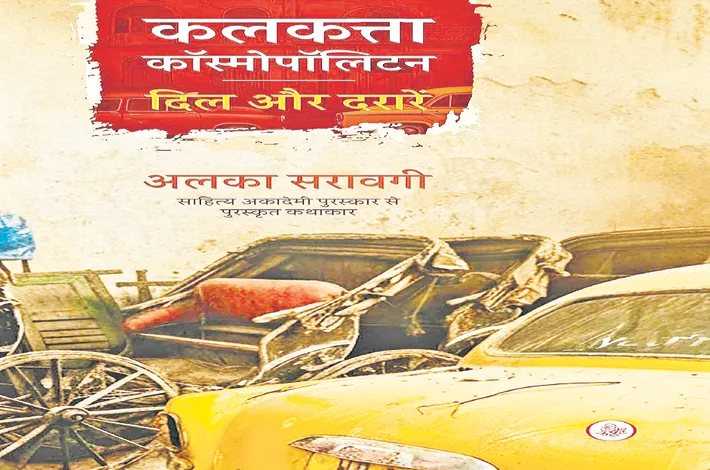
- Kolkata's Identity: Explores the city's paradoxical nature – a melting pot of cultures (Bengali, Muslim, Anglo-Indian) but also a place where communities maintain distances.
- Nostalgia & Memory: Uses Hindi film songs as a powerful tool to evoke past, shared cultural experiences and personal histories.
- Identity Crisis: Characters grapple with fractured identities amidst changing urban landscapes and societal transitions.
- "Dil Aur Dararein" (Hearts & Cracks): The title itself signifies the emotional divides and fissures beneath the cosmopolitan facade of the city.
This is the saga of ‘Sunil Bose’, who converted to Islam and became ‘Mohammad Daniyal’ in order to marry a Muslim girl named ‘Deeba’
Alka Saraogi has consistently brought new narratives of cosmopolitan Calcutta into her novels. The excavation of different time periods of Calcutta, of diverse life situations coexisting in the same era, of the clashes and harmonies between different religions and cultures, of its ever-new angles and mysteries, and of the fissures in its heart continues in Calcutta Cosmopolitan: Dil aur Daraaren as well.
This is the saga of ‘Sunil Bose’, who converted to Islam and became ‘Mohammad Daniyal’ in order to marry a Muslim girl named ‘Deeba’. Amidst numerous internal and external struggles in a lower-class life situation—changing jobs and homes, sometimes hiding their identity or adopting another one—their life moves forward. Within this life, the conflict and duality between ‘Sunil Bose’ and ‘Mohammad Daniyal’ makes the deception between truth and falsehood in the novel increasingly poignant and piercing.
Parallel to this main storyline, tales of people struggling and surviving in Calcutta’s dark, humid lanes continue to unfold. In their lives, the line between right and wrong somehow becomes indistinguishable from the tension between deprivation and dreams, reality and desires. Amidst all this, the personas that various characters have adopted are often torn apart, allowing us to glimpse their inner filth, yet repeatedly, human dignity and nobility shine through in many of them. Calcutta Cosmopolitan: Dil aur Daraaren does not proceed in a straight line; instead, it moves back and forth through time and memories, illuminating the novel’s world and its characters’ many hidden corners and crevices with a transparent light.
A formidable novel woven with extraordinary storytelling.