6 October, 2026 | 7:36 AM


TG unveils New Media Accreditation Rules-2025
23-12-2025 12:12:24 AM
G.O sparks mixed reactions from Journalists' Unions
In a significant overhaul of media regulations, the Telangana government has approved the 'Telangana Media Accreditation Rules-2025', scrapping the previous 2016 guidelines. Issued via G.O. Ms. No. 252 by Chief Secretary K. Ramakrishna Rao, the new rules aim to streamline accreditation for journalists, introduce provisions for digital media for the first time, and establish clearer eligibility criteria. The move is intended to facilitate access to government information while ensuring accountability.
Under the revamped framework, state and district-level accreditation committees will have a two-year tenure, with existing panels continuing until new ones are formed.
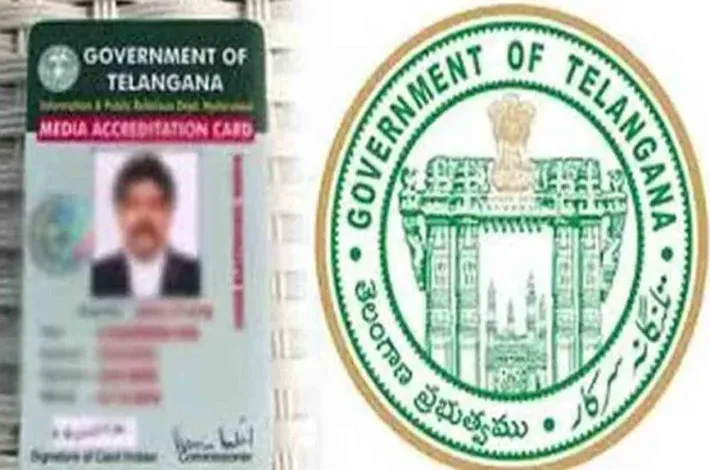
Working reporters in the field will receive accreditation cards as identity for news coverage, while desk journalists—such as sub-editors—will be issued media cards. These media cards are explicitly limited to availing government welfare schemes and benefits for the media fraternity, without field access privileges.
A significant inclusion is for digital news media: Websites must demonstrate at least 500,000 monthly visitors over the past six months to qualify, with a statewide cap of just 10 cards in this category. This reflects the government's recognition of the digital shift but imposes stringent thresholds to maintain quality.
Eligibility criteria have been tightened across sectors. For print media, newspapers must circulate at least 2,000 copies daily and hold Press Registrar General of India (PRGI) registration. Electronic media requirements include satellite channels dedicating 50% airtime to news content, and local cable channels broadcasting at least three daily bulletins. For journalists, state-level accreditation demands a degree or five years of experience; constituency and mandal-level reporters need an intermediate qualification. Freelancers with 15 years of experience and veteran journalists (30 years' service and aged 58+) are now eligible to apply.
The state committee will be chaired by the Media Academy Chairman, with the I&PR Commissioner as co-chair, including representatives from journalist unions and Press Council of India members. District committees will be led by Collectors, with DPR&Os as convenors. Violations—such as misuse of cards, false information, or non-compliance—empower the government to revoke accreditation. Duplicate cards for lost ones will cost Rs. 250.
While the rules modernize accreditation, they have elicited contrasting responses from key journalists' unions. The Telangana Union of Working Journalists (TUWJ) largely welcomed the changes. TUWJ President K. Virahat Ali stated, "All eligible working journalists would get accreditation or media cards based on their field of duty. Desk journalists had only concerns about missing out on government benefits without an accreditation card. For this purpose, they will be given the Media cards by the department and they will be considered for whatever benefits the government extends to the journalist fraternity. As regards desk journalists missing out on RTC bus pass, we would take this up with the department"
However, TUWJ General Secretary Askani Maruthi Sagar criticized introduction of two categories, warning of broader impacts. "Two category of cards (Accreditation for reporters and Media cards for desk journalists) is nothing but dividing journalists which was not the case earlier. He also mentioned about enhancing minimum eligibility years required from 10 to 15 years for freelance journalists and injustice to cable channels. And all these would result in reduction of 10,000 cards this time from the previous figure of 23,000 cards," Sagar opined.
Echoing similar apprehensions, the Telangana Working Journalists Federation (TWJF) expressed support but flagged ambiguities, particularly for desk journalists. TWJF General Secretary B. Basava Punnaiah remarked, "Journalists are expressing objections regarding the Media card given to desk journalists. The provision that it should be used only as an ID card is not correct. We will submit a petition to the I & PR on this."
Unions have urged swift consultations to address gaps, ensuring inclusivity for all media professionals.