8 October, 2026 | 1:29 AM


Tipu Sultan death anniversary observed
05-05-2026 12:00:00 AM
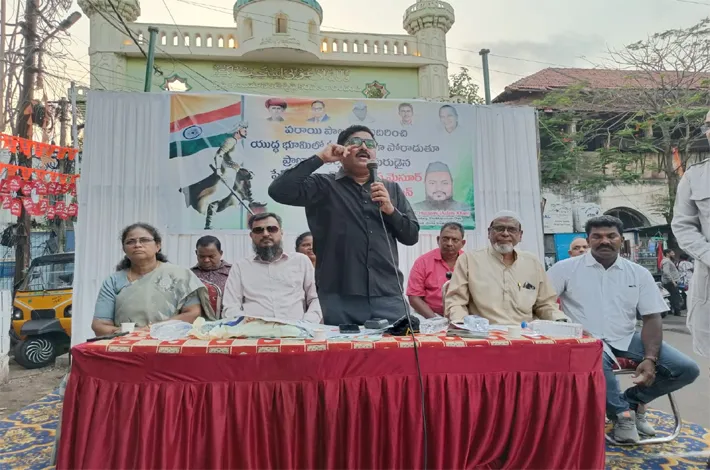
Highlighting the relevance of social reform thought, Dr. Rao said that the ideas associated with Ambedkar, Periyar and Kanshi Ram emphasise equality, self-respect and equitable participation in power
Metro India News | VISAKAPATNAM
A commemorative meeting to mark the death anniversary of Tipu Sultan was held in Visakhapatnam on May 4 under the aegis of Dr. J. Purnachandra Rao, IPS (Retd), National Coordinator. The program, he said, was organized with reference to the ideas associated with B.R. Ambedkar, Periyar E.V. Ramasamy and Kanshi Ram, with a focus on social justice, equality and inclusive governance. Addressing the media, Dr. Rao described Tipu Sultan as a ruler who resisted the expansion of the British East India Company and sought to defend regional sovereignty.
He noted that Tipu made efforts to secure international support, including attempts to build ties with France, and undertook measures to modernize his military with European-style training and improved artillery. Dr. Rao also referred to instances cited by historians to indicate administrative inclusiveness during Tipu Sultan’s reign. Assistance extended to institutions such as the Sringeri Sharada Peetham, and endowments to temples in Melkote and Nanjangud, were mentioned.
Highlighting the relevance of social reform thought, Dr. Rao said that the ideas associated with Ambedkar, Periyar and Kanshi Ram emphasise equality, self-respect and equitable participation in power. He called for a critical reading of history, urging people to view contemporary developments through a historical perspective, ascertain facts, and preserve social cohesion. On the question of political representation, Dr. Rao observed that while democratic institutions have strengthened since Independence, issues relating to equitable representation remain.
He pointed out that certain communities appear to have lower representation in legislative bodies relative to their population share, while others have a comparatively higher presence. Similar concerns, he said, extend to Backward Classes, Scheduled Castes and Scheduled Tribes.