23 October, 2026 | 5:43 AM


Truth should not hide behind the pack
06-09-2026 12:00:00 AM
Why India needs a front-of-pack label that speaks before the advertisement does
hema singuluri I hyderabad
Walk into a supermarket and the first thing a food packet tells you is rarely its nutritional story. Bright colours, smiling faces, health claims, photographs and words such as “energy”, “goodness” or “natural” compete for attention. The information that could actually help a consumer judge the product is often tucked away in a relatively small panel on the back.
That imbalance needs correction.
India’s nutrition transition demands clearer labels as undernutrition persists alongside rising obesity, diabetes, hypertension and cardiovascular diseases, empowering informed choices.
A label people can read at a glance
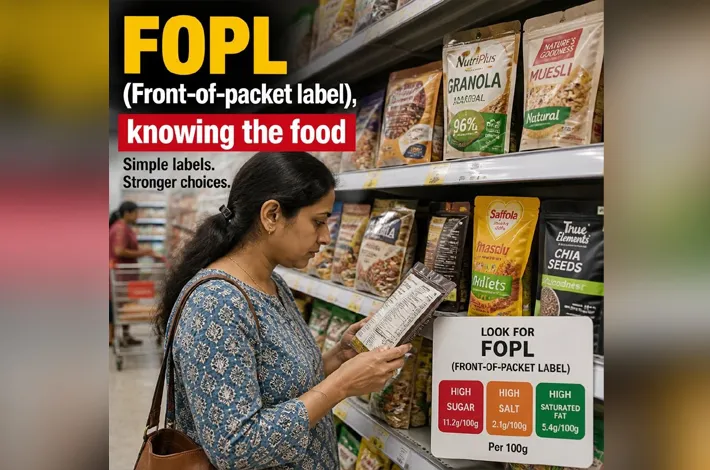
Front-of-pack labelling (FOPL) can bridge that gap by bringing important nutritional information to the most visible part of the package. The World Health Organization considers FOPL an important policy tool because simplified information can help consumers understand nutritional quality and make healthier choices. It also says such systems should be government-led, transparent, and developed with stakeholder participation.
For India, the central question is not whether manufacturers should be consulted. They should. Food companies understand formulations, packaging limitations, supply chains, and purchasing behaviour. Their practical inputs can help make a regulation workable.
But consultation should not become a veto.
The purpose of food labelling is ultimately to inform the person holding the packet, not to preserve the packet’s marketing space.
Hyderabad offers a timely reminder
Recent enforcement in Hyderabad underlines why transparency and compliance matter beyond the supermarket shelf. On September 2, Telangana food-safety authorities inspected 19 cafes and snack outlets. Two establishments were closed for operating without valid FSSAI licences or registrations, while another hotel’s licence was suspended following violations involving hygiene, sanitation, food handling and labelling.
These actions concern food safety, while FOPL concerns nutrition. But both point to the same principle: consumers need information they can see, understand and trust.
Let evidence decide
FSSAI has previously proposed front-of-pack nutrition approaches, including the Indian Nutrition Rating framework, while its draft work has also examined high-fat, sugar and salt foods.
The regulator should now ensure that any final system is based on transparent consumer testing across regions, languages, income groups and education levels. Nutrition scientists, public-health experts, consumer organizations and industry should all have a seat at the table. The scientific basis for thresholds must be publicly available.
A voluntary system, however, has an obvious weakness. Producers of healthier products may have greater reason to display favourable information, while manufacturers of less healthy products may have little incentive to highlight nutritional shortcomings.
Make the market work for health
The biggest impact of FOPL may eventually come from reformulation rather than rejection. If consumers can immediately see that one product contains considerably more sugar, salt or saturated fat than another, manufacturers have a reason to improve their recipes.
The front of a food packet is valuable advertising territory. It is only fair that a small portion of that space should also tell consumers the truth.
The packet can continue to sell. But it must also inform.