22 September, 2026 | 3:44 PM


Umar Khalid bail denial and Ram Rahim's repeated paroles
07-01-2026 12:00:00 AM
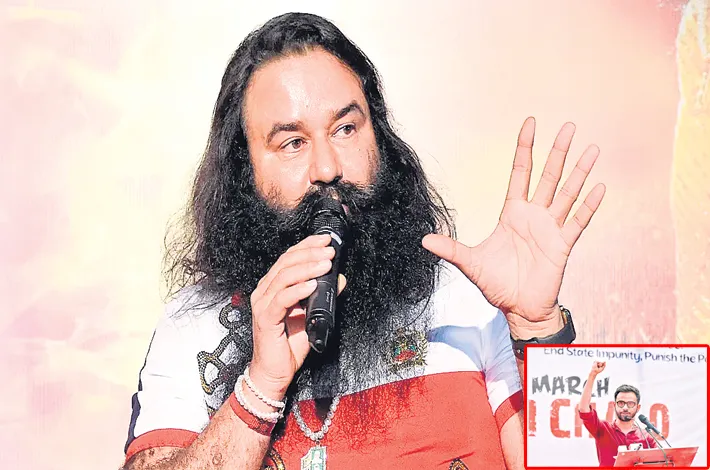
Disparities in India's criminal justice
Khalid's prolonged incarceration without trial exemplifies this: delays in framing charges, witness examinations, and procedural hurdles have stalled proceedings, violating Article 21's right to speedy trial and personal liberty.
In a striking juxtaposition that underscores the paradoxes within India's criminal justice system, the Supreme Court on Monday denied bail to activist Umar Khalid in the 2020 Delhi riots conspiracy case under the Unlawful Activities (Prevention) Act (UAPA), even as convicted rapist and murderer Gurmeet Ram Rahim Singh was granted his 15th parole since 2017. Khalid, arrested in September 2020, has languished in custody for over five years without the trial commencing, highlighting the draconian nature of UAPA provisions that invert the presumption of innocence. Meanwhile, Ram Rahim, the head of Dera Sacha Sauda, serving a 20-year sentence for raping two disciples and convicted in murder cases, walked out of Rohtak's Sunaria prison on a 40-day parole, his latest release following one in August 2025.
This contrast, as echoed in public discourse, raises profound questions about equity, political influence, and the erosion of public trust in the judiciary. To contextualize, Umar Khalid's case stems from allegations of orchestrating violence during the 2020 anti-CAA protests in Delhi, which resulted in over 50 deaths. Charged under UAPA—a law originally aimed at terrorism but increasingly used against dissenters—Khalid and co-accused like Sharjeel Imam face claims of a "larger conspiracy."
The Supreme Court's verdict emphasized that the "statutory threshold" for bail denial under UAPA was met, requiring courts to prima facie believe the accusations are true, effectively making bail the exception rather than the rule. Critics argue this provision, upheld in cases like Zahoor Ahmad Shah Watali (2019), weaponizes pre-trial detention, turning it into punishment without conviction.
Khalid's prolonged incarceration without trial exemplifies this: delays in framing charges, witness examinations, and procedural hurdles have stalled proceedings, violating Article 21's right to speedy trial and personal liberty. Human rights groups, including Amnesty International, have decried UAPA as a tool for stifling activism, with over 77% of India's prisoners being undertrials, disproportionately from marginalized communities.
In stark opposition stands Gurmeet Ram Rahim Singh's treatment. Convicted in 2017 for raping sadhvis and later for murdering journalist Ram Chander Chhatrapati, Ram Rahim's sentences total over 40 years. And the Haryana's government has granted him parole 15 times, often coinciding with elections or festivals, allowing him to reside at his Sirsa ashram and engage in public activities. Parole, intended as a rehabilitative measure under the Haryana Good Conduct Prisoners (Temporary Release) Act, 1988, is meant for good behaviour and family ties.
However, Ram Rahim's frequent releases—totalling over 500 days out of prison—smack of abuse, especially given his influence over millions of followers, which politicians allegedly court for votes. Haryana CM Nayab Saini defended the latest parole as a "matter of court," but opposition parties like Congress and Trinamool Congress label it a betrayal of women's safety, questioning why a "VVIP convict" enjoys such leniency amid rising crimes against women.
This duality exposes systemic disparities. UAPA's bail regime, with its high bar, disproportionately affects critics of the state—activists, journalists, and minorities—fostering a chilling effect on free speech. Data from Prison Statistics India 2023 shows undertrials under special laws like UAPA face extended detentions, often due to investigative delays or political motivations. Conversely, the parole system, lacking stringent oversight, benefits the powerful. Ram Rahim's case isn't isolated; similar leniencies have been extended to figures like Asaram Bapu or politicians in graft cases, revealing class and influence biases. Caste and faith compound these inequities: marginalized groups, including Muslims like Khalid, are overrepresented in undertrial populations, while influential godmen leverage communal clout.
Broader implications are dire. Such selective justice erodes the rule of law, breeding cynicism. As journalist Rajdeep Sardesai noted, it exemplifies "liberty for the powerful, cages for dissent." Public outrage on platforms like X highlights perceptions of a two-tiered system: one punitive for ideological opponents, another forgiving for electoral allies. This undermines constitutional equality under Article 14, fuelling demands for reforms like time-bound trials and parole transparency. Internationally, India's ranking in the World Justice Project's Rule of Law Index slips due to such inconsistencies, drawing scrutiny from bodies like the UN Human Rights Council.
Reform is urgent. Amending UAPA to align with bail jurisprudence in ordinary crimes, as suggested in the Arnab Goswami case (2020), could restore balance. For parole, mandatory judicial review and victim consultations, as in some U.S. models, might curb misuse. Without these, India's justice system risks becoming a tool of power rather than equity.In other words, the Khalid-Ram Rahim saga isn't mere anomaly but symptomatic of deeper flaws: politicized enforcement, unequal access to liberty, and institutional inertia. As one X user lamented, "Yeh hai India ka criminal justice system"—a system in dire need of introspection to reclaim its promise of justice for all.