28 September, 2026 | 1:02 PM


Union Budget continues neglect of minorities: Shabbir Ali
02-02-2026 12:13:11 AM
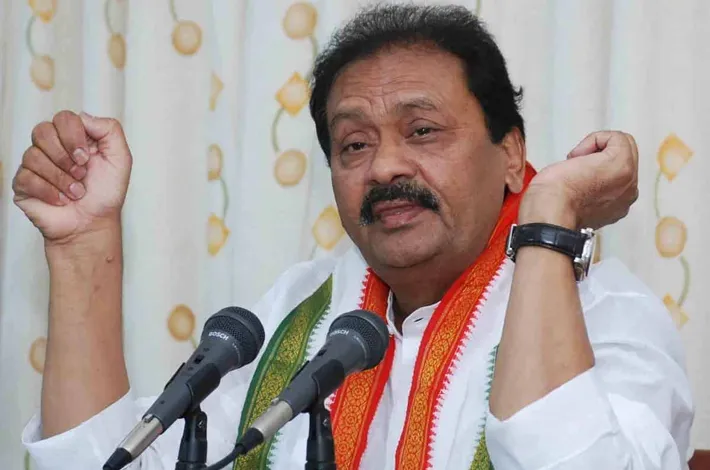
Senior Congress leader and Advisor to the Telangana Government Mohammed Ali Shabbir criticised the Union Budget 2026-27, stating that the BJP-led Union government had once again failed to accord priority to minority welfare despite a massive expansion in overall expenditure.
Reacting to the budget presented by Finance Minister Nirmala Sitharaman, Shabbir Ali said the total allocation for the Ministry of Minority Affairs for 2026-27 stood at Rs 3,400 crore, comprising Rs 3,395.62 crore under the revenue section and Rs 4.38 crore under capital expenditure. He pointed out that this represented an increase of barely Rs 50 crore over the previous year, even as the total size of the Union Budget rose sharply.
Shabbir Ali said the overall expenditure in the Union Budget had increased from about Rs 50.65 lakh crore in 2025-26 to an estimated Rs 53.5 lakh crore in 2026-27, an absolute rise of over Rs 2.85 lakh crore in a single year. “Out of this massive increase, minorities have been given just Rs 50 crore. This clearly shows where the government’s priorities lie,” he said, adding that minorities continued to receive a negligible share of national resources despite constituting over 15 per cent of the population.
He further underlined that the Union government’s allocation for minority welfare across the entire country was now lower than what several States were spending individually. Shabbir Ali pointed out that Congress-ruled Telangana alone had allocated Rs 3,591 crore for its Minorities Welfare Department in 2025-26 and Karnataka had made significant minority-specific provisions of over Rs 4,000 crore through multiple schemes.
“These figures expose a disturbing reality. The Union government is spending less on minority welfare for the entire country than individual States like Telangana. This is despite the Union Budget running into tens of lakh crore rupees,” he said.
Shabbir Ali added that even when minority welfare was examined as a share of budgets, States were showing relatively greater commitment. While Telangana allocated around 1.18 per cent of its budget for minority welfare, the Union government’s allocation for minorities worked out to a fraction of a percentage point of the total national budget, making it statistically insignificant.
The Congress leader reiterated that education continued to bear the brunt of successive Union Budgets. He said scholarship, fellowship and educational support schemes for minorities had either stagnated or weakened over the years, affecting first-generation learners the most. Skill development and livelihood programmes, he added, had also failed to receive meaningful support, undermining employment prospects for minority youth.
Drawing a longer-term comparison, Shabbir Ali said the disparity became even starker when budgets over the years were examined. He recalled that in 2013-14, when the total Union Budget stood at Rs 16.65 lakh crore, the Congress-led UPA government had allocated Rs 3,531 crore for minority welfare. “Today, with the Union Budget swelling to Rs 53.5 lakh crore, the allocation has actually come down to Rs 3,400 crore. This is not stagnation; it is a clear regression,” he said.
He further pointed out that the single-year increase in the Union Budget between 2025-26 and 2026-27, amounting to Rs 2.85 lakh crore, was many times larger than the combined minority welfare budgets of Telangana, Karnataka and Andhra Pradesh put together. “When the government can expand its budget by such a huge amount in one year, it cannot claim lack of resources while allocating just Rs 50 crore more for minorities,” he said.
Shabbir Ali also accused the BJP-led NDA Government of continuously neglecting Telangana in the Union Budget. Chief Minister Revanth Reddy had pushed for funding for projects like Hyderabad Metro Phase-II, Regional Ring Road (RRR), Musi River rejuvenation, and fulfillment of AP Reorganisation Act 2014 commitments. None of these received specific mentions or allocations. Vertical tax devolution remains at 41%, well below the demanded 50%, with no changes to fiscal deficit limits (e.g., to 4% of GSDP) or conversions of loans to grants.