24 September, 2026 | 7:03 AM


Women IAS Officers and ‘Controversies’
11-01-2026 12:00:00 AM
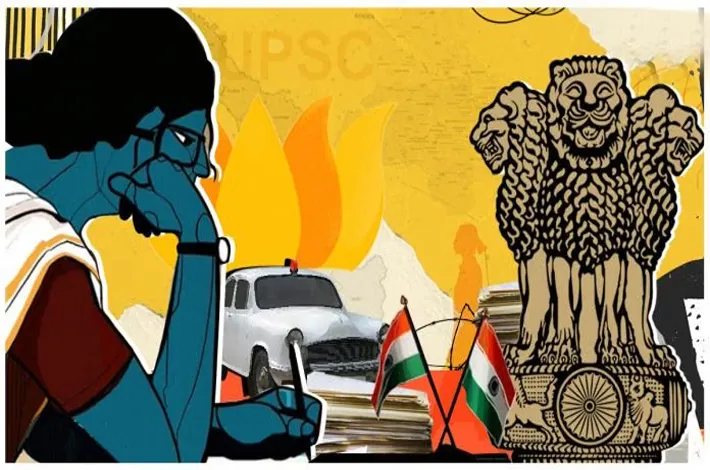
■ Political tensions in TG have led to women IAS officers being dragged into alleged controversies instead of policy-focused debates
■ It is high time that women ministers, IAS, IPS & IFS officers take initiative, come forward and expose the guilty
■ Senior police and intelligence officials have been directed to probe the origin and spread of the news, find out the truth
metro india news I hyderabad
In the recent past, a section of media ran stories about some woman IAS officer and her alleged proximity to some minister. Needless to say this media story became viral and there is a debate on the issue happening all over the main stream and social media platforms. The media attention on the matter became widespread. This led to majority of right thinking people in the state are asking for a in-depth probe and strident action against those guilty.
The media report also evoked strong response from the IAS officers association which took serious exception to so called media, a section of it, focussing not on government policies, but on women IAS officers themselves—linking administrative decisions to alleged personal proximity with ministers. Such reportage, the association claimed has amounted to character assassination, undermining the professional reputation of officers who function at the highest levels of governance.
Rather than scrutinising policies or questioning governance outcomes, some political forces and sections of the media are accused of diverting attention by projecting women IAS officers as proxies in political battles. Reports suggesting that postings, authority, or decisions stem from “personal closeness” to ministers have sparked widespread outrage.
Civil service circles stress that administrative decisions are guided by rules, laws, and collective institutional processes—not individual relationships. Reducing a woman officer’s professional achievements to alleged personal equations not only damages her credibility but also erodes public trust in the governance system.
Such narratives, analysts warn, have far-reaching consequences. They create mental pressure on officers, discourage decisive action in the field, and instil fear that every administrative decision may be painted with a political or personal colour. This, they argue, weakens institutional independence and hampers effective governance.
The issue is no longer seen as isolated incidents but as a broader trend reflecting a demeaning attitude towards women in authority. Observers caution that targeting individual officers ultimately harms the entire administrative framework.
Strong condemnation from Minister and Associations
Minister Komatireddy Venkat Reddy has strongly condemned the alleged smear campaigns, calling it unfortunate and unethical to spread false stories about women IAS officers. He said irresponsible reporting that causes mental distress to officers is unacceptable.
The IAS Officers Association, IPS Officers’ Association and Indian Forest Service Association comprising Telangana bureaucrats of different cadres as members have also denounced the trend, stating that the media has crossed ethical boundaries. Such reporting, the associations asserted, is not journalism but blatant character assassination.
Some allege that these narratives are driven by political interests—using women officers as collateral damage in political confrontations. Analysts warn that dragging civil servants into partisan conflicts undermines democracy and threatens the autonomy of the bureaucracy. They also fear it could discourage future generations of women from taking up leadership roles in public service.
While policies and decisions can and should be questioned, observers emphasise that unsubstantiated allegations, personal insinuations, and attacks on dignity—especially with a gendered undertone—are unacceptable.
Call for Responsible Journalism
There is a growing call for introspection within the media. Many argue that while it is the media’s duty to hold governments accountable, crossing into personal attacks under the guise of criticism is dangerous. Blurring the line between scrutiny and smear, they warn, turns journalism into a political weapon.
Responsible journalism, experts stress, must be rooted in facts, focus on policy and governance, avoid gender bias, and respect personal dignity. Targeting women IAS officers is not just an attack on individuals—it is an assault on governance, women’s empowerment, and democratic values.
As debates intensify, there is a strong demand for media houses to reassess their role and responsibility, recognising that reckless journalism can cause lasting damage to institutions, society, and public trust.
Call for CM’s intervention
There is a growing demand for the Chief Minister to personally intervene and order a thorough probe into the controversy, with calls for strict action against those responsible for spreading misinformation. Minister Komatireddy Venkat Reddy disclosed that the issue has already been discussed with the Director General of Police.
He said senior police and intelligence officials have been directed to conduct a comprehensive inquiry into the origin, coordination, and circulation of fake news and malicious content. “Once the inquiry report is submitted, strict legal action will be initiated against those found responsible,” the Minister warned.
Political observers and analysts are closely tracking the developments, stressing that the issue warrants serious attention. Given that it involves individuals holding key and responsible positions, they argue that the government must accord it top priority and ensure a transparent, time-bound investigation. Analysts emphasise that accountability is essential and that those behind the campaign—regardless of status or affiliation—must be brought to book.