13 September, 2026 | 1:08 AM


60 years since Indira Gandhi took charge of the nation
24-01-2026 12:00:00 AM
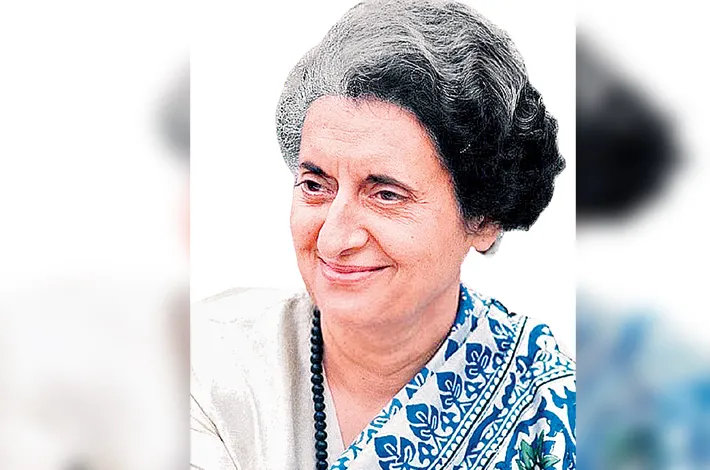
The 60th anniversary of Indira Gandhi's swearing-in as India's first—and to date only—woman Prime Minister on January 24, 1966, evokes pride across political divides, uniting admirers and even adversaries in recognition of her enduring impact.Indira Gandhi's ascent to power was far from predetermined. Following Jawaharlal Nehru's death on May 27, 1964, Gulzari Lal Nanda served briefly as interim Prime Minister. Indira made no immediate claim to the top post.
Lal Bahadur Shastri assumed leadership and repeatedly urged her to join his cabinet. She initially declined, citing mourning and her commitment to organizing Nehru's papers. Shastri kept her position open until she accepted the Information and Broadcasting portfolio. Her reluctance demonstrated no eagerness for power, challenging notions of dynastic entitlement.Her decisive election as Congress Parliamentary Party leader on January 19, 1966, came after a hard-fought contest against Morarji Desai, securing 355 votes to his 169.
She was sworn in five days later by President Sarvepalli Radhakrishnan, marking a historic milestone as the world's second female prime minister after Sirimavo Bandaranaike.Former British Deputy Prime Minister and Labour leader Michael Foot paid glowing tribute, crediting Indira Gandhi with holding India together through turbulent years from 1966 to 1977. Under her stewardship, India emerged as a formidable force: boasting the third-largest pool of skilled scientific and technical manpower among developing nations, ranking as the fifth military power, sixth in the nuclear club after the 1974 Pokhran test, seventh in space pursuits, and tenth among industrial nations.
Her landmark accomplishments defined modern India. The 1971 Bangladesh Liberation War stands out as a pinnacle of resolute leadership. Facing U.S. President Richard Nixon's deployment of the Seventh Fleet to the Bay of Bengal to intimidate her, Indira stood firm, prioritizing human rights and supporting East Pakistan's independence struggle. India's decisive victory created Bangladesh and solidified regional influence.
The Shimla Agreement of July 2, 1972, shifted the Jammu & Kashmir issue from UN oversight to bilateral resolution with Pakistan, a diplomatic triumph. On June 14, 1972, she became the first head of government to highlight environmental concerns at the UN Conference on the Human Environment in Stockholm. India's first underground nuclear test at Pokhran on May 18, 1974—codenamed "Smiling Buddha"—prompted the West to establish the Nuclear Suppliers Group, underscoring her strategic defiance. In her Raul Prebisch Lecture on June 8, 1983, Indira outlined a vision for a New International Economic Order.
She argued that Western prosperity, built on exploiting developing nations' resources, demanded repayment through concessional aid and fairer terms—prosperity could not endure amid global poverty. She played a key role in reviving the North-South Dialogue at the 1981 Cancun Summit, ensuring U.S. President Ronald Reagan's participation for greater impact. A committed democrat despite controversies, Indira resolved to end the Emergency soon after an Indian Youth Congress event in Guwahati in November 1976. She revoked it in 1977 and called elections—widely regarded as among the freest, fairest, and most fearless—despite holding absolute power.
She lost, yet peacefully transferred authority to her fiercest opponents, a rare act of democratic grace in any era.Her experiences with U.S. pressure began earlier. During the 1965 India-Pakistan War under Shastri, American warnings threatened to halt PL-480 wheat supplies if India advanced on Lahore amid drought. Shastri prioritized feeding millions over territorial gains. Shortly after talks with President Lyndon B. Johnson, Indira convened chief ministers and agriculture ministers on April 9, 1966, stressing rapid agricultural growth, population control, and self-sufficiency for national dignity. Viewing foreign aid as temporary, she pragmatically devalued the rupee in 1966, eased imports, and reduced export subsidies to stabilize the economy and secure food amid balance-of-payments strains, drought, and aid freezes post-1965 war.Johnson approved 10 million tonnes of PL-480 wheat, but India's criticism of U.S. bombing in Vietnam—including napalm use—prompted delays, forcing a "ship-to-mouth" existence.
When reminded that India's stance aligned with the Pope and UN Secretary-General, Johnson reportedly retorted that they did not need American wheat, revealing aid as leverage for policy alignment.Indira's socialist measures—land reforms, bank nationalization (14 major banks in 1969), and constitutional amendments—advanced equity, self-reliance, and non-violence. The Green Revolution, bolstered under her watch, transformed India toward food self-sufficiency.Indira Gandhi's legacy embodies resolute leadership, strategic defiance against global pressures, and unwavering commitment to India's sovereignty, equity, and democratic ideals. She shaped the nation's path through crises, leaving an indelible mark on its rise as a self-assured power.