22 September, 2026 | 6:34 PM


Advancing infra sector: Industry perspectives and policy recommendations
09-01-2026 12:00:00 AM
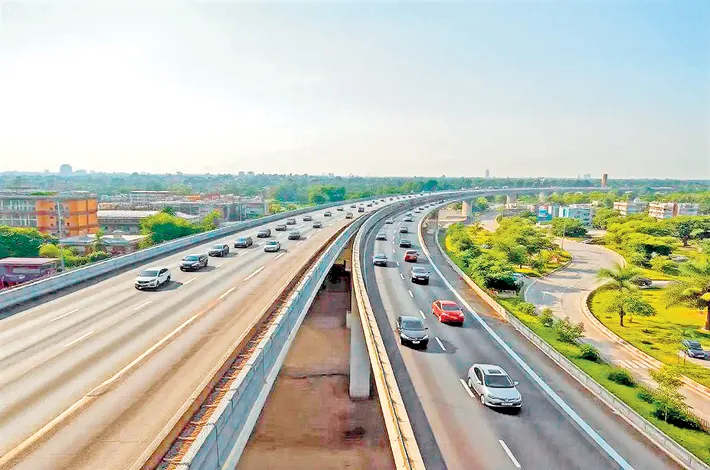
In the realm of India's economic development, infrastructure stands as a cornerstone, driving growth and sustainability. Industry representatives have long appreciated the innovative policies spearheaded by key policymakers through personal initiatives and consultative processes. Landmark measures such as the rolling three-year pipeline for Public-Private Partnership (PPP) projects, 50-year interest-free loans to states for capital expenditure and infrastructure, and the National Infrastructure Pipeline (NIP) have facilitated greater public and private participation.
These efforts underscore a commitment to fostering an investment-led economy, recognizing that every rupee invested in infrastructure yields a threefold multiplier effect on the Gross Domestic Product (GDP). Unlike consumption-driven growth, infrastructure investments bolster sectors like employment, bank credit, transportation, and manufacturing, ensuring long-term economic resilience. Despite these advancements, the infrastructure sector faces contemporary challenges that require sustained governmental support.
One pressing issue is the need for enhanced budgetary allocations. Over the past five years, allocations have been promising, yet their conversion into actual expenditures has often been delayed or deferred. Industry stakeholders urge not only an increase in these allocations but also mechanisms to ensure timely disbursement, preventing bottlenecks that hinder project execution. Complementing this, additional focus on emerging sub-sectors is essential.
While traditional areas like highways, airports, seaports, power, and telecom continue to demand funding, new-age priorities such as pumped storage projects, solar and nuclear power initiatives, green hydrogen projects, data center parks, semiconductor parks, economic corridors, railway station redevelopment, ropeway cable cars, urban mobility infrastructure, inland container depots, inland waterways, smart industrial cities, and multi-modal hubs warrant pioneering investments to align with modern economic needs. To address India's climate commitments, including net-zero targets by 2070 and intermediate goals by 2030 under Nationally Determined Contributions, the establishment of a Climate Finance Bank or Green Finance Bank is proposed.
This institution could start with an initial capitalization of Rs. 5,000 crore, aiming for Rs. 20,000 crore overall, functioning as a Development Finance Institution (DFI) with mandates for equity investments and project lending in adaptation, mitigation, and loss-and-damage initiatives. Allowing co-lending with other banks and the launch of Infrastructure Investment Trusts (InvITs) would further mobilize funds. Similarly, a Bond Fund Retail Platform could channel retail savings into long-term investments by purchasing bonds from infrastructure, government, and autonomous entities. This platform would offer liquidity through flexible entry and exit options, with incentives like lower income tax on interest earnings and no Tax Deducted at Source (TDS) to encourage prolonged savings.
Financial mechanisms tailored to infrastructure's unique demands are also critical. For instance, the Sagarmala Finance Corporation Ltd (SFCL), with its mandate as the nodal agency for the Rs. 25,000 crore Maritime Development Fund, requires accelerated capitalization beyond its current Rs. 9,000 crore paid-up capital to support unmet needs in seaport and related projects. Easing External Commercial Borrowing (ECB) limits, extending tenures from 2 to 20 years without thresholds, and providing flexibility in market-linked rates would enable more companies to access low-cost foreign debt.
Additionally, institutionalizing Viability Gap Funding (VGF) as a standard program, complete with a transparent dashboard tracking recommendations, sanctions, disbursements, and project statuses, would expedite implementation, especially in niche areas like urban transportation, water, sewage, and social infrastructure. Streamlining dispute resolution and financial norms is vital for operational efficiency. Adopting accelerated timelines with standard operating procedures and the Doctrine of Precedence, alongside releasing interim payments without bank guarantees (substituting solvency certificates if needed), would minimize delays.
Higher interest penalties on government departments for procrastination could further disincentivize escalations. For pre-vetted projects, government-led lender briefings post-finalization could address concerns, enabling faster loan approvals once tenders are awarded. Regulatory adjustments, such as guiding the Reserve Bank of India (RBI) to permit an 8:1 debt-equity ratio for infrastructure projects and extending Non-Performing Asset (NPA) recognition to 180 days (considering inherent delays in receivables from government or public sources), would facilitate transparent funding structures.
Tax and fiscal incentives play a pivotal role in attracting capital. Lowering capital gains tax on InvITs to 10% for short-term and 5% for long-term holdings would encourage investments, addressing capital shortages. Additional tax relief up to Rs. 5,00,000 for long-term infrastructure bonds, or full exemption on interest income, could boost savings and project funding. Allowing optional accelerated depreciation up to 33% for plant, equipment, and assets recognizes their rapid value loss, while reducing TDS on contracts from 2% to 1% would alleviate working capital strains amid slim profit margins.
Enhanced weighted tax deductions for research and development in infrastructure could spur innovations in eco-friendly practices, automation, and modular construction, improving quality, timelines, and costs. Finally, Goods and Services Tax (GST) reforms are recommended to ease burdens on the sector. Implementing a uniform 5% GST on all works contracts without input tax credit would resolve compliance and cash flow issues. Lowering GST on essential materials like cement and steel, and permitting full GST Input Tax Credit (ITC) on temporary structures such as worker camps, site offices, testing labs, and material stores, would enhance affordability and efficiency. These collective measures, if adopted, could propel India's infrastructure industry toward greater innovation, sustainability, and economic impact, building on the strong foundation already laid by forward-thinking policies.
-Dr. Nuthalapati Kishore Economist & Corporate Finance Professional