30 September, 2026 | 8:09 PM


Allahabad HC Grants Anticipatory Bail to Shankaracharya
27-03-2026 12:00:00 AM
metro india news I Prayagraj
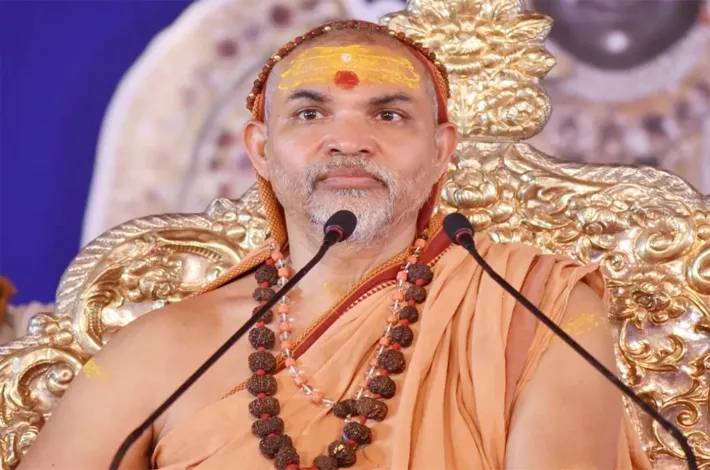
In a significant legal development, the Allahabad High Court on Wednesday granted anticipatory bail to Jagadguru Shankaracharya Swami Avimukteshwaranand Saraswati of Jyotish Peeth and his disciple Swami Mukundanand Giri (also referred to as Mukundanand Brahmachari) in a case registered under the Protection of Children from Sexual Offences (POCSO) Act.
Justice Jitendra Kumar Sinha delivered the detailed 22-page order, providing relief from arrest to the spiritual leader while directing both parties to cooperate fully with the ongoing investigation. The court also imposed a restraint on the applicants and the first informant from making public statements or giving media interviews regarding the matter.
The case originated from allegations of misconduct involving two minor boys. A complaint was filed by Ashutosh Brahmachari, also known as Ashutosh Pandey or Ashutosh Maharaj, associated with Shakumbhari Peeth. Following directions from a special POCSO court in Prayagraj, police registered an FIR at Jhunsi police station. The allegations pertained to incidents claimed to have occurred during a camp or at an ashram setting.
In granting bail, the High Court carefully examined the materials placed before it, including the FIR, medical reports, and statements related to the case. The bench observed that the conduct described by the victims—confiding in a stranger (the informant) rather than their parents or natural guardians—appeared unusual and not aligned with typical human behavior in such sensitive matters. The court highlighted this aspect as one of the factors warranting a cautious approach at the pre-charge stage.
The order noted inconsistencies in the accounts concerning dates and places of the alleged incidents. It further pointed to a six-day delay in lodging the formal complaint, with the explanation provided being that the informant was engaged in “Pooja” (prayer rituals). The court observed that during this period, the informant had already initiated another related complaint, raising questions about the sequence of events.
Importantly, the judgment clarified that the victims were students from a school in Hardoi, not residents of the ashram or disciples at the Shankaracharya's institution as initially portrayed in some claims. This distinction was drawn from records, including marksheets and other details submitted during proceedings. The court also referenced the medical examination report, which indicated no external injuries and used phrasing such as “cannot be ruled out” regarding possible assault, describing the overall evidence as requiring greater scrutiny.
A key legal point addressed in the order was the applicability of Section 29 of the POCSO Act, which creates a presumption of guilt in certain circumstances. The bench ruled that this presumption does not apply at the anticipatory bail or pre-charge stage, aligning with interpretations from higher judicial precedents. The court emphasized that allegations under POCSO demand careful handling,
but relief can be considered when prima facie materials show inconsistencies or procedural aspects needing deeper investigation.
Swami Avimukteshwaranand Saraswati, who holds the title of Shankaracharya of Jyotish Peeth, has consistently maintained his innocence throughout the proceedings. He had earlier offered to undergo a narco test to establish the truth and asserted that the minor students in question had no connection with his gurukul or ashram. Representatives of the seer pointed to CCTV footage and other records as potential evidence supporting this position. The court directed that the investigation should proceed unimpeded, with the applicants required to extend full cooperation to authorities.
The anticipatory bail comes with standard conditions, including furnishing a personal bond and ensuring availability for questioning. The order follows an earlier interim stay on arrest granted by the same bench in late February, when orders were reserved after detailed hearings.
This ruling has drawn attention within spiritual and legal circles, as Swami Avimukteshwaranand is a prominent figure known for his discourses on Hindu philosophy, scriptures, and social issues. The case had generated considerable public interest, with debates surrounding the protection of children under POCSO alongside the rights of the accused to fair process and presumption of innocence until proven guilty.
Legal experts note that while bail has been granted, the underlying investigation remains active. Police are expected to continue gathering evidence, recording statements, and preparing a charge sheet in due course. The High Court’s observations are specific to the bail application and do not constitute a final adjudication on the merits of the allegations.
Both sides have been barred from public commentary to ensure the sanctity of the investigative process and to prevent any influence on witnesses or proceedings. This gag order reflects the court’s intent to allow law enforcement to function without external pressures.
The development underscores the judiciary’s role in balancing stringent provisions of protective laws like POCSO with constitutional safeguards for personal liberty. Anticipatory bail under Section 438 of the Code of Criminal Procedure (now corresponding provisions in the Bharatiya Nagarik Suraksha Sanhita) is granted when the court is satisfied that the applicant may face arrest but the case does not warrant immediate custody at that juncture.
As the matter progresses, the focus remains on a thorough, fair, and time-bound probe. The Allahabad High Court’s order provides immediate relief to the Shankaracharya while reinforcing that serious allegations against any individual, particularly those involving minors, must be examined with utmost diligence and evidence-based reasoning.
The case continues to be monitored closely, with the next steps lying in the hands of the investigating agency. Swami Avimukteshwaranand and his disciple are now required to adhere to the conditions laid down by the court as they navigate the legal process ahead