7 October, 2026 | 1:46 PM


BANGLADESH LOOKS UP TO STUDENTS-LED NCP
01-03-2025 12:00:00 AM
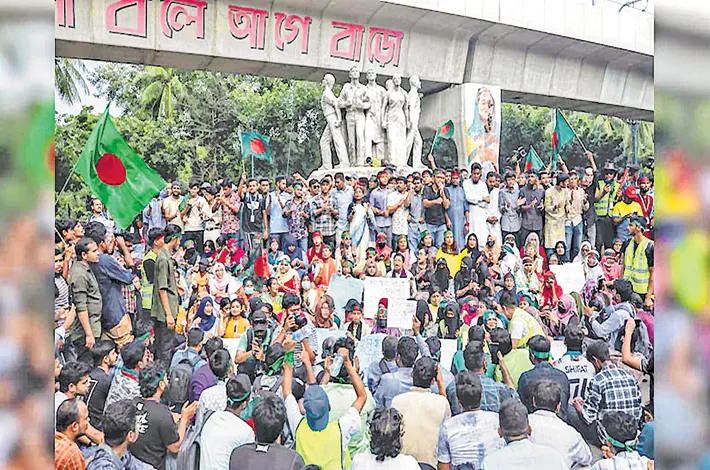
From protesters to leaders: Students launch political party in Dhaka on Friday
Agencies DHAKA
Bangladesh on Friday is set to witness the emergence of a political party led by students who spearheaded the 2024 street campaign that led to the toppling of the then prime minister Sheikh Hasina's Awami League regime. People started gathering since morning in central Dhaka's Manik Mia Avenue for the launch of 'Jatiya Nagorik Party' or National Citizen Party (NCP) led by the key-figures of the Anti-Discrimination Student Movement, also called Students Against Discrimination (SAD).
The Anti-Discrimination Student Movement led a mass uprising leading to the ouster of PM Sheikh Hasina's over 15 years of rule on August 5 last year. NCP leaders said they expected around 3,00,000 people, including students from across the country, at the launch event.
"People from all the 64 districts are to join our inauguration alongside the family members of those who gave their lives in the July-August mass uprising," a spokesman of the new party's media cell said. "We have also invited the leaders of major political parties," he added. The new party is being launched with the blessings of Muhammad Yunus, who took over as the Chief Advisor as the SAD nominee in August 2024.
NCP leaders said Yunus was also invited to their launch ceremony. The other high-profile invitees include Bangladesh Nationalist Party (BNP) chairperson and ex-premier Khaleda Zia; her son and acting BNP chairperson Tarique Rahman; BNP secretary general Mirza Fakhrul Islam Alamgir; Jamaat-e-Islami ameer Shafiqur Rahman, and leaders of several Islamic, rightist and leftwing parties and groups. With the country at a crossroads, many citizens, particularly those from marginalised communities, are looking to this new political force for genuine representation and policy reforms, the Daily Star reported.
Bangladesh has long struggled with systemic inequality, corruption, and a lack of political inclusivity. While major political parties have traditionally focused on expediency to win the election, voices of marginalised groups, including disadvantaged communities, ethnic minorities, persons with disabilities, and informal workers, have often been overlooked.