 12 September, 2026 | 9:39 PM


Battle for Coal Heartland
22-01-2026 12:00:00 AM
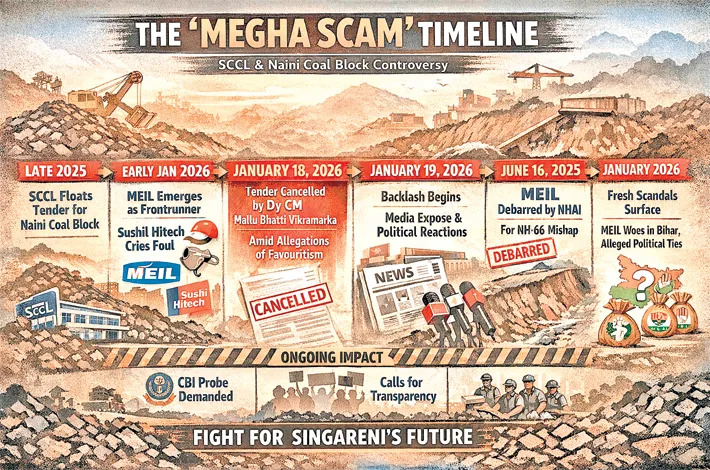
Telangana's Singareni Collieries Company Limited (SCCL), a public sector behemoth employing over 40,000 workers and producing around 65 million tonnes of coal annually, a storm of corporate intrigue and political manoeuvring has erupted. At its center is the alleged "Megha Scam," where Hyderabad-based Megha Engineering and Infrastructures Limited (MEIL) and its joint ventures are accused of attempting to muscle into the lucrative Naini Coal Block in Odisha's Angul district. This block, allocated to SCCL in 2015 with reserves estimated at 350 million tonnes, represents a critical expansion for the company, which fuels 60% of Telangana's power needs. But recent revelations suggest a rigged tender process favouring MEIL, only halted by media scrutiny and swift government intervention—temporarily saving Singareni's integrity, but exposing deeper rot in corporate-government ties.
The saga began in late 2025 when SCCL floated tenders for mining operations at Naini, MEIL, through a joint venture, emerged as a frontrunner amid whispers of favouritism. Competitors, including firms like Sushil Hitech (referred to in some reports as "Sushi Hitech"), cried foul over special clauses: a mandatory site visit certificate issued by SCCL's General Manager and an early Earnest Money Deposit (EMD) submission two days prior for verification. These conditions, critics argue, were tailored to eliminate rivals, creating an uneven playing field.
Sushil Hitech publicly raised alarms, labelling it a "cartel-like" setup designed to handpick winners. As temperatures rose, two major Telugu media outlets splashed headlines exposing vertical divisions among corporates, media houses, and political circles. The fallout was immediate: on January 18, 2026, Telangana Deputy Chief Minister Mallu Bhatti Vikramarka, who holds the Energy portfolio, ordered the tender's cancellation, citing "benefit of doubt" amid allegations of irregularities. This move, announced in a fiery press conference, temporarily salvaged SCCL's reputation but ignited a broader war of accusations.
Bhatti Vikramarka denied any personal involvement, insisting tenders followed Central guidelines for PSUs and that site visits were necessary due to Naini's challenging terrain, opposition Bharat Rashtra Samithi (BRS) leaders, including former minister T. Harish Rao, demanded a CBI probe, alleging the "site visit certificate" system—unique to Telangana and absent in other coal PSUs—was a deliberate scam to award contracts to insiders. Rao pointed to six other SCCL tenders awarded at inflated rates (plus 7-10%) under similar rules, questioning why only Naini was scrapped while others proceeded. He further claimed the SRP OC-II Expansion tender was deferred thrice in 2025 to favor preferred bidders, hinting at internal Congress share disputes. Even the Union Coal Ministry has stepped in, seeking explanations from Telangana on procedural lapses, underscoring federal oversight in the 51:49 state-Centre JV.
The counteroffensive was swift and vicious. Within 24 hours of the cancellation, a mainstream Telugu daily published a damning report: a Central PSU in Chhattisgarh had forfeited Rs 50 lakh EMD from Sushil Hitech and debarred it for a year over failure to submit Rs 125 crore performance security. This revelation, painted Sushil Hitech as unreliable, fuelling speculation of corporate sabotage. But the spotlight soon swung back to MEIL. On June 16, 2025, the National Highways Authority of India (NHAI) debarred MEIL for one year after a slope collapse on NH-66 in Kerala's Chengala-Neeleshwaram section.
The incident stemmed from improper design, inadequate slope protection, and poor drainage under a Hybrid Annuity Model project. NHAI imposed a potential Rs 9 crore penalty and mandated rectification at MEIL's cost, barring it from future bids. Critics now question if this debarment was disclosed in MEIL's Telangana tenders. Suppression could amount to misinformation, grounds for disqualification. Still, MEIL continues securing state contracts, including Rs 7,600 crore for Musi Rejuvenation despite past flops like the Sunkishala wall collapse in August 2024, where Hyderabad Metropolitan Water Supply and Sewerage Board recommended blacklisting.
Adding fuel, fresh reports in January 2026 highlight MEIL's woes in Bihar's Koshi Canal works. Progress has been sluggish, risking blacklisting by the state government. MEIL is scrambling with infrastructure setups like camps to avert it, but the controversy underscores a pattern: shoddy execution leading to bans. While no formal debarment has been confirmed, the timing aligns with a media floodgate, suggesting warring corporates are leaking dirt to undermine rivals. X posts amplify this, with users decrying MEIL's political ties—donating Rs 519 crore via electoral bonds to BJP, and cozying up to Telangana's Congress leadership. One viral thread questions why a firm fined Rs 94.6 crore for illegal mining in Maharashtra got a waiver, linking it to political favours.
This isn't just corporate mudslinging; it's a threat to Singareni's soul. Established in 1920, SCCL is Telangana's pride, generating Rs 30,000 crore revenue yearly and supporting dependent families. Employees, via unions like TBGKS, have protested favouritism, fearing privatization erodes job security and wages. Data shows private mining often slashes labour costs by 30-40%, with accidents rising due to lax safety—MEIL's Kerala debacle is a grim preview. The main question looms: Will Telangana enforce strict action? Qualifying more bidders, mandating mining experience clauses, and dismantling cartels could foster genuine competition. Bhatti Vikramarka must ensure transparency; failure risks a "Coalgate" rerun, eroding public trust.
Chief Minister A. Revanth Reddy has defended his cabinet, insisting no corruption taints Singareni. But with BRS alleging "contract Sarkar" and BJP demanding probes, the government has a bounden duty: safeguard Singareni from predatory corporates. Employees deserve protection from scams that commodify their sweat. If not, this temporary reprieve could unravel into a full-blown crisis, costing Telangana its coal lifeline. The state must act decisively—probe, reform, and compete fairly—or watch Singareni fall to the Megha shadow.


