31 August, 2026 | 5:48 PM


Budget FY27 to emphasise growth stability and jobs
01-02-2026 12:00:00 AM
The global economic environment continues to pose risks due to geopolitical tensions, volatile commodity prices and uneven monetary easing by major central banks.
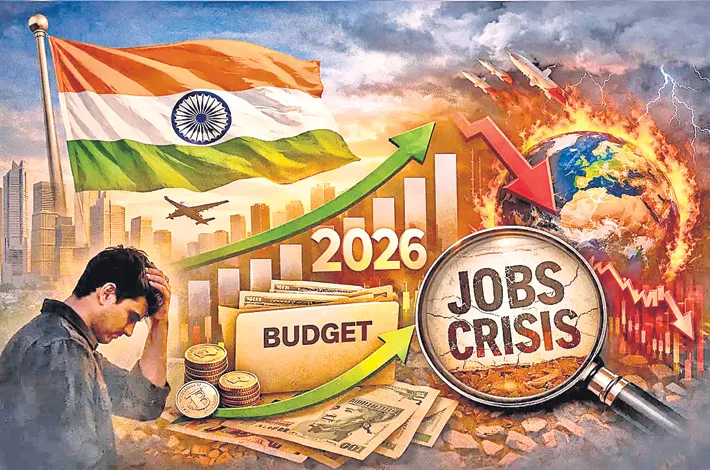
Finance Minister Nirmala Sitharaman will present the Union Budget for 2026–27 on February 1, marking her ninth consecutive Budget and the first time the exercise will be held on a Sunday. The Budget is expected to focus on sustaining economic growth, supporting job creation and strengthening manufacturing, while adhering to the government’s commitment to fiscal discipline amid global uncertainty.
The FY27 Budget comes at a time when India’s domestic demand has remained relatively strong and inflation has moderated from recent highs. However, the global economic environment continues to pose risks due to geopolitical tensions, volatile commodity prices and uneven monetary easing by major central banks. Trade frictions, including steep tariffs imposed by the US, have added to the challenges, even as earlier tax cuts, infrastructure spending and supportive monetary policy have helped cushion the impact on the economy.
Economists say the Finance Minister faces the difficult task of finding new growth drivers without straining government finances. Recent income tax and GST reductions have supported consumption but have also reduced revenue, limiting the scope for major fiscal stimulus. Restoring investor confidence will be a priority, especially as uncertainty around trade negotiations has unsettled markets, leading to foreign investor outflows and pressure on the rupee.
Capital expenditure is expected to remain the cornerstone of the Budget strategy. In recent years, higher public spending on infrastructure such as roads, railways, defence manufacturing, urban development and logistics has played a key role in crowding in private investment. For FY27, economists expect capital spending to rise further, though at a slower pace than in the immediate post-pandemic period. Railways, renewable energy, power transmission, defence and urban transport are likely to be key focus areas, along with continued support to states through interest-free infrastructure loans.
On the tax front, major changes are considered unlikely. The government is expected to prioritise stability and predictability, with only modest and targeted relief for individuals, particularly the middle class. Corporate tax rates are likely to remain unchanged, with greater emphasis on compliance, digitisation and widening the tax base.
Job creation, manufacturing and MSME support are also expected to feature prominently, along with measures to promote the green transition and energy security. Overall, the FY27 Budget is expected to reinforce continuity, balancing growth priorities with fiscal prudence while navigating domestic and global economic risks.