21 September, 2026 | 12:23 PM


Chandrababu Naidu's Nostalgic Return Babu’s Tryst with Gandipet
29-12-2025 12:00:00 AM
Echoes of TDP's Formative Glory and Enduring Legacy
Gandipet is not just a serene outpost on Hyderabad's outskirts but was the epicenter of a political revolution that reshaped Indian democracy. Gandipet hosted this intensive orientation camp, where greenhorn legislators were schooled in the intricacies of governance, legislative protocols, public administration
In a poignant blend of personal reflection and political reverence, Andhra Pradesh Chief Minister Chandrababu Naidu revisited the cradle of his party's storied ascent on Saturday. As the chief guest at the annual day celebrations of the NTR Memorial Trust’s School, Junior College, and Degree College at Gandipet, Naidu's address transformed a routine educational event into a vivid tableau of Telugu Desam Party (TDP) history. Amidst the youthful energy of students and the clamor of loyalists, Naidu's words evoked the transformative era when Gandipet was not just a serene outpost on Hyderabad's outskirts but the epicenter of a political revolution that reshaped Indian democracy.
The occasion marked a full-circle moment for Naidu, who reminisced about the site's evolution from the TDP's inaugural headquarters to an educational sanctuary. Established by the legendary N.T. Rama Rao (NTR) in 1983, the Gandipet Ashram – often dubbed Telugu Vijayam or Shanti Kuteer – became the nerve center for the party's audacious launch. NTR, the charismatic film icon turned political disruptor, galvanized the masses against the entrenched Congress regime in undivided Andhra Pradesh. The TDP's stunning electoral triumph that year, sweeping aside the Congress Goliath, was orchestrated from these very grounds. Naidu, then a rising star in the party's ranks, painted a picture of those heady days: "This place holds memories that changed the course of Indian politics," he told the rapt audience, his voice laced with uncharacteristic sentiment.
Central to Naidu's narrative was the 1985 TDP training program, a cornerstone event held shortly after the party's landslide victory in the Andhra Pradesh Legislative Assembly elections. With TDP securing an overwhelming 202 seats, NTR reclaimed the Chief Minister's mantle, but the influx of novice MLAs – many drawn from non-political spheres amid the party's meteoric rise – demanded urgent grooming. Gandipet hosted this intensive orientation camp, where greenhorn legislators were schooled in the intricacies of governance, legislative protocols, public administration, and the party's ideological moorings. Naidu highlighted how eminent academicians, including Prof. RVR Chandrasekhara Rao, Prof. FD Vakil, and Prof. Vaikuntam, served as faculty, imparting wisdom to these political fledglings. "These classrooms, now buzzing with students' dreams, once echoed with lessons that forged leaders," Naidu remarked, underscoring the site's metamorphosis into the NTR Educational Institutions.
However, what Naidu modestly omitted – a detail that underscores his pivotal often understated role – was his own emergence from these hallowed halls. As a young organizer, Naidu honed his skills at Gandipet, channeling his energy into party-building and ideological fortification. Influenced by socialists and ideologues who infused TDP with a distinct anti-Congress ethos, he orchestrated training camps that built an unassailable grassroots network. This network remains TDP's enduring strength – perhaps unmatched in Indian politics. The party's commitment to cadre development, rooted in Gandipet's early initiatives, has weathered decades of turmoil, from internal schisms to electoral setbacks.
The event itself bore testament to this resilience. As the program drew to a close, a surge of former TDP leaders and activists from Hyderabad overwhelmed the dais, clamouring for handshakes and selfies with their "dear leader." Security personnel struggled to manage the throng, reminiscent of the disciplined chaos at Tirumala's sanctum. Such spontaneous fervor speaks volumes about TDP's organizational depth, meticulously laid by Naidu during those formative years. In an era where political loyalties often fray under the weight of opportunism, TDP's cadre loyalty stands as a bulwark, a direct legacy of Gandipet's foundational ethos.
Delving deeper, Gandipet's ideological imprint on TDP cannot be overstated. A cadre of intellectuals and former socialists – figures like K. Satyanarayana, Nandivada Sambasiva Rao, P. Upendra, Mente Padmanabham, and Atluri Venkateswara Rao – crafted the party's blueprint. They emphasized federalism, state autonomy, and a staunch opposition to overreaching central institutions, such as the office of the Governor. This vision crystallized in TDP's contributions to the Sarkaria Commission report, which advocated for balanced center-state relations. Naidu, guiding these efforts, absorbed these principles, propelling him onto the national stage.
His tenure as Chief Minister of undivided Andhra Pradesh and Convenor of the United Front (UF) exemplified this acumen. Naidu wielded influence over the UF government, steering national policies with insights honed at Gandipet. For a brief, electrifying period, he dictated the contours of Indian politics, earning global acclaim for visionary governance – from pioneering IT hubs in Hyderabad to resilient economic reforms. Gandipet, in essence, was the forge that tempered Naidu into a leader of substance: persistent, strategic, and internationally recognized for initiatives like Amaravati's development and post-bifurcation revival.
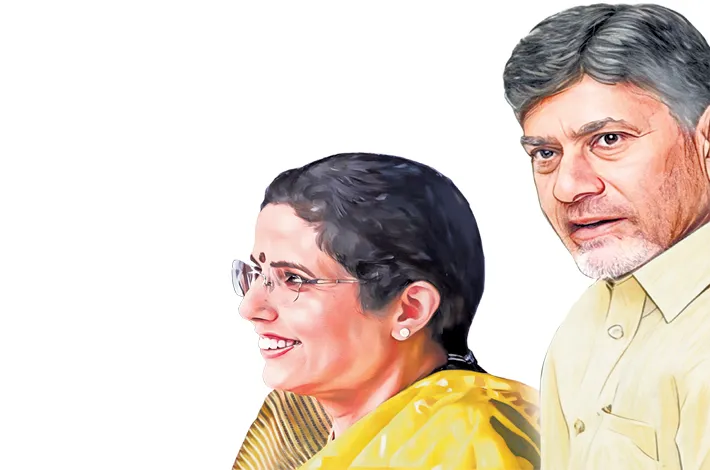
This nostalgia, however, transcends mere reminiscence; it offers a lens into TDP's future and Naidu's enduring blueprint for leadership. Under Nara Bhuvaneswari's stewardship – NTR's daughter and Naidu's wife – Gandipet now nurtures hundreds of students from diverse backgrounds, channeling the site's revolutionary spirit into education. Bhuvaneswari's leadership ensures that the ashram's legacy evolves, empowering the next generation with knowledge rather than political dogma. And, the parallels are striking: just as Gandipet upskilled TDP's cadre, it now equips youth for a competitive world, fostering inclusivity and excellence.
In summary, Naidu's Gandipet tryst is more than a sentimental detour; it's a powerful affirmation of legacy. As crowds mobbed him yesterday, echoing the fervor of 1985, it was clear: the seeds sown at this historic site continue to bear fruit, ensuring TDP's – and Naidu's – indelible imprint on Indian politics. With Bhuvaneswari at the helm of its educational avatar, Gandipet promises to inspire not just politicians, but generations of dreamers. In an age of fleeting alliances, such enduring foundations are a rare, impactful beacon.