21 September, 2026 | 5:47 PM


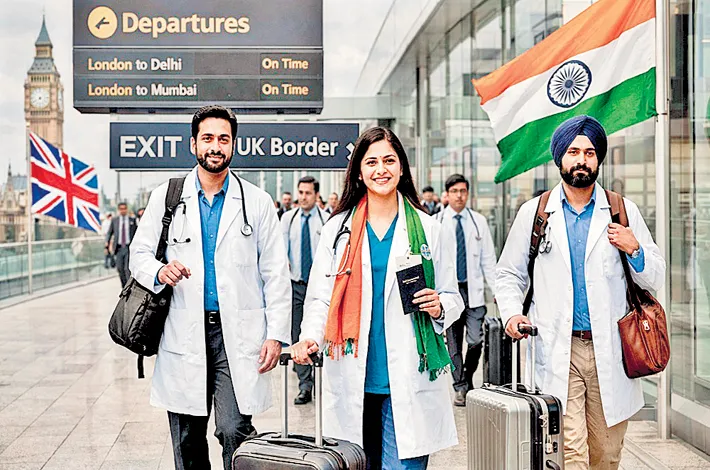
Indian Doctors leave UK in droves
29-12-2025 12:00:00 AM
- Overall approvals have dropped by nearly 67 per cent
- Nursing visas alone have declined by a steep 79 per cent
Indian doctors are increasingly choosing to leave the United Kingdom, indicating a profound shift in one of the longest-standing migration trends in global healthcare. UK, which was once considered as the most desirable overseas destination for Indian medical professionals, is now losing its appeal as tighter immigration rules, falling visa approvals, rising financial stress and shrinking career opportunities reshape the stay for Indians.
Official data which was presented during India's Winter Parliamentary Session reveals that a sharp collapse in Health and Care Worker visas was issued to Indian nationals. Overall approvals have dropped by nearly 67 per cent, while nursing visas alone have declined by a steep 79 per cent. These numbers reflect not dissatisfaction with medical practice itself, but the growing structural and economic challenges facing Indian professionals who once viewed the National Health Service (NHS) as a stable long-term option.
For decades, the health services in UK always symbolized professional prestige and security. Launched in 1948 as part of post-war welfare reforms, the NHS built a global reputation for high clinical standards. Indian doctors were central to its expansion, assisted by the fact that until 1975, Indian medical degrees were recognized by the UK’s General Medical Council, allowing relatively seamless migration and career progression.
This equation has now changed as the NHS is under the sustained pressure from the long waiting lists, constrained budgets and the limited training posts. Although the number of UK-trained doctors has increased in recent years, the availability of specialist training and consultant positions has been declining. This has intensified competition across the system, leaving many qualified doctors, specifically international graduates, facing uncertain job prospects.
Now, Indian doctors must clear the PLAB (Professional and Linguistic Assessments Board) examinations to register with the General Medical Council. However, passing these assignments still no longer guarantees stable employment because many report short-term contracts, delayed promotions and limited advancement opportunities. Financial pressures have emerged as one of the strongest drivers behind the exodus.
According to UK government data from 2024, Asian or Asian British staff constitute 13 per cent of the NHS workforce, with 16 per cent working full-time and 8 per cent part-time. Experts warn that these numbers are likely to decline further as Indian doctors increasingly relocate to Australia and New Zealand.
While NHS experience remains globally respected, Indian doctors are now prioritizing financial stability, career certainty and quality of life over institutional prestige. For many, leaving the UK has become a calculated, practical decision, one that raises pressing questions about the NHS’s long-term workforce sustainability.
No more viable
NHS consultants in higher pay bands face income tax rates of up to 45 per cent, along with 2 per cent National Insurance contributions and mandatory NHS pension deductions of around 12.5 per cent on earnings above GBP 65,191. When combined with the UK’s rising cost of living, take-home pay has become increasingly uncompetitive.