14 October, 2026 | 12:21 PM


Democracy under Scrutiny: Challenges and the need for a vigilant civil society
18-06-2026 12:00:00 AM
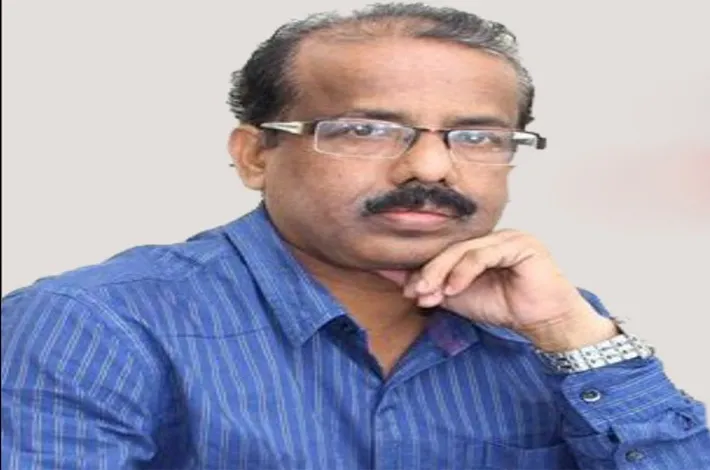
In the second part of the “Breaking the Democracy Spell” series organised by the Essence Group, Dr. Kasula Lingareddy delivered a wide-ranging presentation on the state of democracy in the modern world. The noted neonatologist and Telugu literary figure explored the concept’s historical roots, its practical limitations, and the widening gap between democratic ideals and political realities across major nations. Dr. Lingareddy began by welcoming participants and recalling the previous session led by Dr. Harathi Vagishan, which examined whether a universal model of democracy exists and how countries adapt it to their own histories and cultures.
He then turned to the core questions raised by political theorist John Dunn: the relationship between democracy and good governance, the role of citizens, the limits of democratic institutions, and the tension between democratic aspirations and actual outcomes. The speaker located the deeper foundations of modern democratic ideas in the Paris Commune of 1871, a short-lived workers’ government that promoted secularism, labour rights, women’s equality, and the separation of church and state. He contrasted this with the dominant narrative that credits the United States as democracy’s primary inventor.
While acknowledging America’s constitutional framework — separation of powers, elections, and the Bill of Rights — Dr. Lingareddy highlighted significant deviations in practice. He pointed to America’s expansionist foreign policy, interventions in Vietnam, Iraq, Libya, Afghanistan and elsewhere, and its alliances that often contradicted proclaimed democratic values. Citing John Perkins’ book Confessions of an Economic Hit Man, he argued that U.S. actions frequently prioritise economic and strategic interests over genuine democracy promotion.
Turning to China, Dr. Lingareddy discussed John Dunn’s analysis of its hierarchical, party-led system rooted in its imperial past. He acknowledged China’s remarkable economic and military rise over recent decades but questioned whether its successes stem from an “obscene understanding” of power or from disciplined long-term planning. The presentation touched on the violence in China’s revolutionary history, including the Cultural Revolution, while noting that violence has accompanied major societal transformations worldwide. He cautioned that rapid growth without corresponding democratic checks could prove dangerous if momentum stalls.
India’s democracy: Resilience amid deep contradictions
A significant portion of the talk celebrated India as the world’s largest and most surprising democracy, capable of absorbing conflict and diversity despite extreme poverty. Dr. Lingareddy referenced John Dunn’s praise for India’s absorptive capacity and the roles of leaders like Gandhi, Nehru, and Patel in maintaining national unity. Yet he also listed persistent challenges: the Emergency, communal violence, caste oppression, corruption, money power in elections, and media manipulation. He argued that parliamentary democracy has often functioned as a legitimising tool for capitalist interests rather than genuine people’s power.
The speaker stressed the gap between constitutional promises of social and economic justice and ground realities, warning that political democracy cannot survive long without social democracy — a point originally made by B.R. Ambedkar. Dr. Lingareddy expressed deep concern over declining voter seriousness and the transformation of elections into transactional exercises. He questioned whether citizens truly exercise sovereign power or merely choose among pre-selected options influenced by money, liquor, and caste. The presentation concluded with a strong appeal for building a responsible civil society that transcends caste, religion, and immediate self-interest.
– Dr. Kasula Linga Reddy
Deccan College of
Medical Sciences