22 September, 2026 | 9:36 PM


Has bollywood bounced back?
20-12-2025 12:00:00 AM
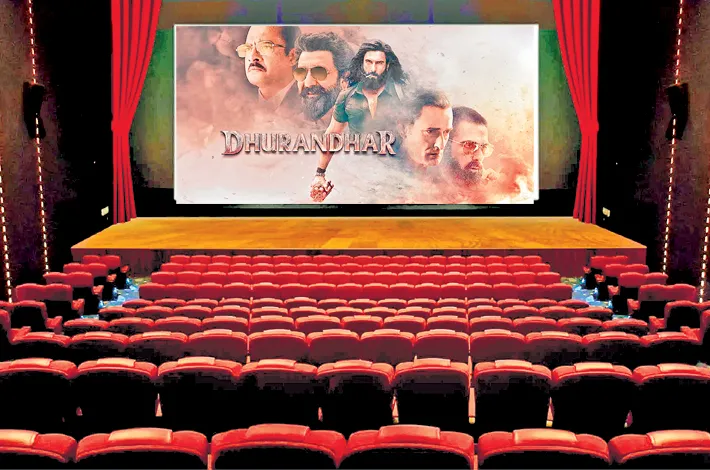
The roar of popcorn machines and long queues at ticket counters across India have reignited an old debate: Is Bollywood finally staging a comeback? At the centre of this excitement stands Durandhar, the Aditya Dhar directed Ranbir Singh-starrer that has shattered box-office records and forced theatres to add midnight shows to accommodate surging demand. The film has grossed over Rs 450 crore net in India and approximately Rs 639 crore worldwide, claiming the title of the highest second-weekend collection for any Indian film. Its second week outperformed even its blockbuster opening, a rarity that underscores extraordinary word-of-mouth pull.
Audiences are flocking to cinemas in unprecedented numbers, with repeat viewings becoming common and theatres reporting house-full shows even in late-night slots. Yet Durandhar is not an isolated triumph. 2024 and 2025 has seen a handful of big-budget spectacles dominate earnings. The top 10 films, including South Indian blockbusters like Kantara: Chapter 1 and Pushpa 2 and other blockbusters like Chaava and Stree2 account for more than a third of total box-office revenue. On paper, the year looks robust, with industry-wide collections reportedly up 27% year-on-year.
Industry insiders and exhibitors, however, caution that these headline figures mask deeper structural concerns. Growth remains uneven, with elite urban audiences yet to return in full force. Hindi films continue to lose ground to regional and dubbed content in overall market share. While tent-pole releases are driving ticket sales, mid-budget and smaller Hindi films struggle to find screens and sustained traction.
Adding to the uncertainty are major corporate shifts within Bollywood’s legacy studios. Karan Johar’s Dharma Productions recently sold a 50% stake to Adar Poonawalla for Rs 1,000 crore, marking a seismic change for one of the industry’s most iconic banners. Similarly, Saregama India is reportedly investing Rs 325 crore in Sanjay Leela Bhansali’s production house, securing exclusive music rights and a path to majority ownership by 2030. These deals signal that even as audiences turn up for big spectacles, traditional studios are hedging risks, diversifying revenue streams, and sharing control in an era dominated by OTT platforms.
A trade analyst attributed Durandhar’s second-week surge to strong female turnout after initial hesitation over the film’s violent content, combined with exceptional repeat value. He argued that while OTT competition persists, a segment of viewers will always wait for digital releases—yet compelling theatrical experiences can still draw massive crowds. An exhibitor in Delhi described the phenomenon as “FOMO at the box office,” emphasising that hype paired with genuine word-of-mouth creates history, as seen with recent hits like Gadar 2, Pathaan, Jawan, Animal, Chhaava, and Stree 2. He stressed that programming is ultimately dictated by audience demand and the law of supply and demand, not exhibitor preference.
Another top exhibitor who owns multiple movie theatres in Mumbai highlighted the irreplaceable big-screen experience—Dolby sound, massive visuals, and immersive atmosphere—that OTT cannot replicate. His theatres have been running house-full for Durandhar, proving audiences crave spectacle when delivered convincingly. A business researcher pointed to post-COVID volatility: occupancy rates have dropped from pre-pandemic levels of around 30% to 20–28%, and earnings remain heavily dependent on a few tent-pole releases. He noted that OTT platforms have become more selective, cutting budgets and signing fewer films, forcing producers to answer to shareholders just like exhibitors.
One commonly agreed upon point is that that social-media reels pose a greater threat than OTT to everyday cinema-going, consuming the two-plus hours that once belonged to theatrical viewing. Meanwhile, consolidation among studios and the exit of traditional financiers have pushed production houses toward corporate partnerships to secure funding and build intellectual property assets. In conclusion, Durandhar proves that when Bollywood delivers scale, conviction, and event-like storytelling, audiences respond enthusiastically. Theatres can still fill, buzz can build rapidly, and word-of-mouth remains powerful.
However, the industry’s transformation is far from a simple revival. OTT has permanently altered viewing habits, shortened theatrical windows, and compelled studios to rethink risk management. Legacy houses are monetising their crown jewels and inviting corporate partners to survive. What emerges is not yet a full-fledged comeback, but a clear reset—one where only the biggest, most compelling stories thrive, and the business of Bollywood increasingly resembles corporate strategy as much as creative passion.