22 September, 2026 | 9:51 AM


Plans to revive Ayurveda in AP
22-12-2025 01:14:34 AM
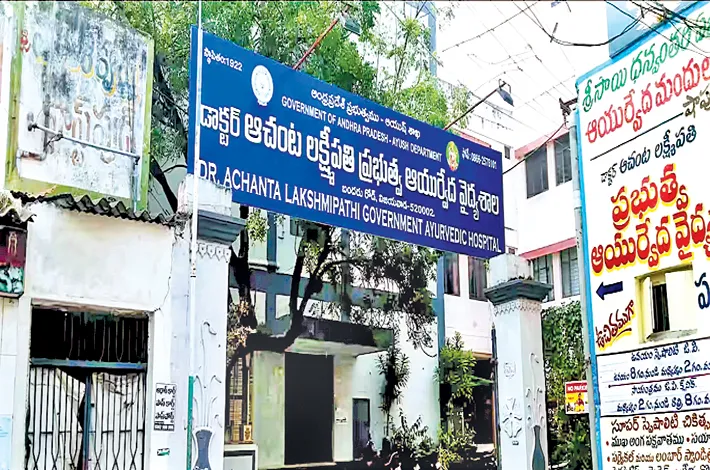
Government plans to promote healthy lifestyles through AYUSH systems in nearly 75,000 schools across the state
Despite Andhra Pradesh’s rich legacy in traditional medicine, the state today has only one full-fledged government ayurveda teaching hospital, the Dr Achanta Lakshmipathi Government Ayurvedic Hospital, highlighting years of institutional neglect in the AYUSH sector. Located in Vijayawada, the hospital is equipped with 150 beds and also houses an Ayurveda College, making it the sole centre in the entire state that combines education, clinical training and inpatient care under one roof.
Apart from this flagship institution, Andhra Pradesh has only two mini Ayurveda dispensaries, both of which have suffered from chronic underfunding, staff shortages and inadequate infrastructure for several years. Health experts say this limited institutional footprint has severely restricted public access to Ayurvedic treatment, especially in rural and tribal regions where cost-effective traditional medicine could have played a vital role in preventive healthcare.
Officials acknowledge that the sector suffered deep neglect during previous administrations. “For years, Ayurveda and AYUSH systems were treated as peripheral services, not as a core component of public health. As a result, institutions stagnated, posts remained vacant and utilisation of Central funds was poor,” said M Sreevani, Assistant Professor.
That narrative will soon change, as the coalition government has begun repositioning Ayurveda as a key pillar of public health, with a focus on expanding institutions, improving infrastructure and integrating AYUSH systems into preventive healthcare strategies. The State government has already started the procedures to fill the vacant posts and also bring new institutions on the line.
Besides this, a major thrust area is the School Health Programme through AYUSH, aimed at addressing the physical and mental health needs of school-going children. The programme envisages ayurveda-based health and nutrition education, awareness on home remedies and locally available medicinal plants, promotion of kitchen and home herbal gardens, regular yoga practice, counselling, and education on sexual and reproductive health.
Health screening for early detection of vision and hearing problems, learning disabilities, skin diseases, anaemia and worm infestation is also part of the plan. Referral linkages will be established with AYUSH hospitals and medical colleges for further treatment and preventive care, with designated nodal teachers overseeing implementation at the school level.
Under the flagship AYURVIDYA initiative, the government plans to promote healthy lifestyles through AYUSH systems in nearly 75,000 schools across the state. Medical camps, both general and condition-specific, will be organised, along with peripheral outpatient services staffed by Ayurveda doctors, pharmacists and field workers. Quarterly evaluations and progress reports will be submitted to the Department of AYUSH to ensure accountability.
Strategies include training health education teams comprising teachers, health professionals, ASHA workers and local self-government representatives to drive behavioural change communication through community outreach.
Health Minister Y. Satya Kumar Yadav has been vocal about the need to scale up AYUSH services. Speaking at a recent national roundtable organised by the Ministry of AYUSH in Lonavala, he said, “Providing affordable and preventive healthcare through AYUSH systems is not an option anymore; it is a necessity, especially in a state like Andhra Pradesh with vast rural populations.”
The Minister sharply criticised the previous YSRCP government, stating that administrative apathy resulted in Andhra Pradesh receiving only ₹37 crore in Central AYUSH funding, with negligible spending in the first two years and zero utilisation in the last three. “That neglect led to acute staff shortages and stalled growth of ayurveda institutions,” he said.
In contrast, the current government has secured Rs. 87 crore in Central assistance for AYUSH in 2024-25 and submitted a fresh proposal seeking Rs. 150 crore for 2025-26. “Our goal is to expand institutions, fill vacancies and ensure that ayurveda is accessible to every section of society,” said Satya Kumar Yadav.
The government is also exploring medical tourism opportunities by promoting integrated hospitals combining ayurveda and allopathy, drawing inspiration from Kerala’s globally recognised model. As Andhra Pradesh attempts to revive its ayurvedic ecosystem, the lone hospital in Vijayawada stands as both a reminder of past neglect and a potential nucleus for the sector’s long-overdue revival.