18 September, 2026 | 10:34 AM


Is cross-party camaraderie fading in Indian politics?
17-12-2025 12:00:00 AM
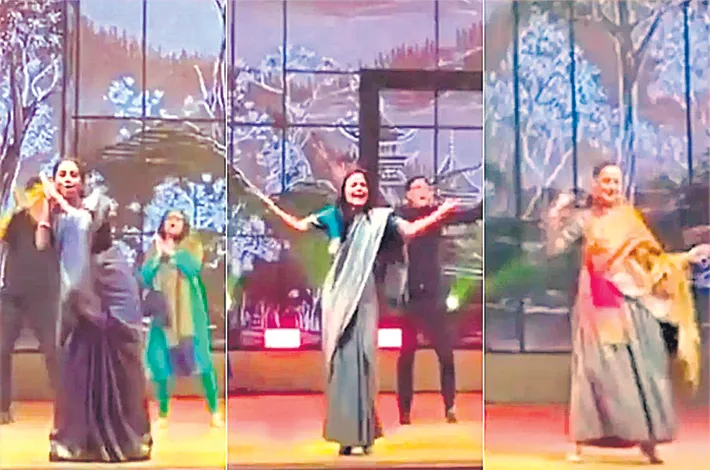
Cross-party camaraderie in Indian politics seems to be increasingly rare, as recent high-profile events have brought the debate into the spotlight. Videos from these gatherings went viral, sparking discussions on whether personal respect can survive in today’s highly polarised political environment. At the wedding of Yashaswini Jindal, daughter of BJP MP and industrialist Naveen Jindal, politicians from rival parties were seen dancing together and sharing light-hearted moments. From BJP’s Kangana Ranaut to TMC’s Mahua Moitra and NCP (SP)’s Supriya Sule, parliamentarians grooved to Bollywood hits alongside the Jindal family, a scene that would have been unimaginable in today’s combative political climate. Similarly, veteran leader Sharad Pawar’s pre-birthday dinner ahead of his 85th birthday on December 12 drew attendees from across the spectrum, including Rahul and Priyanka Gandhi, his estranged nephew Ajit Pawar, industrialist Gautam Adani, and BJP figures such as Nalin Kohli.
These rare glimpses of cordiality have sparked a broader debate: do such personal interactions reflect enduring political civility, or are they simply exceptions in an age of increasing distrust? Critics on social media questioned why politicians who publicly oppose each other so fiercely can comfortably attend private celebrations together. In recent years, cross-party socialising has declined amid heightened partisanship, while historical examples suggest cordiality was once more common. Leaders like Atal Bihari Vajpayee and P.V. Narasimha Rao maintained mutual respect on crucial national issues such as nuclear policy, showing that ideological differences did not preclude personal friendships.
A BJP spokesperson defended attendance at Pawar’s dinner as a cultural gesture of respecting elders, separate from political rivalries. He highlighted that India’s constitutional ethos promotes equality and unity on matters of national importance, suggesting that private celebrations should be distinguished from public political battles. Conversely, a Congress spokesperson lamented the change in political culture since 2014, saying partisanship has intensified to the point where even casual meetings are viewed with suspicion. He recalled anecdotes from Manmohan Singh’s tenure, highlighting how leaders accommodated allies’ requests or offered support during personal crises—practices now increasingly rare in contemporary politics.
A retired bureaucrat and columnist traced the tradition further back, pointing to examples from Andhra Pradesh and Hyderabad, where ideological adversaries often maintained cordial personal relationships. He recounted how Vajpayee acknowledged his predecessors during nuclear tests and how Singh appreciated Vajpayee’s role in the nuclear deal. Yet he argued that today’s politics is marked by ideological rigidity, with leaders discouraged from forming personal bonds with rivals.
Despite this, gestures of goodwill persist. Prime Minister Narendra Modi publicly extended birthday wishes to Sharad Pawar, and ministers like Kiren Rijiju have demonstrated outreach across party lines in parliamentary matters. Analysts argue that separating personal respect from political rivalry strengthens democracy. One observer summed it up: politicians fight in public but hug in private—the opposite of actors—emphasising the importance of maintaining civility without compromising ideological stances.
The question of who bears responsibility for the decline in cross-party socialising remains contested. BJP leaders argue that the party’s post-2014 governance-focused pace leaves little time for visible social engagement, while social media amplifies negative reactions to even minor gestures. Congress leaders, however, question the lack of consistent outreach from the Prime Minister to opposition leaders over the past decade, contrasting it with examples from the Vajpayee era and Sonia Gandhi’s interventions to resolve conflicts within rival parties. Both perspectives underscore the tension between political duty and personal courtesy in modern India.
While fierce debates dominate Parliament and prime-time television, rare occasions like the Jindal wedding and Pawar’s dinner demonstrate that personal relationships across party lines still exist, if quietly. They suggest that ideological differences do not have to entirely erase personal bonds. Yet, as the political climate intensifies, these moments of cordiality may face increasing scrutiny. The underlying question for India’s democracy remains: can cross-party camaraderie survive the age of hyper-partisanship?